

- Details
- Short Itinerary
Itinerary
Itinerary- Useful Info
- Photos
- FAQ
Trip overview
Over Overview: Tsum Valley 19-day trek
The Tsum Valley Trekking is often considered a less-traveled route in the Nepalese Himalayas. Although the Tsum Valley Trek offers stunning views and a unique cultural experience, it may not appeal to everyone. However, for those in search of solitude and authenticity, it promises an unforgettable adventure. Many trekkers may find the remote nature of the trail challenging, as the region is located in a secluded area with limited infrastructure. Some might be deterred by the long, strenuous days of hiking, with steep ascents and difficult terrain that can be physically demanding.
Geographical and Cultural Context
The Tsum Valley is located to the east of Manaslu, on the border with Tibet, and was only opened to trekkers in 2008. The people of this region, known as Tsumbas, have preserved their Tibetan Buddhist traditions for centuries. The valley remains relatively untouched, with ancient villages and sacred monasteries waiting to be explored. Trekkers typically walk 5–8 hours each day, gaining altitude gradually.
Cultural Immersion and Local Life
Reaching over 4,000 meters, Mu Gompa is the largest monastery in the region and a spiritual highlight of the trek. Staying in lodges and homestays allows trekkers to immerse themselves in the local culture. The simplicity of the accommodations and the hospitality of the locals create an enriching experience. Traditional foods like dal bhat, chapatis, and noodle soup are staples that provide comfort and sustenance.
Sacred Sites and Spiritual Significance
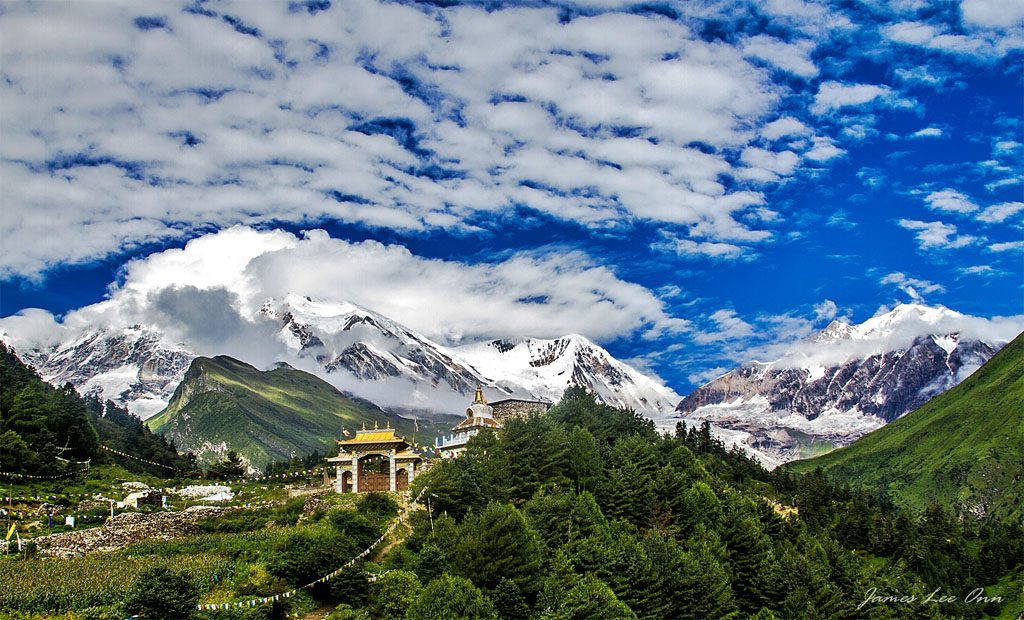
The trail leads through the upper Budi Gandaki River Valley, considered a sacred pilgrimage route. Authentic Tsumba villages like Chhokangparo dot the landscape. Tsum has long been regarded as a Baeyul, or “hidden land,” offering insight into a preserved way of life. Buddhist monuments, such as prayer walls, chortens, and nunneries, are widespread, with the longest mani walls found at Dzong and Phurpe.
Natural Beauty and Biodiversity
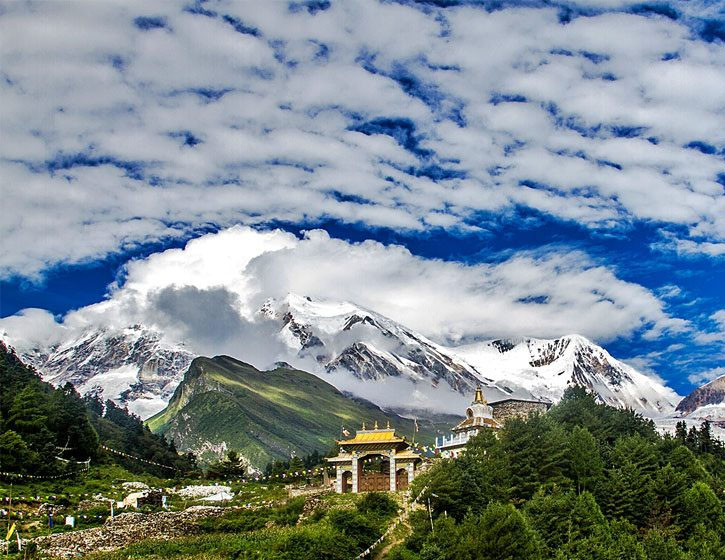
Tsum Valley is surrounded by stunning peaks such as Ganesh Himal, Sringi Himal, Buddha Himal, and Himalchuli. Its secluded location protects pristine forests, waterfalls, and alpine pastures. The region supports diverse flora and fauna, including rare wildlife like the Himalayan thar and the elusive snow leopard.
Trekking Route Overview
Starting Point: Soti Khola (710 m) or optionally Machha Khola (900 m)
Ending Point: Soti Khola or Dharapani (1,860 m), with the option to link to the Annapurna Circuit.
Major Highlights of the Trek
1. Monasteries and Gompas
Tsum Valley is home to ancient monasteries and gompas that hold deep spiritual significance. Key sites include Mu Gompa, perched at 3,700 meters, and Rachen Gompa, known for its vibrant murals and monastic life. These sacred places reflect the valley’s strong Tibetan Buddhist heritage and offer peaceful spaces for reflection.
2. Chortens & Mani Walls
Chortens and mani walls are prominent features of the Tsum Valley landscape, symbolizing the region’s deep Buddhist roots. These stone structures, inscribed with sacred mantras and prayers, line the trails and villages. They offer spiritual blessings to travelers and preserve centuries-old traditions of devotion, faith, and Himalayan cultural identity.
3. Scenic Grandeur
Snow-capped peaks, untouched forests, and tranquil pastures offer some of Nepal’s most picturesque landscapes.
4. Spiritual Depth
The valley’s spiritual energy is palpable, offering trekkers a meditative and peaceful experience.
Famous trekking route in Nepal:
Nepal offers some of the world’s best trekking routes, ranging from short cultural hikes to challenging high-altitude expeditions. Here are the main trekking routes in Nepal categorized by region:
Everest Region (Khumbu)
Everest Base Camp Trek (12–14 Days)
Start: Lukla (Flight from Kathmandu)
Highlights: Namche Bazaar, Tengboche Monastery, Kala Patthar (5,545m), Everest Base Camp (5,364m)
Difficulty: Moderate to Challenging
Gokyo Lakes 14–16 Days
Highlights: Gokyo Ri (5,357m), stunning turquoise lakes, Cho La Pass (5,420m)
Alternative Route: Can combine with EBC for the Everest Three Passes Trek
C. Everest Three Passes (18–22 Days)
Passes: Kongma La (5,535m), Cho La (5,420m), Renjo La (5,360m)
Best for: Experienced trekkers looking for a challenging adventure
Annapurna Region: Annapurna Base Camp (ABC) 7–12 Days
Start: Nayapul or Ghandruk (Drive from Pokhara)
Highlights: Machapuchare Base Camp (3,700m), Annapurna Base Camp (4,130m), hot springs at Jhinu Danda
Difficulty: Moderate
Annapurna Circuit 14–18 Days
Start: Besisahar or Chame
Highlights: Thorong La Pass (5,416m), Muktinath Temple, Jomsom, Manang
Difficulty: Moderate to Challenging
Mardi Himal Trek Days
Best for: Short, off-the-beaten-path trek
Highlights: Forests, ridge walks, stunning Annapurna views
D. Poon Hill Trek Days
Best for: Beginners or short-time trekkers
Highlight: Sunrise view over Annapurna and Dhaulagiri
Manaslu & Tsum Valley Region Manaslu Circuit (14–18 Days)
Start: Soti Khola
Highlights: Larke La Pass (5,106m), remote villages, fewer crowds
Difficulty: Moderate to Challenging
B. Tsum Valley (14–18 Days)
Best for: Cultural & Buddhist heritage trek
Highlights: Mu Gompa, Rachen Gompa, hidden valley
Langtang Region
A. Langtang Valley 7–10 Days
Start: Syabrubesi (Drive from Kathmandu)
Highlights: Kyanjin Gompa, Langtang Glacier, stunning mountain views
Gosaikunda Trek Days
Highlights: Sacred alpine lake (4,380m), Hindu pilgrimage site
Helambu Trek Days
Best for: Short trek near Kathmandu
Remote & Off-the-Beaten-Path Treks:
Upper Mustang 10–14 Days
Highlights: Ancient Tibetan culture, desert landscapes, Lo Manthang
Upper Dolpo Trek Days
Best for: Adventurers seeking remote wilderness
Highlights: Shey Phoksundo Lake, Buddhist monasteries
Kanchenjunga Base Camp 20–26 Days
Start: Taplejung
Highlights: 3rd highest mountain in the world, rarely visited region
Most popular trekking routes in Nepal:
-
Everest Base Camp Trek—The classic journey to the foot of the world’s highest peak, offering stunning views of Everest, Sherpa culture, and dramatic alpine scenery.
-
Annapurna Circuit Trek—A diverse trek around the Annapurna Massif, crossing Thorong La Pass (5,416m), with varied landscapes, villages, and mountain vistas.
-
Annapurna Base Camp Trek—A shorter trek leading to the Annapurna Sanctuary, surrounded by towering peaks including Annapurna I and Machapuchare.
-
Langtang Valley Trek—A scenic trek close to Kathmandu, known for its beautiful valley, Tamang culture, and views of Langtang Lirung.
-
Manaslu Circuit Trek— A less crowded alternative to Annapurna, this trek circles Mount Manaslu, featuring remote villages and the Larkya La Pass.
Ghorepani Poon Hill Trek—A relatively short and easy trek offering sunrise views over the Dhaulagiri and Annapurna ranges, ideal for beginners.
-
Upper Mustang Trek—A cultural trek into the former Kingdom of Lo, showcasing Tibetan-influenced culture, arid landscapes, and ancient caves.
-
Tsum Valley Trek—A secluded and spiritual journey through Tibetan Buddhist villages and pristine Himalayan wilderness, ideal for experienced trekkers.
Conclusion: Tsum Valley Treking
Tsum Valley Hiking is a hidden gem in Nepal. It offers a perfect blend of spirituality, cultural immersion, and breathtaking natural beauty. As a Beyul—a sacred hidden valley in Tibetan Buddhism—it provides a sense of peace and refuge for those seeking spiritual and personal rejuvenation.
The trek leads adventurers through remote Himalayan landscapes, ancient monasteries, and traditional Tsumba villages. Here, the rich Buddhist heritage is deeply preserved. The journey is both challenging and rewarding, with rugged trails, suspension bridges, and high-altitude passes. It’s an ideal destination for trekkers seeking an off-the-beaten-path experience.
For those in search of authentic Himalayan culture, serene wilderness, and spiritual depth, Tsum Valley Hiking remains one of Nepal’s most remarkable and untouched trekking routes. It is truly a journey into the heart of the Himalayas, offering memories to last a lifetime.
Short Itinerary
Day 1: Arrival in Kathmandu (1,350 m)
Day 2: Kathmandu Sightseeing & Trek Preparation
Day 3: Drive to Arughat (900 m)—7-8 hrs.
Day 4: Trek to Arughat to Soti Khola (1,340 m)–6-7 hrs.
Day 5: Trek to Machha Khula (2,240 m) – 6-7 hrs.
Day 6: Trek to Jagat (2,386 m) – 5-6 hrs.
Day 7: Trek to Chhokang Paro (3,031 m) – 5-6 hrs. T
Day 8: Trek to Lpkpa (3,361 m) – 4-5 hrs.
Day 9: Trek to Chhokangparo (4,000 m)—4-5 hrs.
Day 10: Trek to Nile (3347 m) via Milarepa Cave (5-6 hrs walk).
Day 11: Excuision Mu gumpa (3700 m) and Dephyudonma gumpa (4060 m) 5-6 hrs walk.
Day 12: Trek to Chhekamparo (3031 m)–6-7 hrs.
Day 13: Trek to Gumpa Lungdung (3,200 m)—6-7 hrs.
Day 14: Trek to Ganesh Himal hike (1,340 m) – 6-7 hrs.
Day 15: Trek to Jagat (2386 m): 6-7 hours.
Day 16: Trek Laphubeshi for about 6-7 hours.
Day 17: Trek to Aarughat about 6-7 hrs.
Day 18: Drive to Kathmandu from Aarughat for about 6-7 hours.
Day 19: Final departure from hotel to TIA airport.
Itinerary
Day 01: Arrival in Kathmandu Tribhuban international airport (1,300m/4,264ft): you will be met and taken a short drive from the airport to the hotel check-in of your hotel, here you can have a short rest for few hrs. After resting your guide will discuss the itinerary and about the equipment we need for the trek and what time we leave from Kathmandu.
Get permits, preparation or sightseeing in Kathmandu: – This is a rest day today, and also a day to prepare and to acclimatise as Kathmandu is 1350m above sea level. We get permits and arrange the rest of things for our trek to Annapurna Circuit. We will today in the morning take a guided tour to some of the most chronological and spiritual attractions in Kathmandu which are also listed as UNESCO World Heritage sites, we visit the historic Durbar Square, the sacred Hindu temple of Pashupatinath, the famous ´Monkey Temple´ (Swayambhunath) and Buddhist shrine (Bouddhanath), which is also one of the largest stupas in the world.
At noon, our climbing leader will get our equipment checked and introduce our fellow participants. the evening is free time.
Stay overnight at Kathmandu.
Drive to Arughat (600m) from Kathmandu; 7-8 hours drive: – After breakfast drive from Kathmandu into the western mountains takes us to the Arughat via Dhadingbesi. its take about 7-8 hours. Dhading Beshi is the headquarters of the Dhading district. Driving along the dirt road from Dhading Beshi viewing the lush green hills, we reach Arughat, our trek start point. Arughat is a major town in the region and is divided into two parts with the Budhi Gandaki River flowing between them. Stay overnight at Arughat. Meals included: Breakfast Lunch and Dinner.
Trek to Soti Khola (710m), 4 hrs walk:-We cross the bridge over Budhi Gandaki and begin our trek from the western part of Arughat., we follow the stone-paved street north through the bazaar. We pass through the hydroelectric power plant, fields of rice and millet to Mangaltar, and then through forests before arriving at Shanti Bazar.
The trail to Budhi Gandaki valley now becomes steeper and the trek more difficult as we cross the Arkhet Khola on a suspension bridge, passing the shops of Arkhet Bazar, we then descend to a high, cascading waterfall before making a long steep slog up a ridge to Kuerepani. Then from here, the trail descends to Soti Khola.
Stay overnight at the campsite at Soti Khola. Meals included: Breakfast Lunch and Dinner.
Tre to Machha Khola (887m); 6 hrs walk:-Cross the bridge and trek through the beautiful Sal forests, then climb onto a ridge above huge rapids on the Budhi Gandaki. The rocky trail then weaves its way up and down, past two tropical waterfalls on a steep, rocky trail clinging to the side of a cliff. It eventually makes its way down and past a few rice terraces, then up and around to the Gurung village of Labubesi. Climb behind a rocky outcrop, where the valley opens and the Budhi Gandaki meanders among wide gravel bars. Drop to the sandy river bed and walk along with rounded stones before climbing over a side ridge. Head down again to the river and traverse to Machha Khola village. Stay overnight at Machha Khola. Meals included: Breakfast Lunch and Dinner.
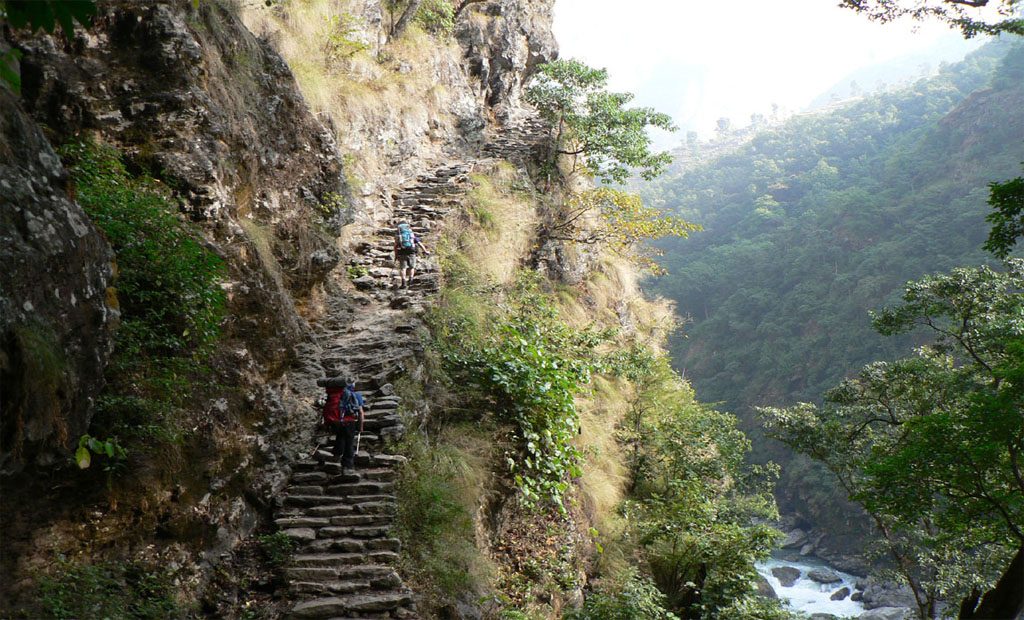
Trek to Jagat (1345m) 6-7 hrs walk:-The narrow trail makes some minor ups and downs and eventually crosses the Tharo Khola, flowing in a rocky ravine, then reaches Khorlabesi. After a few more ups & downs there is a small trailside hot spring, from where we reach to Tatopani. From the Hot spring, we climb over another ridge, then cross the Budhi Gandaki on a suspension bridge. Climb on a wide, well-crafted staircase, then across a landslide and over a ridge to Dobhan. Crossing a suspension bridge over the Dobhan Khola, the trail climbs on a rugged trail to Duman. Ascending up again to the Budhi Gandaki, we reach Yaru Khola. Crossing a suspension bridge over the Yaru Khola we climb the stone stairs and then drop to the river and again climb more stone stairs to Tharo Bharyang. Cross to the west bank of the Budhi Gandaki, climb over a ridge, and trek along the river then climb towards the village of Jagat. Meals included: Breakfast Lunch and Dinner.
Trek to Lakpa (2240m), 6 hrs walk:- After completing with the ACAP procedure, we climb over a rocky ridge to Salleri, and then descend to Sirdibas. The valley widens a bit as the trail continues up to Ghatta Khola. Continue upstream to a long simple hanging bridge. Climb up to Philim, a large Gurung village. Philim valley is well known for Japanese made school and police station. Walk past Philim to the north across a forest with the views of the narrowing valley and walk up north from Gum Pul we reach Lokpa. Stay overnight at Lokpa. Meals included: Breakfast Lunch and Dinner.
Trek Chumling (2386m) (Lower Tsum); 4-5 hrs walk:- From Lokpa the trail descend half an hour towards Lungwa Khola and climbing Jick jack difficult trail further two hours north through pines and rhododendrons we reach Gumlung. Crossing the Siyar Khola, finally arrive at Chumling, Lower Tsum, from where we can view Shringi Himal. Visit the old Chumling gompa and the stone streets of the village. Stay overnight at Lokpa. Meals included: Breakfast Lunch and Dinner.
Trek to Chhokangparo (3031m), 4-5 hrs walk:- Cross the suspension bridge onto the opposite bank. Enjoy the great views of Ganesh Himal. Walk past Rainjam to Serpu Khola crossing another bridge we arrive at the Gho Village. Another continues 2 hours climb to Tsum takes us to the village of Chhokangparo. Weather permitting; enjoy the views of Himalchuli at 7893 meters and Ganesh Himal at7140m. Stay overnight at Chokhangparo. Meals included: Breakfast Lunch and Dinner.
Trek to Nile (3347m) via Milarepa Cave, 5-6 hrs walk:- We trek through the villages of Ngakyu. Leru, Lama Gaun today. We will visit a cave and pay homage. It is believed that saint Milarepa had meditated here in the cave; (admission fee to visit the cave was NPR 300/U$3) the cave is also known as Piren Phu meaning “Pigeon cave. We continue passing Burji, Phurbe and Pangdun villages, there is magnificent big Buddhist Stups is sighted on the way to Chhule and Nile. Stay overnight in the Nile. Meals included: Breakfast Lunch and Dinner.
Excursion Mu Gompa (3700 m) and Dhephyudonma Gompa (4060m) 5-6 hrs. walk:- We are now almost close to the Tibetan border. Walk to the west bank of the valley through the Tibetan landscapes. Climb up to the Mu Gompa. We also visit the monastery. Then after, we make a visit to the Dhephu Doma Gompa. Today we make a sightseeing of the whole Mu Gompa Region. Mu Gompa is the largest monastery in the region. The Gompa lies at the highest and most remote part of the Tsum Valley. After exploring the Mu Gompa area and Stay overnight at the Nile. Meals included: Breakfast Lunch and Dinner.
Trek to Chhekamparo (3031m), 4-5 hrs walk:- Today it is an easy walk to Chhekamparo from the Nile. We trek passing through Lar Village visit the Rachen Gompa, which is also well known as Nunnery Gompa too, cross over a suspension bridge and trek to Chhekamparo via same trail back. Stay overnight in Chhekamparo, Meals included: Breakfast Lunch and Dinner.
Trek to Gumpa Lungdang (3200m), 6 hrs walk:- The trail drops down from Chhekamparo to Gho and then cross Dumje Bridge. We can visit an Amchi, a Tibetan Traditional clinic and there. There is a nun; teaches some 10-21 young nun and runs small Amchi. She welcomes the visitor by Tibetan tea, we walk up about 2-3 hours that takes us to Gumba Lungdang, their basic shelter and meals are provided by monastery. Wilderness Excursion will provide a tent and extra meal our client’s visiting Gumba Lungdang. Meals included: Breakfast Lunch and Dinner.
Ganesh Himal Base Hike:-Day 15: Trek to Lokpa, 6-7 hrs. walk –We trek to Lokpa today via Ripchet village, walk down to Dunje from Gumba Lungdang and walk through the pine forest and reaching Ripchet and trail goes down steeply and retrace the same way back to Lokpa. Stay overnight in Lukla. Meals included: Breakfast, Lunch, and Dinner.
15: Trek to Jagat, 6-7 hrs walk:-Today, after breakfast at Lokpa, we walk down to Jagat. The trail goes down to Ghumpul through the pine and rhododendron forest and joins to the main Manaslu trail again, We continue to walk passing through Eklai Bhatti, Philim, crossing Buddhi Gandaki before reaching Sirdibas and finally to Jagat. Stay overnight in Jagat. Meals included: Breakfast, Lunch and Dinner.
Trek to Lapubesi 6-7 hrs walk:- From Jagat, the trail goes down to Bagar after walking some 15 minutes then cross the suspension bridge and walk through cantilever bridge that was built after the Nepal earthquake that hit the country so badly and causes famous Manaslu trekking trail damage. Continue the journey via Dovan, Tatopani (hot spring), Khorlabesi and finally I stay overnight in Lapubesi. Meals included: Breakfast, Lunch and Dinner.
Trek to Arughat, approximately 6-7 hrs walk:- Today is the last day of our trekking in Tsum Valley. We walk to Arughat from Lapu Besi. Meals included: Breakfast, Lunch and Dinner.
Drive to Kathmandu from Arughat, 7-8 hrs drive:-We drive to Kathmandu by local bus. There is no tourist bus available at Arughat. Wilderness Excursion can arrange 4WD private jeep that is more comfortable and safer drive if you would not like the local bus that is overloaded sometimes, playing non-stop music. .A farewell dinner is organized by Wilderness Excursion in one of the authentic Nepalese restaurants. Stay overnight in Kathmandu. Meals included: Dinner
Departure from Kathmandu to home country:-Our adventure trip in Nepal with Wilderness Excursion comes to the end. We will drop you at the international airport and see you off. Fly back to home or further destination. Meals included: Breakfast.
Useful Info
Tsum Valley, known as the "Hidden Valley," is a remote and sacred Himalayan valley located in northern Gorkha District, Nepal. It lies within the Manaslu Conservation Area and offers breathtaking landscapes, ancient Buddhist monasteries, and a unique Tibetan-influenced culture.
Highlights of Tsum Valley Trek
Rich Tibetan Buddhist Culture: Ancient monasteries like Mu Gompa & Rachen Gompa are remote Crowded: Fewer trekkers compared to other Nepal trekking routes. Sacred Land—Home to Milarepa’s meditation caves, Scenic Beauty: Stunning views of Ganesh Himal, Sringi Himal, and Boudha Himal. Wildlife & Nature: Rare species like Himalayan Thar and Blue sheep, Trekking Permit & Fees: Since Tsum Valley is a restricted area, special permits are required: Tsum Valley Restricted Area Permit (RAP): USD 40 per person per week (Sept-Nov), USD 30 per person per week (Dec-Aug) Manaslu Conservation area Permit (MCAP) Annapurna Conservation Area Permit (ACAP):
Best Time to Visit
Spring (Mar-May): Best weather, blooming rhododendrons.
Autumn (Sept-Nov): Clear skies, best mountain views.
Winter (Dec-Feb): cold but beautiful with snow.
Monsoon (Jun-Aug): Heavy rain, landslides, not recommended.
Difficulty Level & Fitness Moderate to Challenging: Requires good fitness
Max Altitude: Mu Gompa (3,700 m)—no extreme altitude risks but acclimatization is needed
Daily Walking Hours: 5-7 hours
Accommodation:
Tea Houses & Lodges: Basic facilities, mostly local-style room
Packing Essentials
Warm Layers – Cold mornings & nights
Sleeping Bag: Tea houses provide blankets, but extra warmth is needed.
Trekking Poles: Useful for steep sections.
Water Purification: Bottled water is limited
How to Book the Tsum Valley Trek?
Since it’s a restricted area, you must trek with a registered trekking agency and be in a group of at least two trekkers with a licensed guide.
Gallery
FAQs
-
Where is Tsum Valley located?
Tsum Valley is a remote and sacred Himalayan valley in the northern part of the Gorkha district, Nepal. It lies near the border of Tibet and is part of the Manaslu Conservation Area.
-
What is the best time for the Tsum Valley Trek?
The best seasons for trekking in Tsum Valley are: Spring (March-May): Clear skies, moderate temperatures, and blooming rhododendrons. Autumn (September-November): Stable weather, clear views, and comfortable trekking conditions. Monsoon (June-August) is less ideal due to rain, while winter (December-February) can be challenging due to snowfall and extreme cold.
-
How long does the Tsum Valley Trek take?
The trek usually takes 14-18 days, depending on the itinerary and walking pace.
-
How difficult is the Tsum Valley Trek?
Tsum Valley Trek is a moderate to challenging trek. The trails are rugged, with several ascents and descents. The highest point is Mu Gompa (3,700m), so altitude sickness can be a concern.
-
Do I need a permit for the Tsum Valley Trek?
Yes, you need the following permits: Restricted Area Permit for Tsum Valley (issued by the Department of Immigration, Nepal). Manaslu Conservation Area Permit (MCAP). Annapurna Conservation Area Permit (ACAP) (if combining with Manaslu Circuit). A registered trekking agency is required to arrange the permits, and at least two trekkers with a licensed guide are mandatory.
-
What is the highest altitude on the Tsum Valley Trek?
The highest point of the trek is Mu Gompa (3,700m). If combined with Manaslu Circuit, the trek crosses Larke Pass (5,160m).
-
Is altitude sickness a concern in Tsum Valley?
Yes, altitude sickness can be a risk as you trek above 3,000m. Proper acclimatization, staying hydrated, and ascending gradually help prevent it.
-
What kind of accommodation is available?
Basic teahouses and lodges are available along the route. The facilities are simple, with basic food options and limited electricity and internet.
-
How do I get to the Tsum Valley Trek starting point?
How do I get to the Tsum Valley Trek starting point?
-
Is there mobile network and Wi-Fi in Tsum Valley?
Mobile network coverage is limited or unavailable in many areas. Some teahouses provide Wi-Fi for an extra charge, but it is slow and unreliable.
-
What kind of food is available?
Teahouses offer basic meals like: Dal Bhat (rice and lentils) Noodles and soups Tibetan bread and pancakes Momos (dumplings) Tea, coffee, and local drinks