

Trip overview
Overview—Annapurna Base Camp (ABC) via Ghorepani Poon Hill 9-Day Trek
The Annapurna Base Camp (ABC) via Ghorepani Poon Hill trek is one of the most beautiful and rewarding trekking journeys in the Annapurna region of Nepal. This route combines two famous trails into one unforgettable adventure. On one hand, it includes the classic Ghorepani Poon Hill section, well known for its sunrise mountain views. On the other hand, it continues deeper into the heart of the Himalayas to reach Annapurna Base Camp, surrounded by towering snow peaks. Because of this combination, the trek offers both gentle village walks and high mountain scenery. Moreover, trekkers enjoy cultural encounters, rich forests, and dramatic alpine landscapes in a single journey.
Introduction
This trek suits travelers who want a complete Annapurna experience without rushing. First, it leads through charming Gurung and Magar villages. Then, it passes through rhododendron forests and terraced farmland. After that, the trail climbs higher into glacial valleys and mountain amphitheaters. Eventually, trekkers reach Annapurna Base Camp at 4,130 meters, standing face to face with Annapurna I, Machhapuchhre, Hiunchuli, and Annapurna South. Therefore, this trek feels balanced, scenic, and deeply satisfying for both first-time trekkers and experienced hikers.
Location
The Annapurna Base Camp via Ghorepani Poon Hill trek lies in the central Himalayan region of Nepal, inside the Annapurna Conservation Area. Specifically, it is located north of Pokhara city in western Nepal. The route begins in the lower Annapurna foothills and gradually moves toward the high mountain basin of Annapurna Sanctuary. Since the area is protected, trekkers walk through well-preserved forests, rivers, and mountain landscapes. At the same time, the trail connects many traditional settlements that still follow old customs and lifestyles.
How to Reach and Transportation
First, travelers arrive in Kathmandu, the capital city of Nepal. From there, they travel to Pokhara by tourist bus, private vehicle, or short flight. Pokhara serves as the main gateway to the Annapurna region. After reaching Pokhara, the journey continues by jeep or local transport to Nayapul or Ulleri, depending on the itinerary. From this point onward, the trek begins on foot. Throughout the trek, well-maintained trails, suspension bridges, and stone steps guide trekkers safely from village to village.
Main Attractions
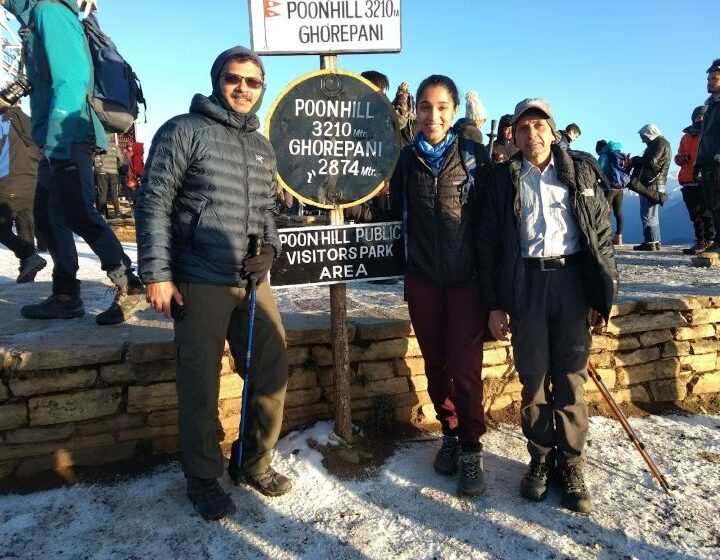
This trek offers many highlights, and each day feels different from the last. One of the biggest attractions is the sunrise view from Poon Hill. Early in the morning, trekkers climb to the viewpoint and watch golden sunlight touch Dhaulagiri, Annapurna South, and Machhapuchhre. Another major attraction is the Annapurna Sanctuary itself, a natural mountain bowl surrounded by towering peaks. In addition, the trek includes hot springs at Jhinu Danda, peaceful forests, deep valleys, and close-up mountain views. Because of these varied attractions, the journey never feels repetitive.
What We See on the Trek
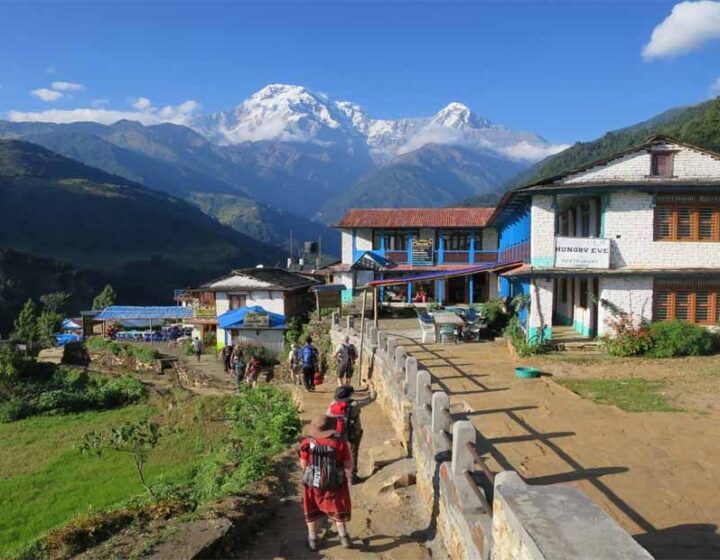
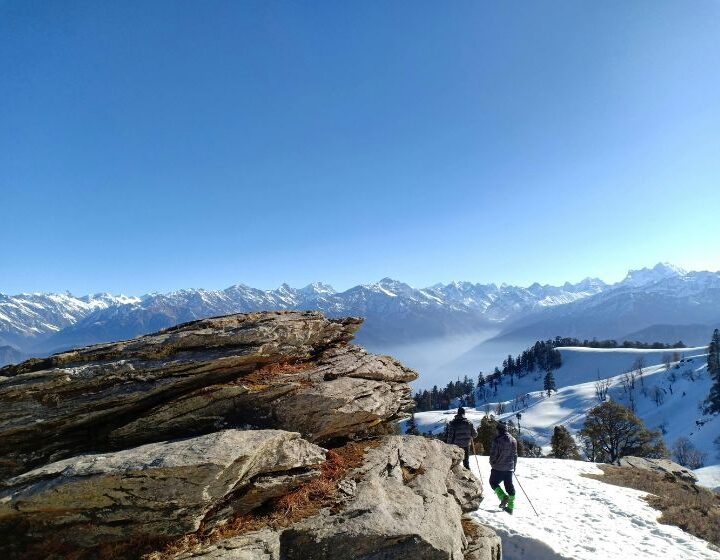
Along the trail, trekkers see a wide range of landscapes and natural beauty. At lower elevations, they walk through terraced rice fields, waterfalls, and subtropical forests. As the trail climbs higher, dense rhododendron and oak forests dominate the scenery. During spring, these forests bloom with red, pink, and white flowers. Gradually, the vegetation changes, and the landscape becomes more open and alpine. Near Annapurna Base Camp, trekkers see glaciers, moraine fields, and massive snow-covered peaks rising all around them.
Difficulty Level
The Annapurna Base Camp via Ghorepani Poon Hill trek is considered a moderate trek. While it does not require technical climbing skills, it does demand good physical fitness. The trail includes many stone staircases, especially between Ulleri and Ghorepani. However, the daily walking hours remain manageable. Moreover, the gradual ascent allows proper acclimatization. With steady walking, regular breaks, and a positive mindset, most trekkers can complete this trek comfortably. Therefore, it suits both active beginners and seasoned trekkers.
People Along the Trail
Throughout the trek, trekkers meet friendly local people who welcome visitors warmly. The region is mainly home to Gurung and Magar communities. These people have lived in the mountains for generations and maintain a strong connection to nature. Along the way, lodge owners, guides, and porters greet trekkers with smiles and hospitality. As a result, the journey feels personal and welcoming rather than commercial or impersonal.
Culture, Lifestyle, and Religion
The cultural experience forms an important part of this trek. Villages along the route reflect a simple mountain lifestyle based on farming, animal husbandry, and tourism. Stone houses, prayer flags, and small monasteries appear frequently along the trail. Buddhism and Hinduism both influence daily life in the region. Moreover, trekkers often see mani walls, prayer wheels, and chortens, especially as they move higher. Because of this cultural richness, the trek feels meaningful as well as scenic.
How Crowded Is the Trek
Compared to the Everest region, the Annapurna Base Camp via the Ghorepani Poon Hill trek is busy but not overwhelming. Poon Hill is more crowded during sunrise, especially in peak seasons. However, once the trail moves beyond Ghorepani and into the Annapurna Sanctuary, the number of trekkers spreads out. Therefore, trekkers still find quiet moments, especially in the afternoons and evenings. With proper planning and early starts, crowd pressure remains manageable.
Flora and Fauna
The Annapurna Conservation Area is rich in biodiversity. Along the trek, trekkers may see monkeys, Himalayan thar, langurs, and various bird species. Although rare, the area is also home to snow leopards and musk deer at higher elevations. In addition, the forests support a wide range of plant life, from subtropical species to alpine shrubs. Because of this diversity, nature lovers find the trek especially rewarding.
Vegetation
Vegetation changes clearly as altitude increases. At lower levels, bamboo, banana plants, and ferns dominate the landscape. As the trail climbs, rhododendron, oak, and pine forests become common. Near the upper valleys, vegetation thins out, and only hardy alpine plants survive. This gradual transition helps trekkers understand how nature adapts to altitude and climate.
Overall Atmosphere
The atmosphere of the trek feels balanced and peaceful. In the early days, villages feel lively and social. Later, the trail becomes quieter and more reflective as mountains take center stage. Clear air, flowing rivers, and towering peaks create a calm and inspiring environment. Ultimately, reaching Annapurna Base Camp brings a deep sense of achievement and connection with the Himalayas.
Best Time to Do the Trek
The best seasons for this trek are spring (March to May) and autumn (September to November). In spring, flowers bloom, and the forests come alive with color. In autumn, the weather remains stable, and mountain views appear sharp and clear. While winter treks are possible, heavy snow may block higher sections. Monsoon season brings rain and leeches, so it is less popular.
Why Join The Himalayan Realms Treks for This Journey
Choosing The Himalayan Realms Treks and Expedition Nepal Pvt. Ltd. ensures a safe, comfortable, and well-organized trekking experience. With decades of Himalayan experience, our team understands both the trail and the needs of trekkers. We provide experienced local guides, proper acclimatization planning, and flexible itineraries. Moreover, we focus on responsible tourism that supports local communities. Because of our personal service and deep regional knowledge, your trek becomes smoother and more meaningful.
Trek Connections with Other Routes
The Annapurna Base Camp via the Ghorepani Poon Hill trek connects easily with other popular routes. Trekkers can extend the journey toward Mardi Himal, Khopra Danda, or even link it with parts of the Annapurna Circuit. Because of these connections, the trek remains flexible and customizable. This makes it ideal for travelers who want more exploration without changing regions.
Conclusion
In conclusion, the Annapurna Base Camp via Ghorepani Poon Hill trek offers a complete Himalayan experience. It blends mountain views, cultural encounters, forest walks, and high-altitude adventure into one rewarding journey. With moderate difficulty and rich scenery, it suits a wide range of trekkers. When guided by The Himalayan Realms Treks and Expedition Nepal Pvt. Ltd., the journey becomes safer, deeper, and more enjoyable. Ultimately, this trek leaves lasting memories and a strong connection to the Annapurna Himalayas.
Itinerary
The journey begins with a morning drive from Pokhara to Nayapul and onward to Ulleri by jeep, starting around 8:00 am. After lunch, the trek gradually ascends toward Ghorepani, passing stone staircases, terraced fields, and lively Magar villages. Along the trail, trekkers walk beside rivers and waterfalls while enjoying fresh mountain air. As elevation increases, the landscape changes noticeably, and distant Himalayan peaks begin to appear through the trees. Arrival in Ghorepani is usually around 4:00 pm. The main highlight of the day is the first clear sense of being deep in the Annapurna region, surrounded by forests and mountain scenery.
Early in the morning, trekkers hike to Poon Hill before sunrise to witness one of Nepal’s most famous mountain panoramas. Annapurna, Dhaulagiri, Machhapuchhre, and Nilgiri glow with golden light as the sun rises. After returning to Ghorepani for breakfast, the trek continues toward Tadapani through dense rhododendron forests and quiet ridgelines. The trail undulates gently, offering occasional viewpoints and peaceful forest sections filled with birdsong. Arrival at Tadapani is usually in the mid-afternoon. The highlight of the day is the unforgettable sunrise at Poon Hill, followed by a scenic forest walk that showcases the natural beauty of the Annapurna foothills.
Leaving Tadapani after breakfast, the trail descends through lush forests toward the Kimrong Khola, crossing suspension bridges and passing small settlements. The route then climbs steadily to the beautiful Gurung village of Chhomrong, perched on a hillside facing Annapurna South and Machhapuchhre. Throughout the day, trekkers enjoy changing landscapes, from cool forest paths to open village trails with dramatic mountain backdrops. Chhomrong is reached by mid to late afternoon, allowing time to explore the village and relax. The highlight of the day is the wide-ranging Annapurna–Dhaulagiri panorama combined with the welcoming atmosphere of one of the region’s most important mountain villages.
The trek from Chhomrong to Dovan begins with a steep descent on stone steps, followed by a crossing of the Chhomrong Khola. From there, the trail gradually ascends through bamboo groves, dense forests, and narrow valleys as the route enters the deeper Annapurna Sanctuary area. The environment becomes quieter and more alpine, with fewer villages and a stronger sense of wilderness. Walking beside the Modi Khola, trekkers reach Dovan in the afternoon. The highlight of the day is the transition into a more remote mountain landscape, where traditional Gurung culture blends with the raw beauty of the inner sanctuary.
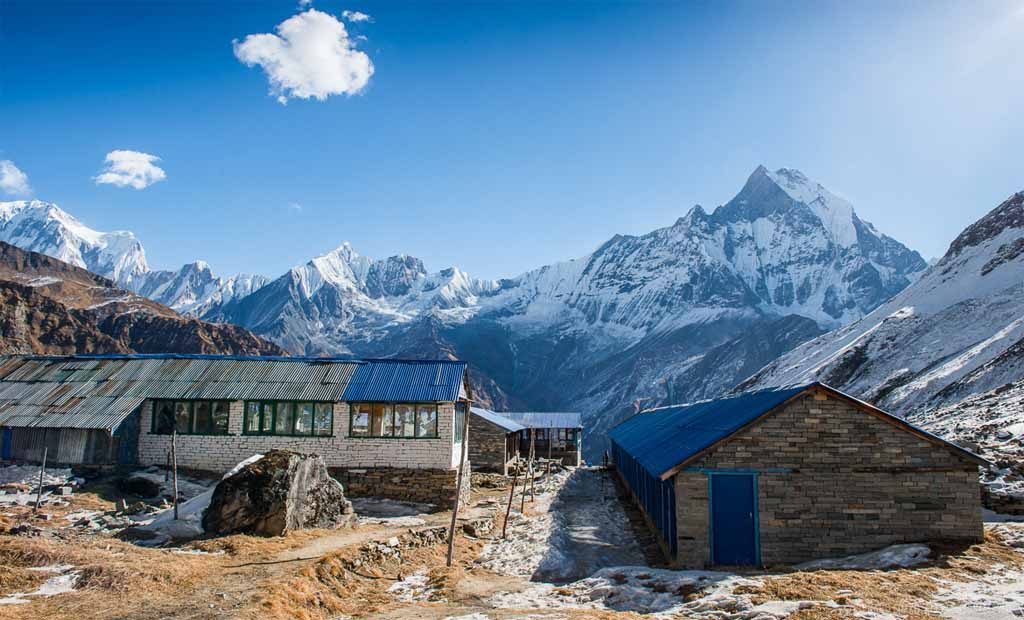
This is the most significant and rewarding day of the trek. Starting early, trekkers pass through Deurali and Machhapuchhre Base Camp, where the valley opens into the vast Annapurna Sanctuary. Towering peaks surround the trail from all sides, creating a dramatic natural amphitheater. The air becomes thinner as the path gently climbs toward Annapurna Base Camp. Arrival is usually by early afternoon, allowing time to rest and absorb the scenery. The highlight of the day is standing at Annapurna Base Camp itself, surrounded by Annapurna I, Annapurna South, Hiunchuli, and Machhapuchhre, one of the most awe-inspiring settings in the Himalayas.
After enjoying sunrise over the surrounding peaks, the descent begins from Annapurna Base Camp. The return journey retraces the route through Machhapuchhre Base Camp and Deurali, gradually losing altitude. The landscape shifts from icy alpine terrain back to forests and river valleys. Walking downhill allows trekkers to breathe more easily while still enjoying impressive views of glaciers, cliffs, and waterfalls. Bamboo is reached by mid to late afternoon. The highlight of the day is the close-up view of glaciers and the sense of accomplishment after reaching and departing from the heart of the Annapurna Sanctuary.
The trail continues downhill through bamboo and rhododendron forests, crossing rivers and small settlements. After reaching Chhomrong, the route climbs gently to Jhinu Danda, a peaceful village known for its natural hot springs. Arrival is usually early enough to allow a visit to the hot springs, which lie a short walk downhill near the river. Soaking in the warm pools provides welcome relief for tired muscles after several days of trekking. The highlight of the day is relaxing in the Jhinu hot springs while listening to the sound of the river and reflecting on the journey.
The final day begins with a short trek from Jhinu to the road head, passing terraced fields and small villages. After reaching the pickup point, the drive back to Pokhara follows scenic rural roads and river valleys. As the mountains slowly fade into the distance, trekkers return to the comfort of the lakeside city. The afternoon is free for rest, shopping, or enjoying Pokhara’s relaxed atmosphere. The highlight of the day is the smooth and comfortable return, marking the completion of a memorable Annapurna Base Camp trek via Ghorepani Poon Hill.
Included
- All airport, hotel airport transfers.
- Kathmandu to Pokhara by deluxe tourist bus fare
- Transfers Pokhara to Kyomi by jeep
- Conservation & TIMS permit.
- Accommodation in the tea house
- Food, Tea/coffee during trek.
- Guide: – including salary, insurance, equipment, flight, food and lodging.
- Porter: – including salary, insurance, equipment, food and lodging.
- For guest: -Down jacket, Good sleeping bag (down jacket and sleeping bag are to be returned after trip completion).
- Transfer from Kyomi l to Pokhara by jeep
- Transfare from Pokhara to Kathmandu by Deluxe tourist bus.
Not Included
- 2-night hotel in Kathmandu
- Food in Kathmandu ( Lunch & Dinner).
- 2-night hotel in Pokhara
- Bakery food during the trek.
- Nepal Visa fee.
- International airfare.
- Extra night accommodation in Kathmandu.
- Travel and rescue insurance if guest get mountain sickness and need to rescue helicopter.
- Personal expenses example (phone calls, laundry service , bar bills, battery recharge, WIFI charge, extra porters, bottle water or boiled water, shower etc.)
- Sightseeing sport fees. tours guide cost and vechicle cost
- Tips for guide and porters
Join Us Upcoming Trips
Book this trip with us. Here are the upcoming dates. Feel free to share this trip with your friends and family. For custom trips or general inquiries contact us.
| Departure Date | Trip Duration | Price | Status | |
|---|---|---|---|---|
| 05 March, 2026 | 9 days | USD $1245 | Fixed departure | |
| 15 March, 2026 | 9 days | USD $1245 | Fixed departure | |
| 25 March, 2026 | 9 days | USD $1245 | Fixed departure | |
| 10 April, 2026 | 9 days | USD $1245 | Fixed departure | |
| 25 April, 2026 | 9 days | USD $1245 | Fixed departure | |
| 02 May, 2026 | 9 days | USD $1245 | Fixed departure | |
| 10 May, 2026 | 9 days | USD $1245 | Fixed departure | |
| 15 May, 2026 | 9 days | USD $1245 | Fixed departure | |
| 24 September, 2026 | 9 days | USD $12145 | Fixed departure | |
| 05 September, 2026 | 9 days | USD $1245 | Fixed departure | |
| 15 September, 2026 | 9 days | USD $1245 | Fixed departure | |
| 25 September, 2026 | 9 days | USD $1245 | Fixed departure | |
| 03 October, 2026 | 9 days | USD $1245 | Fixed departure | |
| 15 October, 2026 | 9 days | USD $1245 | Fixed departure | |
| 25 October, 2026 | 9 days | USD $1245 | Fixed departure | |
| 06 November, 2026 | 9 days | USD $1245 | Fixed departure | |
| 15 November, 2026 | 9 days | USD $1245 | Fixed departure | |
| 26 November, 2026 | 9 days | USD $1245 | Fixed departure | |
| 04 December, 2026 | 9 days | USD $1245 | Fixed departure | |
| 15 December, 2026 | 9 days | USD $1245 | Fixed departure |
Useful Info
Overview
The Annapurna Base Camp trek via Ghorepani Poon Hill is one of the most rewarding trekking routes in the Annapurna region. It combines the famous sunrise viewpoint of Poon Hill with the dramatic mountain amphitheater of Annapurna Base Camp. This route offers a perfect mix of cultural villages, rhododendron forests, hot springs, and close-up Himalayan scenery, making it suitable for first-time trekkers as well as experienced hikers.
Trek Duration and Distance
The trek usually takes 10–12 days, depending on pace, acclimatization, and side trips like Jhinu Hot Spring. Daily walking time ranges from 4 to 7 hours, covering 8–15 km per day. The route is well-paced, with gradual altitude gain.
Maximum Altitude
The highest point is Annapurna Base Camp at 4,130 meters (13,550 feet). Poon Hill stands at 3,210 meters (10,531 feet). The gradual ascent helps reduce the risk of altitude sickness.
Difficulty Level
This trek is moderate. There are many stone steps, especially between Ulleri and Ghorepani, and some long uphill days. However, no technical climbing is required. Anyone with reasonable fitness and some walking preparation can complete it comfortably.
Best Time to Trek
The best seasons are spring (March–May) and autumn (September–November). Spring offers blooming rhododendrons and mild weather, while autumn provides clear skies and sharp mountain views. Winter is quieter but cold at higher elevations, and monsoon season is greener but slippery and cloudy.
Accommodation and Food
Accommodation is in tea houses throughout the route. Rooms are basic but comfortable, usually twin-sharing. Meals include dal bhat, noodles, pasta, soup, rice, potatoes, and eggs. Food becomes simpler and more expensive as altitude increases.
Permits Required
You need two permits:
- Annapurna Conservation Area Permit (ACAP) and TIMS Card
These are easily arranged in Kathmandu or Pokhara.
Cultural Experience
The trail passes through Gurung and Magar villages such as Ghandruk, Tadapani, and Chhomrong. You’ll experience traditional mountain lifestyles, local monasteries, prayer flags, and warm village hospitality.
Scenery and Highlights
Key highlights include:
Sunrise over Dhaulagiri and Annapurna from Poon Hill
Rhododendron and oak forests
Deep Modi Khola valley
Machapuchare (Fishtail) views
Natural Jhinu Hot Springs
360-degree Himalayan views at Annapurna Base Camp
Crowds and Trail Condition
This is a popular trek, but the Ghorepani route spreads trekkers out, making it less crowded than the direct ABC trail. Paths are well-maintained stone steps and forest trails.
Packing Essentials
Key items include good trekking boots, warm layers, a rain jacket, trekking poles, sunscreen, water purification tablets, and a sleeping bag for colder nights. Porters can be hired to reduce the load.
Connectivity and Charging
Mobile networks work in some villages but are unreliable higher up. Charging and Wi-Fi are available in tea houses for an extra cost.
Why Choose ABC via Ghorepani Poon Hill
This route is ideal because it offers more variety than the standard ABC trek. You get classic viewpoints, cultural depth, natural hot springs, and a safer, more gradual ascent—all in one journey.
FAQs
-
What is the ABC via Ghorepani Poon Hill trek?
This trek combines the famous Poon Hill sunrise viewpoint with the classic Annapurna Base Camp route. It offers mountain panoramas, cultural villages, and a high-altitude base camp experience in one journey.
-
What is the highest altitude reached?
The highest point is Annapurna Base Camp at 4,130 meters (13,550 feet).
-
How difficult is this trek?
It is a moderate trek. Daily walks are 5–7 hours. Some days include long stone staircases, especially around Ghorepani and Chhomrong.
-
What makes this route special compared to the direct ABC trek?
This route includes Poon Hill, known for one of Nepal’s best sunrise views over Annapurna and Dhaulagiri. It also passes through more villages and forests.
-
How crowded is this trek?
Poon Hill is busy during peak seasons. However, after Tadapani, the trail becomes quieter until it joins the main ABC route.
-
What kind of accommodation is available?
Accommodation is in tea houses. Rooms are simple but comfortable. Most have twin beds, blankets, and shared bathrooms.
-
What food is available on the trek?
You can find Nepali, Asian, and Western meals. Dal Bhat, noodles, soup, pasta, rice, and potatoes are common. Hot drinks are widely available.
-
When is the best time to do this trek?
The best seasons are March–May (spring) and September–November (autumn). These months offer clear views and stable weather.
-
What permits are required?
You need an Annapurna Conservation Area Permit (ACAP) and a TIMS card.
-
Why choose Himalayan Realms Treks for this trek?
Himalayan Realms Treks offers experienced local guides, flexible itineraries, strong safety focus, and deep regional knowledge, ensuring a smooth and meaningful trekking experience.