

Trip overview
Overview: Jomsom Muktinath 8-day Trek
The Jomsom Muktinath Trek is one of Nepal’s most spiritually significant and scenically captivating routes. Combining natural beauty, cultural depth, and sacred heritage, this trek offers an experience unlike any other in the Annapurna region. Starting in the bustling town of Jomsom and continuing to the sacred heights of Muktinath Temple, trekkers traverse the Kali Gandaki Valley, all the while passing traditional Tibetan-influenced villages, ancient monasteries, high desert landscapes, and dramatic Himalayan peaks. Although the trail is accessible, it remains remote, which makes it ideal for those seeking a balance between adventure, culture, and spirituality.
In contrast to the lush southern slopes of the Annapurna region, the route toward Muktinath passes through the rain-shadow zone of Mustang, where wind, altitude, and arid conditions have shaped a high Himalayan desert landscape. Here, deep valleys carved by the Kali Gandaki River, wide plateaus, and eroded cliffs create a striking contrast against the snow-capped peaks of Dhaulagiri (8,167 m), Nilgiri (7,061 m), and Annapurna II (7,937 m). Consequently, the scenery is both raw and serene, allowing trekkers to experience the Himalayas in a profoundly intimate and spiritual way.
A Journey of Spiritual and Cultural Significance
The Jomsom Muktinath Trek is not only a trekking adventure but also a pilgrimage of immense religious importance. At the heart of this journey lies the Muktinath Temple, situated at 3,800 meters, revered by both Hindus and Buddhists. Known as the “Temple of Liberation,” it attracts pilgrims seeking spiritual cleansing and blessings. Here, they perform ritual baths in sacred natural springs, circle the temple while spinning prayer wheels, and make offerings. For trekkers, witnessing these sacred rituals provides a deep understanding of Himalayan spirituality and faith.
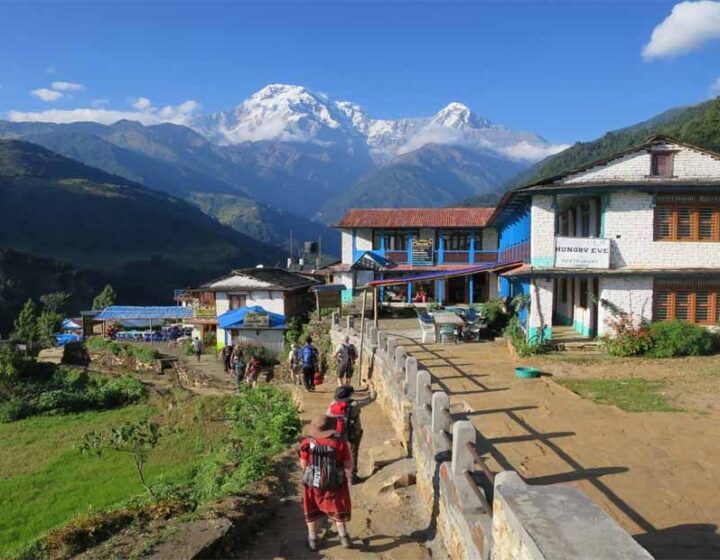
Along the trail, trekkers encounter centuries-old monasteries, chortens (stupas), mani walls, and prayer flags that reflect Tibetan Buddhist culture. Villages such as Marpha, Kagbeni, Jharkot, and Lupra have preserved traditional lifestyles with little modern influence. As a result, visitors gain a clear glimpse into the enduring customs of the local people. Stone houses, terraced barley fields, and yak-grazing communities together portray daily life in the Himalayan high desert.
Moreover, the cultural richness along the trail is complemented by the unique hospitality of the local people, who welcome visitors warmly despite limited interaction with the outside world. Additionally, trekkers can observe local festivals, traditional farming practices, and monastic rituals, which together create a highly immersive trekking experience.
Geographic and Environmental Setting
The Jomsom Muktinath Trek lies within the Annapurna Conservation Area, Nepal’s largest protected region. However, the landscape here differs markedly from greener southern Annapurna trails. The Kali Gandaki River, one of the world’s deepest gorges, slices between the Annapurna and Dhaulagiri ranges, creating dramatic cliffs and canyon walls that rise thousands of meters on either side.
The terrain gradually transitions from fertile riverbanks to arid high desert as trekkers approach Muktinath. The upper reaches of the valley are wind-swept, barren, and rocky, with hardy shrubs, juniper, and scattered pine forests. Despite the semi-arid conditions, the area supports a variety of wildlife, including blue sheep, Himalayan foxes, snow leopards (rarely seen), and numerous bird species. Trekkers experience both agricultural landscapes with barley and buckwheat terraces and untouched natural areas, thus providing a balanced encounter with human culture and, at the same time, wilderness.
Regarding altitude, the gain is moderate, starting from Jomsom (2,700 m) and ascending gradually to Muktinath (3,800 m). Although it is lower than treks crossing 5,000+ meter passes, the route still requires acclimatization, especially for those sensitive to altitude. Furthermore, while the trail itself is non-technical, exposure to strong winds, sun, and temperature variations means that proper preparation is essential.
How to Reach the Jomsom Muktinath Trek
Kathmandu to Pokhara
Most travelers start from Kathmandu, flying to Pokhara, which takes approximately 25 minutes. The flight offers stunning aerial views of the Trishuli River, terraced hills, and glimpses of the Annapurna range. Alternatively, road travel from Kathmandu to Pokhara takes 6–8 hours, passing through traditional towns, terraced landscapes, and scenic rivers.
Pokhara to Jomsom
From Pokhara, an early morning mountain flight or jeep ride takes trekkers to Jomsom. Afternoon winds are strong and may cause flight delays, so flexibility is essential. The Jomsom airstrip offers a dramatic start to the trek, surrounded by high cliffs and the Kali Gandaki Valley below.
Jomsom to Muktinath
The trek begins in Jomsom, following the valley northward. The trail passes through Marpha, famous for apple orchards and local whiskey, and Kagbeni, the gateway to Upper Mustang and an ancient trading hub. Trekkers continue through Jharkot and Lupra, visiting monasteries, mani walls, and traditional villages before reaching Muktinath Temple.
Major Attractions Along the Trek
Muktinath Temple
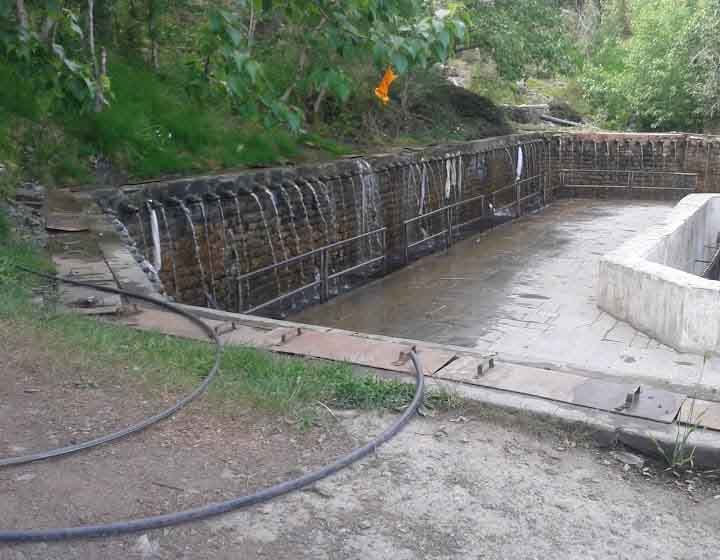
The highlight of the trek, Muktinath Temple, is sacred for both Hindus and Buddhists. The temple complex contains 108 sacred water spouts, where devotees perform purification rituals, and a large golden statue of Lord Vishnu. Buddhist monks often conduct prayers nearby, adding to the spiritual atmosphere.
Marpha Village
Known for its apple orchards, local brandy, and unique stone houses, Marpha is a charming village offering a cultural pause. Visitors can witness traditional farming, taste local cuisine, and explore narrow alleys lined with Buddhist symbols.
Kagbeni Village
Kagbeni is a traditional settlement at the junction of the Jhong River and the Kali Gandaki River, acting as the entrance to Upper Mustang. Trekkers can explore narrow streets, visit ancient gompas, and observe Tibetan-influenced customs that have survived for centuries.
Jharkot and Lupra Monasteries
These villages host small but significant monasteries. Lupra is particularly famous for its cliff-side settlement and panoramic views of surrounding peaks, providing insight into Tibetan Buddhist life in remote areas.
Kali Gandaki Gorge
The trail along the Kali Gandaki Gorge offers breathtaking views of the towering Annapurna and Dhaulagiri ranges. The gorge is home to one of the deepest river valleys in the world, offering a dramatic backdrop throughout the trek.
Trekking Experience and Scenery
The daily experience on the Jomsom Muktinath Trek is varied and visually rewarding. Wide valley floors, terraced fields, and villages gradually transition into arid, rocky landscapes. The trail passes through red, gray, and yellow cliffs sculpted by centuries of wind and erosion. Yaks, horses, and sheep graze along the route, and occasional wildlife sightings enrich the trek with nature encounters.
The trail balances human settlements with wilderness, allowing trekkers to interact with local communities while also enjoying solitude and serenity. Furthermore, the open skies, expansive views, and constant presence of snow-capped peaks create an atmosphere that is both calming and at the same time invigorating.
Trek Difficulty and Preparation
The Jomsom Muktinath Trek is considered moderate. Trails are well-marked, mostly non-technical, and suitable for trekkers with average fitness. However, long walking days, sun exposure, and wind can make the journey physically demanding.
Altitude Considerations
Although the trek does not exceed 4,000 meters, acclimatization is essential to prevent altitude sickness. Proper hydration, pacing, and rest days in Jomsom or Kagbeni can help trekkers adjust to higher elevations.
Essential Preparation
Layered clothing for changing temperatures, sunglasses, sunscreen, and a windproof jacket. Trekking poles for stability, sturdy boots for rocky terrain, and a personal first-aid kit with basic medications.
People, Culture, and Lifestyle
The people along the Jomsom Muktinath Trek primarily speak Tibetan-influenced dialects. Villages maintain strong community traditions, with daily life centered around agriculture, livestock, and monastic practices. Stone and mud houses withstand harsh weather, while mani walls, prayer flags, and chortens reflect spiritual devotion.
Local festivals, Buddhist rituals, and daily prayer practices continue with minimal modern influence, allowing trekkers to observe a culture largely unchanged for centuries. Hospitality is genuine, with local teahouses and lodges providing meals, rest, and cultural immersion.
Flora and Fauna
Despite the arid terrain, the region hosts diverse plant and animal life. Flora includes hardy shrubs, alpine grasses, juniper trees, and scattered pine forests. Fauna may include blue sheep, Himalayan foxes, snow leopards in remote areas, and numerous bird species. The combination of natural and cultivated landscapes creates a rich ecological mosaic, offering trekkers opportunities for wildlife observation and nature photography.
Best Time to Trek
Spring (March–May) offers pleasant temperatures, clear skies, and active agriculture, making trekking enjoyable. During summer and the monsoon season (June–August), much of Nepal receives heavy rain. However, the trail stays relatively dry due to the rain-shadow effect, making trekking possible even in this period.
Autumn (September–November) brings stable weather, clear mountain views, and vibrant skies. Therefore, it is the most popular season, and many trekkers choose this time for their journey.
Why Choose Himalayan Realms Treks
Himalayan Realms Treks and Expedition Nepal Pvt. Ltd. ensures a seamless trekking experience. Permits, logistics, and acclimatization guidance are handled professionally. Experienced guides provide insights into cultural, historical, and spiritual aspects, ensuring safety while enriching the journey. Responsible trekking practices preserve the fragile environment and support local communities, making the trek meaningful and sustainable.
Trek Connections and Extensions
The Jomsom Muktinath Trek naturally connects to several other Annapurna treks. Trekkers can continue toward Upper Mustang, exploring Tangbe, Chhoser, and Lo Manthang, or link with the Annapurna Circuit, crossing high passes and descending to Pokhara. These connections allow for extended adventures, combining high desert valleys, sacred sites, Tibetan culture, and panoramic Himalayan landscapes.
Conclusion
Trekkers walk through breathtaking landscapes while embarking on a spiritual pilgrimage in one of Nepal’s most sacred regions. The journey blends adventure, spirituality, and cultural immersion amid ancient villages and the peaks of Annapurna and Dhaulagiri.
With Himalayan Realms Treks, travelers enjoy a professionally guided and culturally sensitive experience. The Jomsom Muktinath Trek is safe, accessible, and unforgettable. It is a Himalayan journey that remains in the heart long after the trek ends.
Itinerary
Arrival in Kathmandu Tribhuban international airport (1,300m/4,264ft): then pick you up and take a short drive from the airport to the hotel check in the hotel and rest for few hrs then we meet again with guide and barging about the trek what we need the equipment for then trek and what time we live from Kathmandu details.
Drive to Pokhara (827m/2,700ft): 6-7 hours:-We can enjoy the beautifully terraced farms, little shops by the side of the road and the raging Trishuli River on our drive to Pokhara also referred to as the ‘City of Lakes.’ From the city, we get great views of the Himalayas including Dhaulagiri, Manaslu, Machhapuchhre, the five peaks of Annapurna. Pokhara is also a tourist destination, so we take some time out in the evening and enjoy! Stay overnight hotel in Pokhara.
Pokhara to Kagbeni (2858m.): Take a morning flight to Jomsom, the Head quarters of Mustang district. Reach to Jomsom village after crossing the Kaligandaki River Bridge then trek about 3 hrs. Through the bank of Kaligandaki and reach to Ekley Bhatti village; trek one hour more to reach Kagbeni which lies at the band of two rivers, Kaligandaki (flows from Muktinath) and Nilgiri (flows from Mt. Nilgiri). There is good current of wind that blows 10 A.M. to 5. P.M. through out the trail. (4/5 hrs. walk).
Kagbeni to Muktinath (3817m.): Muktinath is an important pilgrimage for both Hindus and Buddhists with a Gompa and pagoda style. Pagoda is dedicated to Lord bishnu. The most interesting and importance of the area however is the spot with burning natural gas (3/4 hrs. walk).
After breakfast, visit the sacred Muktinath Temple. Then take a local bus toward Tatopani, following the Kali Gandaki Valley. The route passes through Kagbeni, Jomsom, Marpha, Tukuche, Ghasa, and Dana. Enjoy dramatic mountain landscapes, the Kali Gandaki River, apple orchards, and traditional villages. The road can be rough and bumpy in some sections.
Arrive at Tatopani (around 1,200 m) in the afternoon. Check into the lodge and relax in the famous natural hot springs, a perfect way to rest after the journey.
Overnight: Tatopani
Meals: breakfast, lunch, and dinner
Transport: Local bus/jeep
Main highlights: Muktinath Temple • Kagbeni • Jomsom • Marpha • Kali Gandaki Valley • Ghasa • Tatopani Hot Springs.
After breakfast, take a local bus from Tatopani (around 1,190 m) toward Beni (around 830 m). The road follows the Kali Gandaki Valley, passing through small villages, waterfalls, forests, and dramatic mountain scenery. The Tatopani–Beni section can be rough in places.
From Beni, continue by bus toward Kushma and Baglung. This section is generally easier and follows the highway toward the Pokhara Valley. Enjoy views of the hills, rivers, and, on clear days, the Annapurna and Dhaulagiri ranges.
Continue through Kushma and Baglung and finally arrive in Pokhara in the afternoon or early evening. Transfer to your hotel and relax.
Route:
Tatopani → Beni → Kushma → Baglung → Pokhara
Overnight: Pokhara
Meals: breakfast, lunch, and dinner
Transport: Local bus
Main highlights: Kali Gandaki Valley • Beni • Kushma • Baglung • Mountain and river views • Pokhara Valley
After breakfast, walk or take a short transfer to the Pokhara Tourist Bus Park. Board a comfortable deluxe A/C tourist bus and begin your scenic journey to Kathmandu. Tourist buses generally have comfortable seating, air conditioning, luggage space, and scheduled rest stops.
The bus follows the Prithvi Highway, passing through Dumre, Muglin, Kurintar, Malekhu, Naubise, and Thankot before entering Kathmandu Valley. Along the way, enjoy views of green hills, rivers, villages, terraced farmland, and mountain scenery.
There will normally be stops for breakfast/tea, lunch, and toilet breaks during the journey. After crossing Thankot, the bus enters Kathmandu Valley and continues toward the city.
Arrive in Kathmandu in the afternoon and transfer to your hotel. The rest of the day is free for rest, shopping, or exploring Thamel.
Route: Pokhara → Dumre → Muglin → Kurintar → Malekhu → Naubise → Thankot → Kathmandu
Transport: Deluxe A/C Tourist Bus
Meals: Breakfast and lunch
Overnight: Kathmandu
Main highlights: Prithvi Highway • Trishuli River • Green hills • Rural villages • Terraced fields • Scenic river valleys
After breakfast, enjoy your remaining free time in Kathmandu. Depending on your flight schedule, our representative will meet you at your hotel and transfer you by private vehicle to Tribhuvan International Airport.
The drive usually takes around 30–45 minutes, depending on traffic. Our team will assist you with your luggage and ensure you reach the airport comfortably and on time for your international flight.
Transport: Private vehicle
Destination: Tribhuvan International Airport
Meal: Breakfast
Tour ends: Airport departure
Included
- 2 Night accommodation in Kathmandu with B/B basie plan
- Kathmandu to Pokhara transfer by bus or Car
- 1 Night accommodation in Pokhra with B/B basic plan
- All airport and hotel transfers
- Conservation permit
- Accommodation, food and Tea/coffee during the trek
- Guide:- including salary, insurance, equipment, flight, food and lodging
- Porter:- including salary, insurance, equipment, food and lodging
- For guest:-Down jacket, Good sleeping bag (down jacket and sleeping bag are to be returned after trip completion)
Not Included
- Air ticket from KTM-PKR-JUM-PKR-KTM
- .Food in Kathmandu Lunch & Dinner)
- Food in Pokhara (Lunch & Dinner)
- Bakery food during the trek. When you eat in the bakery that you need to pay by yourself
- Nepal Visa fee
- International airfare from your country to Kathmandu and from Kathmandu
- Extra night accommodation in Kathmandu
- Travel and rescue insurance if guest get mountain sickness and need to rescue helicopter.
- Personal expenses example (phone calls, laundry service , bar bills, battery recharge, extra porters, bottle or boiled water, shower etc
- Tips for guide and porters if you are happy from them theirs services.
Join Us Upcoming Trips
Book this trip with us. Here are the upcoming dates. Feel free to share this trip with your friends and family. For custom trips or general inquiries contact us.
| Departure Date | Trip Duration | Price | Status | |
|---|---|---|---|---|
| 01 October, 2026 | 13 Days | USD $1800 | Fixed departure | |
| 14 October, 2026 | 13 Days | USD $1800 | Fixed departure | |
| 28 October, 2026 | 13 Days | USD $1800 | Fixed departure | |
| 12 November, 2026 | 13 Days | USD $1800 | Fixed departure | |
| 27 November, 2026 | 13 Days | USD $1800 | Fixed departure | |
| 10 December, 2026 | 13 Days | USD $1800 | Fixed departure | |
| 26 December, 2026 | 13 Days | USD $1800 | Fixed departure |
FAQs
-
How difficult Jomsom Muktinath trek?
The Jomsom Muktinath Trek is considered a moderate trek, suitable for both beginners and experienced trekkers. Here’s a breakdown of its difficulty level:
-
How to go Jomsom Muktinath trek?
1, Pokhara → Jomsom flight (20 min) 2, Drive to Muktinath (1.5-2 hrs) → Explore → Return to Jomsom 3, Fly back to Pokhara
-
do we need trekking permit and guide?
Yes, you need trekking permits for the Jomsom Muktinath Trek, and as of recent regulations, a licensed guide is mandatory for all foreign trekkers in Nepal.