

Trip overview
Overview: Gokyo Lake 14-Day Trek
The Gokyo Lake trek is one of the most beautiful treks in the Everest region of Nepal. This journey takes trekkers to a series of high-altitude glacial lakes, peaceful Sherpa villages, and stunning viewpoints. The trek is known for its calm trails, turquoise lakes, and wide Himalayan views. Compared with the Everest Base Camp route, the Gokyo Lake Trek offers a calmer, more peaceful, and relaxed trekking experience. The trek is ideal for travelers who want mountain beauty, nature, and culture without heavy crowds.
During the 14-day journey, trekkers walk through forests, valleys, and alpine landscapes. The route slowly gains altitude, allowing proper acclimatization. The highlight of the trek is Gokyo Ri, a famous viewpoint that offers panoramic views of Everest and nearby peaks. The trek is suitable for fit beginners and experienced walkers. It is a perfect choice for those who prefer scenic and peaceful Himalayan trekking.
Introduction
The Gokyo Lake Trek is a classic route in the Everest region that emphasizes natural beauty over busy trails. Along the way, it passes six sacred glacial lakes in the upper Dudh Koshi Valley, which rank among the highest freshwater lake systems in the world. Unlike the traditional Everest Base Camp trek, this journey offers a distinct experience: rather than navigating crowded paths, trekkers encounter silent valleys, expansive landscapes, and the crisp, fresh mountain air. Furthermore, the trek provides an intimate glimpse into Sherpa culture and mountain life. As a result, many adventurers choose the Gokyo Lake Trek for its ideal combination of adventure, comfort, and natural charm.
Location
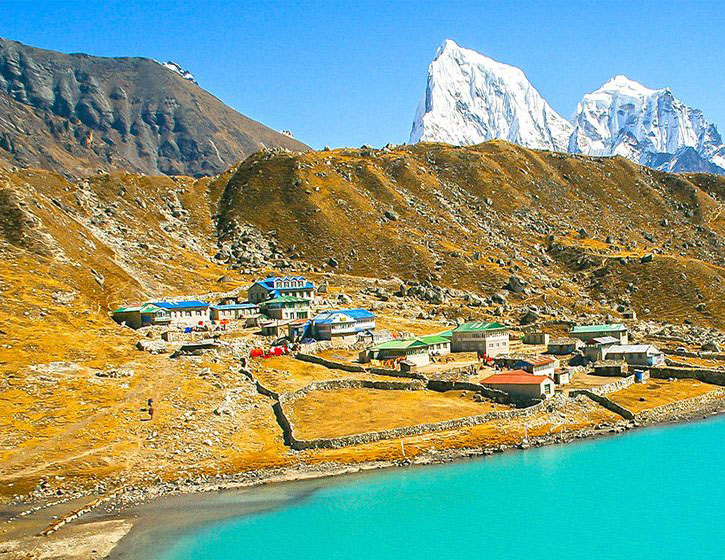
The Gokyo Lake Trek is located in the Khumbu region, Nepal. This area lies inside Sagarmatha National Park, a UNESCO World Heritage Site. The trek is surrounded by some of the world’s highest mountains, including Mount Everest, Lhotse, Makalu, and Cho Oyu. Meanwhile, the Gokyo Valley runs parallel to the Everest Base Camp route, lying west of the main trail and following the Dudh Koshi River upstream. The glacial lakes themselves are located above the village of Gokyo at an altitude of over 4,700 meters. Because of this remote location, the region remains less crowded and noticeably more peaceful, offering trekkers a serene Himalayan experience
How to Reach—Transportation
The journey begins in Kathmandu, the capital city of Nepal. From Kathmandu, travelers take a short flight to Lukla, which is the gateway to the Everest region. The flight is scenic and exciting. It takes about 30 to 40 minutes.
After landing in Lukla, the trek starts on foot. The trail passes through villages such as Phakding, Namche Bazaar, Dole, and Machhermo. Pack animals like yaks and mules are often used to carry supplies. The entire route is well-marked and supported by teahouses. At the end of the trek, trekkers return to Lukla and fly back to Kathmandu.
Main Attractions
The main attraction of the Gokyo Lake Trek is the Gokyo Lakes themselves. These lakes shine in shades of blue and green. The reflection of snow-covered peaks on the water creates unforgettable views.
Another major highlight is Gokyo Ri (5,357 m). From its summit, trekkers can see four peaks above 8,000 meters in a single view. The Ngozumpa Glacier, the longest glacier in Nepal, is also visible along the trail. In addition, traditional Sherpa villages, ancient monasteries, and colorful prayer flags add a rich cultural charm to the trek.
What We See During the Trek
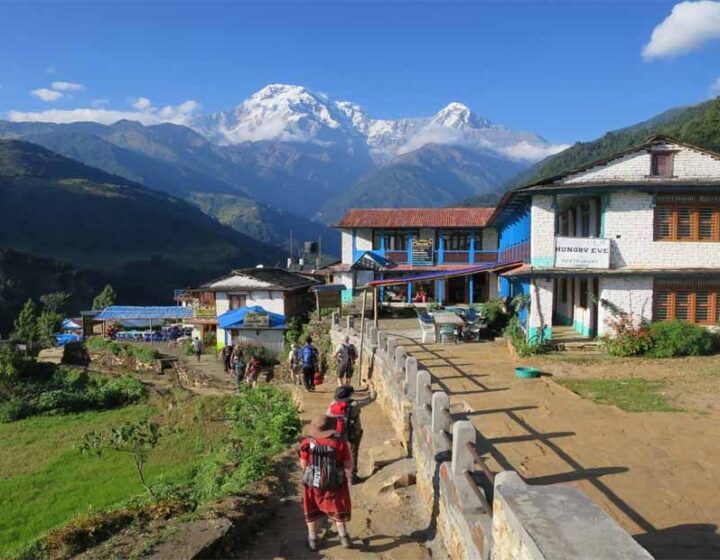
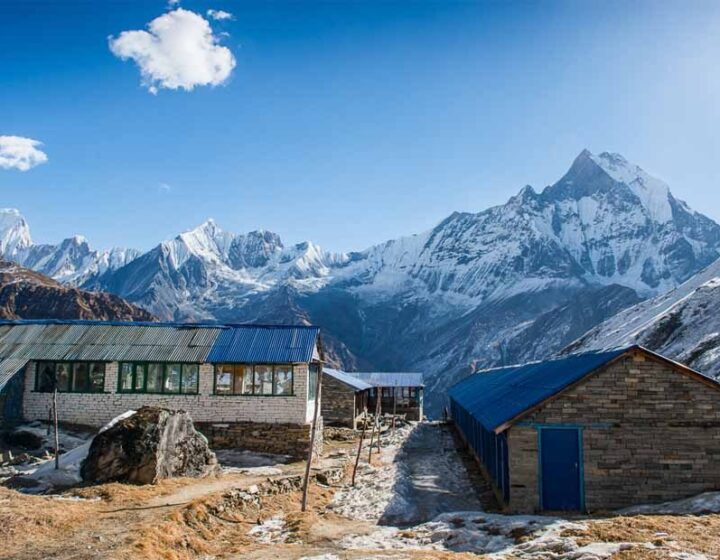
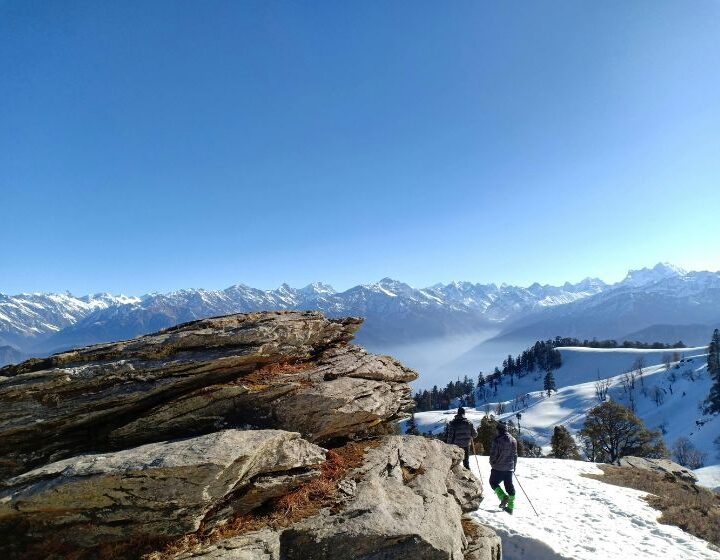
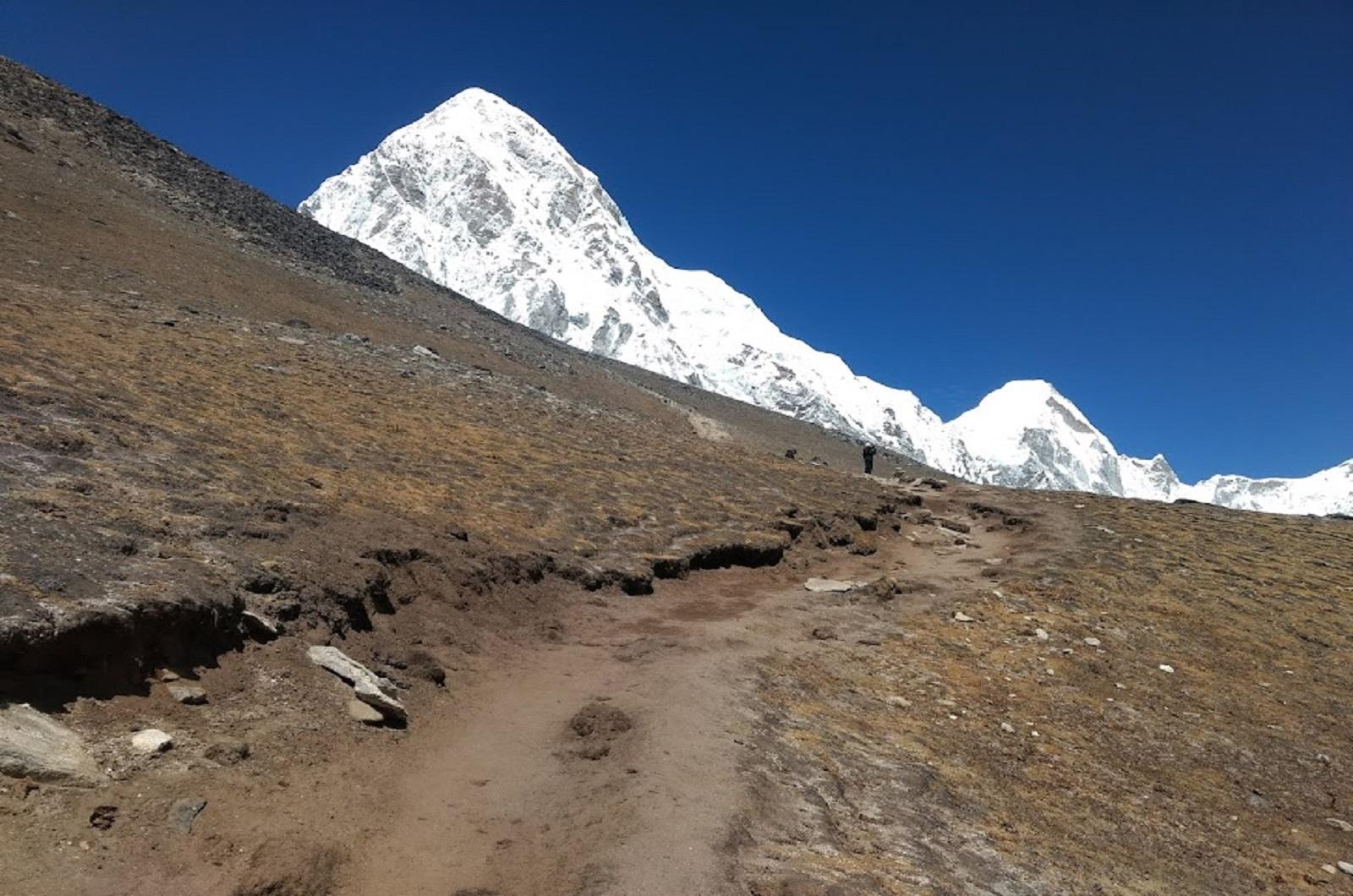
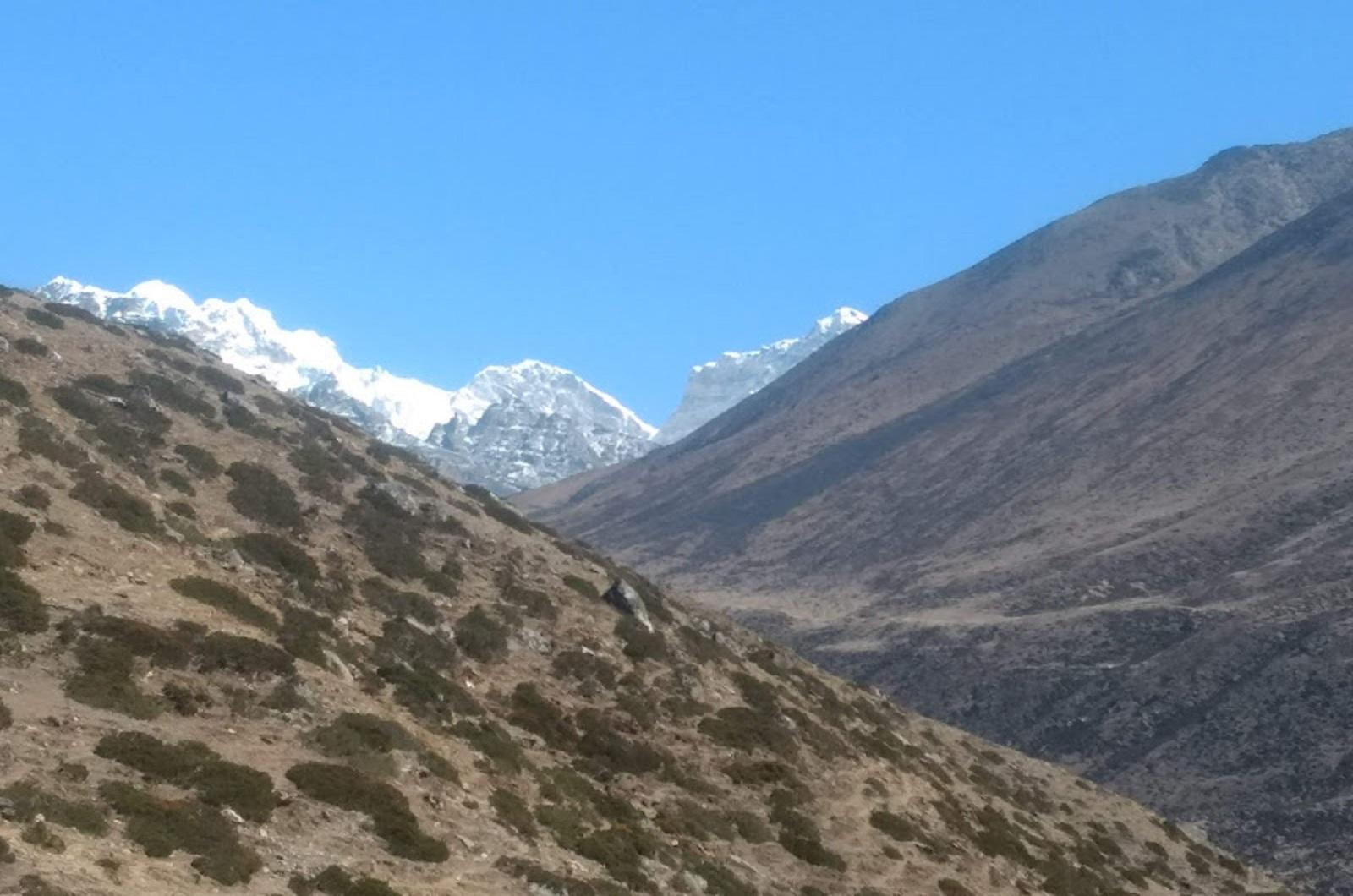
Throughout the journey, trekkers witness landscapes that change dramatically with altitude. In the lower regions, green forests, flowing rivers, and terraced fields dominate the scenery. As the trek ascends, rocky paths, glaciers, and towering snow peaks come into view, while yaks grazing on alpine meadows are a familiar sight.
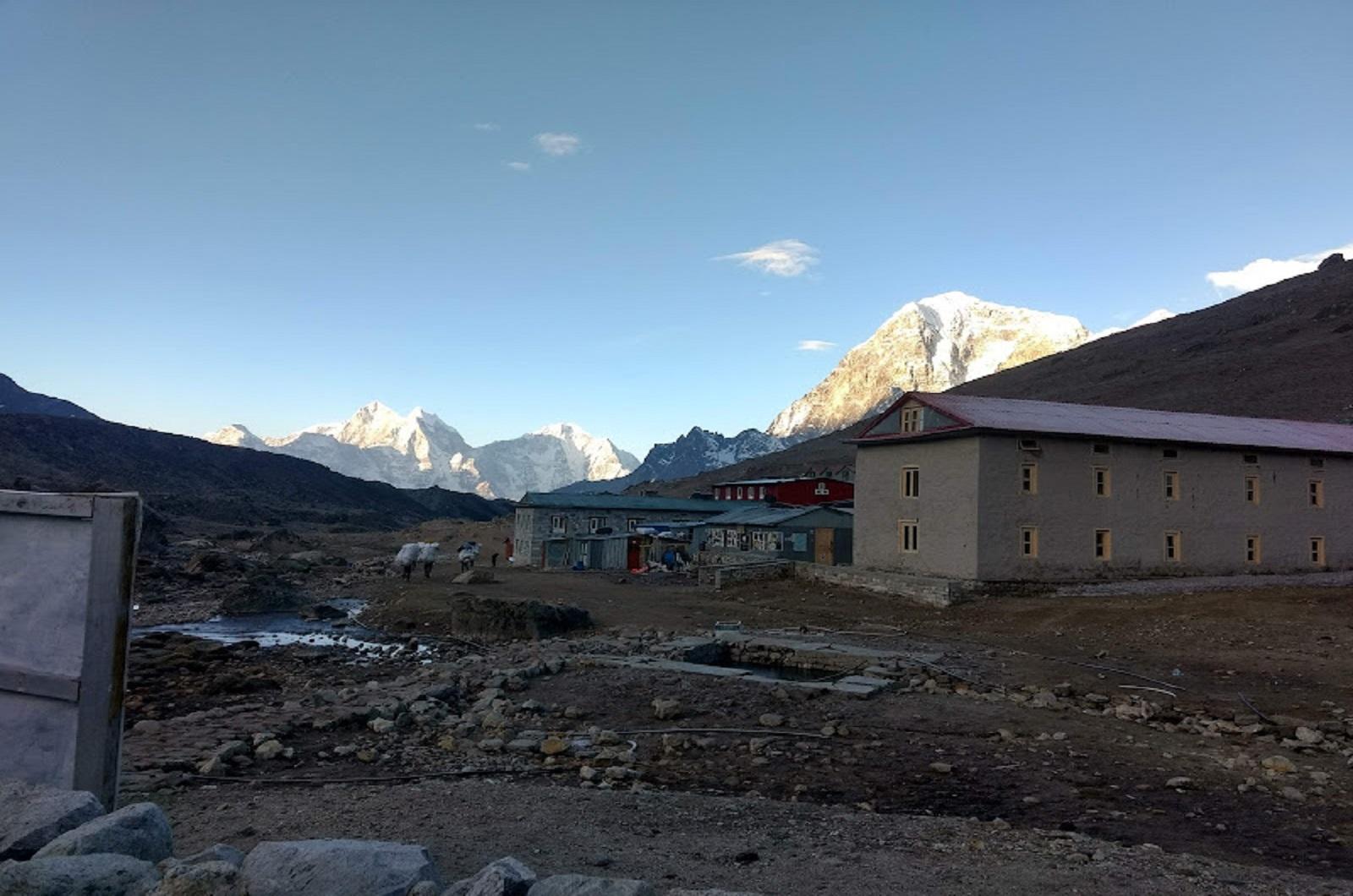
Moreover, trekkers encounter traditional stone houses, mani walls, spinning prayer wheels, and colorful chortens that reflect the region’s spiritual heritage. Above it all, snowy mountains dominate the skyline, and at sunrise and sunset, the peaks glow with a golden light. On clear nights, the skies reveal countless bright stars, creating a serene and peaceful atmosphere. Altogether, the journey offers a profound sense of closeness to nature and the Himalayan environment.
How Difficult Is the Gokyo Lake Trek?
The Gokyo Lake Trek is moderately difficult. It does not require technical climbing skills. However, good fitness is important. Daily walking hours range from five to seven hours. The trail includes gradual ascents and descents.
High altitude is the main challenge. The trek goes above 5,000 meters. Slow walking and proper acclimatization help reduce altitude sickness. The route is suitable for beginners with preparation and for experienced trekkers seeking a calm route. With proper guidance, the trek is safe and enjoyable.
People of the Region
The main ethnic group in the Gokyo region is the Sherpa community. Sherpas are well known for their mountain knowledge and warm hospitality. They have lived in the Himalayas for generations.
Most Sherpas work in trekking, mountaineering, farming, and tourism. Despite modern influences, they still maintain traditional lifestyles. Visitors are often welcomed with friendly smiles and respectful behavior. Staying in local teahouses allows trekkers to interact closely with local families.
Culture, Lifestyle, and Religion
Sherpa culture is deeply influenced by Tibetan Buddhism. Monasteries, prayer flags, and mani stones are part of daily life. Religious festivals are celebrated with dances, music, and rituals.
Life in the mountains is simple. People wake up early and follow routines based on nature. Farming, animal care, and tourism are key activities. Respect for mountains is strong. Locals believe the peaks are sacred. This spiritual connection creates a peaceful atmosphere along the trail.
How Crowded Is the Gokyo Lake Trek?
The Gokyo Lake Trek is notably less crowded than the Everest Base Camp trek. Although it shares the same starting route up to Namche Bazaar, the trail becomes significantly quieter afterward. Even during peak seasons, the number of trekkers remains manageable, and while teahouses are available, the environment retains a sense of calm. Consequently, this trek is ideal for travelers who seek solitude and a closer connection with nature. In comparison to EBC, Gokyo offers a more relaxed and personal experience.
Flora and Fauna
The trek passes through Sagarmatha National Park, which protects diverse plant and animal life. Lower regions have pine, fir, and rhododendron forests. In spring, flowers bloom and add color to the trails. Wildlife includes Himalayan tahr, musk deer, snow leopard (rare), and red panda. Birds such as the Himalayan monal, snow pigeon, and eagles can also be observed along the trail. As the altitude increases, vegetation becomes sparse; nevertheless, wildlife continues to thrive in forms adapted to the harsh environment.
Vegetation changes noticeably with altitude. Below 3,000 meters, dense forests dominate the landscape; however, as the height increases, trees gradually become shorter and more sparse. Above 4,000 meters, shrubs and hardy grasses replace the forests, creating a more open and rugged terrain. Near Gokyo, the land is mostly rocky and icy; as a result, only mosses and small alpine plants manage to survive. Nevertheless, despite these harsh conditions, these resilient plants play a vital role in sustaining the local ecosystem. Moreover, the gradual shift in vegetation along the trail introduces striking visual variety, which in turn makes the trek increasingly engaging and captivating for trekkers.
The trail alone introduces striking visual variety, which in turn makes the trek increasingly engaging and captivating for trekkers.
Atmosphere of the Trek
The atmosphere of the Gokyo Lake Trek is peaceful and refreshing. The sound of rivers, prayer flags fluttering, and distant avalanches creates a natural rhythm.
Unlike busy trekking routes, this trail allows quiet moments. Trekkers can walk slowly, breathe deeply, and enjoy the surroundings. The open valleys and wide mountain views create a feeling of freedom. Many travelers find the trek mentally relaxing and spiritually uplifting.
Best Time to Do the Gokyo Lake Trek
The best seasons for the Gokyo Lake Trek are spring (March to May) and autumn (September to November). During spring, flowers bloom, and the weather is stable. Autumn offers clear skies and sharp mountain views.
Winter trekking is possible but cold. Heavy snow warnings can block high passes. Summer brings monsoon rain, which can affect flights and trails. For comfort and safety, spring and autumn are the most recommended times.
Gokyo Lake Trek Connected to Other Trekking Routes
The Gokyo Lake Trek is well connected to other famous routes. The most popular connection is via the Chola Pass, which links Gokyo Valley with Everest Base Camp.
Trekkers can combine Gokyo Lakes, Cho La Pass, the Fifth Lake trek, and Everest Base Camp into one long adventure. Another connection leads toward Renjo La Pass, which links Gokyo with the village of Thame. These connections make the Gokyo route flexible and adventurous.
Why Join Himalayan Realms Treks for the Gokyo Lake Trek?
The Himalayan Realms Treks and Expeditions Nepal Pvt. Ltd. offers professional and reliable service. With decades of trekking experience, the company ensures safety and comfort.
Experienced local guides lead the trek. They understand altitude, culture, and terrain. The itineraries are well planned with proper acclimatization days. Personalized service is provided to individuals and groups.
The company supports local communities and promotes responsible tourism. Clear communication, fair pricing, and strong support make Himalayan Realms Treks a trusted choice for the Gokyo Lake Trek.
Conclusion
The Gokyo Lake Trek, 14 days, is a peaceful and scenic Himalayan journey. It offers stunning lakes, high mountain views, and rich Sherpa culture. Compared to other Everest routes, the trail is far quieter; consequently, trekkers can enjoy a more peaceful experience and, moreover, forge a deep and lasting connection with nature. Additionally, with moderate difficulty and strong trekking support, the trek is suitable for a wide range of travelers. Furthermore, its connection to other major routes adds flexibility and a sense of adventure, making it an ideal choice for those seeking both comfort and exploration. Its connection to other major routes adds both flexibility and a sense of adventure. By choosing Himalayan Realms Treks, trekkers are guaranteed a safe, meaningful, and truly memorable experience. Ultimately, the Gokyo Lake Trek is not just a walk; it is a journey into the very heart of the Himalayas
Short Itinerary
Day 1: Arrival in Kathmandu
Day 2: Flight to Lukla (2,860 m)
Day 3: Trek to Namche Bazaar (3,440m) – 5-6 hrs
Day 4: Acclimatization
Day 5: Trek to Dole (4,200m)
Day 6: Trek to Machhermo (4,470m) – 4-5 hrs
Day 7: Trek to Gokyo (4,790m) – 4-5 hrs
Day 8: Hike to Gokyo Ri (5,357m)
Day 9: Trek back to Dole
Day 10: Trek to Namche Bazaar
Day 11: Trek to Lukla (2,860m) Day 12: Fly back to Kathmandu
Day 13: Buffer day
Day 14: Departure
Itinerary
When you arrive at Kathmandu Tribhuvan International Airport, our representative will pick you up and take you to your reserved hotel. After check-in at the hotel, you will be briefed about your trekking tour program. After the briefing session, you can relax and unwind at the hotel. If you want to get familiar with this place, you can go for a walk in the Thamel area in the evening. Meals included: none
We embark on a journey with an experienced tour guide to the historical and spiritual attractions of Kathmandu, which is also a UNESCO World Heritage Site. You will visit the historic Kathmandu Durbar Square, the sacred Hindu Temple of Pashupatinath, the famous Monkey Temple (Swayambhunath) and the Buddhist Temple (Boudhanath), one of the largest stupas in the world. In the afternoon, our leader checks our equipment, introduces us to the other participants, and we talk about their trip. Meals included: Breakfast
You will escort to Tribhuvan domestic airport in a private vehicle to board a flight to Lukla. After a 35-40 minute flight, you will land at Lukla airport. Upon arrival at Lukla airport, you will be introduced to the other crew members who are waiting for your arrival. At the same time, the luggage is prepared for your porter. As soon as everything is ready, you will start the trek towards the destination of the day, leaving Lukla behind. After four hours of downhill and flat trail experience, you will reach phakding. After a short rest, you may like to take a walk through the village of Phakding or even a walk to the nearby gompas to acclimatize. The night is spent at the lodge in Phakding. Meals included: Breakfast, lunch, and dinner
Today is the second day of your trek, and our destination is the Namche Bazaar. Without wasting time, we leave Phakding and walk towards Monju over some suspension bridges and small settlements. Monju is popularly recognized as the gateway to Sagarmatha National Park. Upon arrival in Sagarmatha National Park, the team leaders at the entrance will take care of the necessary documents for the National Park. We then enter the national park, after a short vertical descent taking us over some suspension bridges, the path then climbs taking you over the "Hillary Suspension bridge where you continue to climb into Namche Bazaar, which offers the first view of Mount Everest along with other peaks. You will spend a night at a Lodge in Namche Bazaar. Meals included: Breakfast lunch and dinner
Acclimatization is essential so that we can adapt to the gradual changes in the environment. It will also help us avoid acute mountain sickness. Today we take part in activities that help us adapt to the change in altitude and the drop in the air. Staying active is the best way to acclimatise, instead of resting we visit the Sherpa Museum and the famous statue of Tenzing Norgay here you will find genuinely epic views of Everest, Lhotse, and Ama Dablam. After a short stay we climb to the "Everest View Hotel' at 3,880 meters above sea level where we have lunch. Then we return to the Namche Bazaar to explore the rest of the day before sleeping. Meals included: Breakfast lunch and dinner
The fourth day of the trek, and our goal is to reach Dhole. If you leave the Namche Bazaar behind, you can easily walk to Kyangjuma, from where you have one of the best views of towering peaks. The walk continues via the rhododendron forest to Sanasa, an significant crossroads of trails in the Everest Base camp and Gokyo Valley. We leave the Everest Base Camp Trail, follow the stone step path on our left, and head towards Mong. From Mong, there is an easy descent to the banks of the Dudh Koshi River when we cross Phortse Thanga. We walk to Tenga and follow the banks of the Dudh Koshi River. From here, we leave the river bank and go through the birch and rhododendron forest to Dhole. The night is spent in a hostel in Dhole.
Meals included: Breakfast lunch and dinner
After having breakfast at the dole, we start trek to Machheromo. On the way, you walk with the pine and oak forests. You will go uphill gently so that it is not as difficult as the day before. Along the way, you can see peaks such as Taboche, Cholatse, Cho Oyu, and Everest. Meals included: breakfast lunch dinner
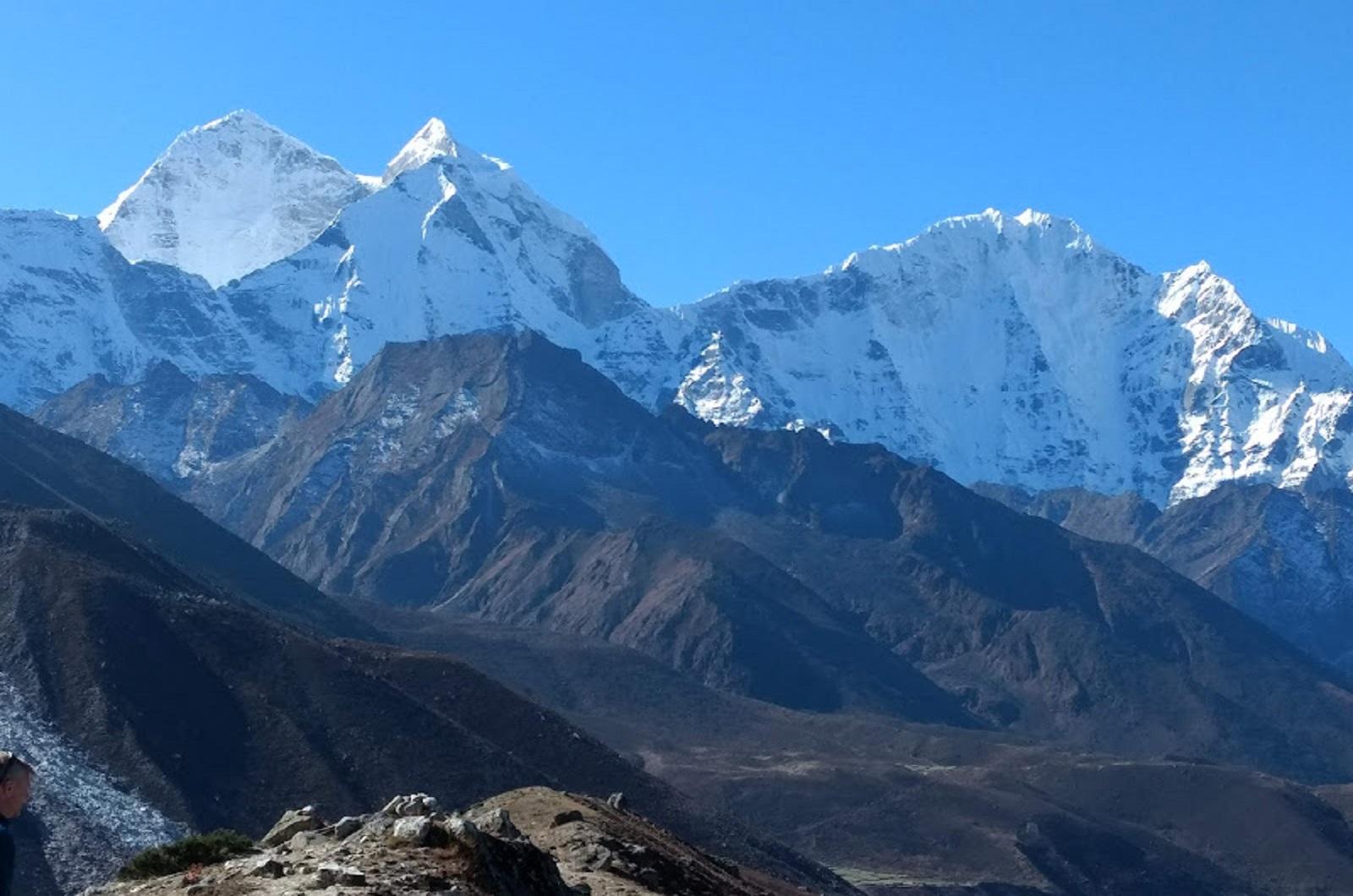
We climb a hill and enjoy the view of the Dudh Koshi valley and the Mount Kangtega, Thamserku, and Cho-Oyu. Beyond the ridge, the valley widens when the path leads through a choir and reaches Phangga. You go down to the river bank before walking the end moraine of the Ngozamba glacier. We passed Longpongo, Raboche Tsho, and Dudh Pokhari before we reached Gokyo. On the way next to the first lake, we see the footprints of a Lama (Buddhist priest). We explored Dudh Pokhari before saying good night. Night stay at Lodge in Gokyo. Meals included: Breakfast, lunch, and dinner
We spend another day in Gokyo to get used to the altitude. In good weather, we walk to Gokyo Ri today. From the top of Gokyo Ri, we admire the view of the Himalayas and the calm lakes of Gokyo. We also hiked to the fourth and fifth lakes of Gokyo. The fourth lake is only 3 km north of Gokyo. It is Specified by high cliffs and Himalayan peaks that rise above it. We continue and reach the fifth lake. Climbing a nearby hill guarantees you incredible views of mount Cho-Oyu, Everest, Lhotse, Gyachung Kang, Nuptse, and Makulu. From here, we can see a lot more: The place is called Scoundrel's POV. From the northern part of the fifth lake, we see the Cho Oyu base camp and the Ngazumpa glacier, the largest glacier in the world. We go back to Gokyo for the night stay.
Meals included: Breakfast, lunch, and dinner
We descend a path along the Dudh Koshi River and pass the first Gokyo Lakes. On the way, enjoy the view of the Cholatse and Taboche peaks. Our route descends before we climb a hill. After reaching the Chorten on edge, we see a great view of the mount Thamserku, Cho Oyu, and Kangtega. You walk through the villages of Machhermo, Luza, and Lhafarma before reaching Dole. We will spend the night in Dole.
Meals included: Breakfast, lunch, and dinner
Today, you'll go down a steep path to Phortse Thanga and think a lot of rhododendrons, waterfalls, and wildflowers. You also find wild goats, musk deer, pheasants, etc. From Mong, you can enjoy a good view of Khumbila Peak. On the way to Namche, you will admire the views of the Taboche, Ama Dablam, Thamserku, and Kangtega mountains. After walking for a while, we reached an intersection where the path from Sanasa meets our way. We hiked a trail that hangs on a wooded hill beyond Kyangjuma and crosses several curves and reaches to Namche Bazar. You will stay at standard lodge in the Namche Bazaar.
Meals included: Breakfast Lunch and dinner
We descend a rocky path and cross several suspension bridges before walking on a flat road. The air is warmer than we go the same way to reach Lukla. Our hike on the mountain ends after reaching Lukla. We spend our time remembering our time on the hill. Night stay in Lukla. Meals included: Breakfast, lunch, and dinner
Today is your last day in the Everest region of Nepal. Your porters bring your luggage to the airport, where we say goodbye. As soon as the plane has landed at the Lukla airport, we board the plane and fly back to Kathmandu in the early morning, enjoying the panoramic view from the sky again. Our office vehicle will be waiting for you at Kathmandu Airport that will accompany you safely to the three-star hotels in Kathmandu. Meals included: Breakfast
It is the last day of your trip to Nepal. If your flight is scheduled early in the morning, a representative of our company will accompany you according to the departure time of your flight from the airport. However, if the flight is scheduled later in the evening, you can go shopping and pick up some souvenirs or stroll around the shopping areas of Kathmandu. However, if you wish to spend an extra day in Nepal, we can also arrange other adventure activities that you can participate in during your stay in Nepal.
Included
- All airport, hotel airport transfers.
- 2-night hotel in Kathmandu
- National Park permit & Pasang Lhambu village entry permit.
- Flight fare from Kathmandu-Lukla-Kathmandu.
- Accommodation in the tea house,
- Food, Tea/coffee during trek.
- Guide: – including salary, insurance, equipment, flight, food and lodging.
- Porter: – including salary, insurance, equipment, food and lodging.
- For guest: -Down jacket, Good sleeping bag (down jacket and sleeping bag are to be returned after trip completion).
- Transfer from airport to hotel in Kathmandu
- All government and local taxes.
- Final departure from hotel to international airport transfer.
Not Included
- Food in Kathmandu ( Lunch & Dinner). Kathmanmdu.
- Bakery food during the trek.
- Nepal Visa fee.
- International airfare.
- Extra night accommodation in Kathmandu.
- Travel and rescue insurance if guest get mountain sickness and need to rescue helicopter.
- Personal expenses example (phone calls, laundry service , bar bills, battery recharge, WIFI charge, extra porters, bottle water or boiled water, shower etc.)
- Tips for guide and porters
Join Us Upcoming Trips
Book this trip with us. Here are the upcoming dates. Feel free to share this trip with your friends and family. For custom trips or general inquiries contact us.
| Departure Date | Trip Duration | Price | Status | |
|---|---|---|---|---|
| 05 March, 2026 | 16 Days | USD $1945 | Fixed departure | |
| 20 March, 2026 | 16 Days | USD $1945 | Fixed departure | |
| 02 April, 2026 | 16 Days | USD $1945 | Fixed departure | |
| 15 April, 2026 | 16 Days | USD $1945 | Fixed departure | |
| 29 April, 2026 | 16 Days | USD $1945 | Fixed departure | |
| 02 May, 2026 | 16 Days | USD $1945 | Fixed departure | |
| 11 May, 2026 | 16 Days | USD $1945 | Fixed departure | |
| 26 May, 2026 | 16 Days | USD $1945 | Fixed departure | |
| 06 October, 2026 | 16 Days | USD $1945 | Fixed departure | |
| 19 October, 2026 | 16 Days | USD $1945 | Fixed departure | |
| 01 November, 2006 | 16 Days | USD $1945 | Fixed departure | |
| 05 October, 2026 | 16 Days | USD $1945 | Fixed departure | |
| 15 October, 2026 | 16 Days | USD $1945 | Fixed departure | |
| 27 October, 2026 | 16 Days | USD $1945 | Fixed departure | |
| 10 November, 2026 | 16 Days | USD $1945 | Fixed departure | |
| 22 November, 2026 | 16 Days | USD $1945 | Fixed departure | |
| 04 December, 2026 | 16 Days | USD $1945 | Fixed departure | |
| 13 December, 2026 | 16 Days | USD $1945 | Fixed departure | |
| 26 December, 2026 | 16 Days | USD $1945 | Fixed departure |
Useful Info
The Gokyo Lake Trek is one of the most scenic treks in the Everest region, offering breathtaking views of turquoise lakes, glaciers, and snow-capped peaks, including Mt. Everest (8,848 m), Cho Oyu (8,188 m), Lhotse (8,516 m), and Makalu (8,485 m).
Trek Overview
Duration: 14 Days
Max Elevation: 5,357m (Gokyo Ri)
Trek Difficulty: Moderate to Strenuous.
Best Seasons: Spring (March–May) & Autumn (Sept–Nov)
Accommodation: Teahouses & Lodges
Permits Required:
Sagarmatha National Park Entry Permit
Khumbu Pasang Lhamu Rural Municipality Permit
Packing List Essentials
Clothing: Layered trekking gear, insulated jacket, thermal wear, gloves, hat.
Footwear: Good quality trekking boots with ankle support.
Gear: Sleeping bag (-15°C rating), trekking poles, sunglasses, headlamp.
Snacks: Energy bars, dried fruits, and nuts.
Health: Diamox (for altitude sickness), first-aid kit, personal medications.
Best season for Gokyo lake trek
Spring (March–May)
Mild temperatures and stable weather
Blooming rhododendrons and lush greenery
Clear mountain views, though occasional haze in lower elevations
Autumn (September–November)
Stable weather with clear skies
Crisp mountain views after the monsoon season
Ideal trekking conditions with moderate temperatures
Gallery
FAQs
-
What is the Gokyo Lake Trek?
The Gokyo Lake Trek is a scenic Himalayan journey in the Everest region. It leads to the turquoise Gokyo Lakes and the famous Gokyo Ri viewpoint. The trek offers peaceful trails, glacier walks, and stunning mountain views.
-
Where is the Gokyo Lake Trek located?
The trek is located in the Everest (Khumbu) region of northeastern Nepal. It lies west of the main Everest Base Camp trail, near the Ngozumpa Glacier.
-
What is the maximum altitude of the trek?
The highest point is Gokyo Ri (5,357 meters / 17,575 feet). This viewpoint offers one of the best panoramic views in the Everest region.
-
Is the Gokyo Lake Trek difficult?
The trek is moderately challenging. It requires good physical fitness and regular walking for 5–7 hours a day. No technical climbing is needed.
-
What kind of accommodation is available?
Accommodation is in local teahouses and lodges. Rooms are simple but comfortable. Most have twin beds, blankets, and shared bathrooms.
-
What food is available during the trek?
Teahouses serve meals such as dal bhat, noodles, rice, pasta, soups, eggs, and pancakes. Vegetarian food is widely available and recommended at higher altitudes.
-
What permits are required for the Gokyo Lake Trek?
You need two permits: Sagarmatha National Park Permit Khumbu Pasang Lhamu Rural Municipality Permit
-
How crowded is the Gokyo Lake Trek?
The route is less crowded than Everest Base Camp. It is ideal for trekkers seeking quieter trails and a more peaceful atmosphere.
-
Is travel insurance necessary?
Yes. Travel insurance must cover high-altitude trekking up to at least 6,000 meters and include emergency helicopter evacuation.
-
Can the Gokyo Lake Trek be combined with other routes?
Yes. It can be combined with the Everest Base Camp Trek via Cho La Pass, making it a more adventurous circuit.
-
What mountains can be seen from Gokyo Ri?
You can see Everest, Lhotse, Makalu, Cho Oyu, and many other Himalayan peaks from the top of Gokyo Ri.
-
Why choose Himalayan Realms Treks for the Gokyo Lake Trek?
Himalayan Realms Treks offers experienced local guides, flexible itineraries, and personalized service. With decades of Himalayan expertise, safety and client satisfaction are always the top priorities.