

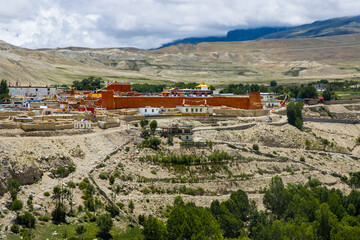
Overview: Lo-Manthang
Upper Mustang is in the trans-Himalayan region of north-central Nepal. It is home to the famous walled city of Lo-Manthang—an old kingdom full of mystery, dry beauty, and cultural isolation. Often called “Little Tibet,” this remote area is one of Nepal’s most well-preserved and unique regions. Once closed to visitors, Upper Mustang now welcomes travelers to discover its untouched Himalayan landscapes, living traditions, and echoes of ancient Tibetan culture.
About Lo-Manthang
Upper Mustang represents the northern part of the Mustang District in Gandaki Province. The territory remained an autonomous kingdom until 2008, with Lo-Manthang as its capital. Even today, the former king (raja) is respected as a symbolic figure of leadership and spiritual guardianship. Lo-Manthang is famous for its fortified city, monasteries, and medieval alleys surrounded by stark cliffs and wind-carved canyons.
This region is culturally and geographically part of the Tibetan Plateau. It offers an enthralling glimpse into a lifestyle nearly untouched by time, as locals still follow ancient Buddhist customs, wear traditional attire, and converse in the Tibetan dialect. With its stark desert-like landscape, whitewashed dwellings, and crimson monasteries, Lo-Manthang presents a rare combination of geological beauty and spiritual depth.
Location of Upper Mustang
Upper Mustang sits to the north of the Dhaulagiri and Annapurna massifs and shares its northern border with Tibet (China). The area begins past Kagbeni, where the restricted zone of Upper Mustang officially starts. Lo-Manthang is situated at an elevation of around 3,840 meters (12,600 feet), surrounded by wind-eroded cliffs, ancient cave dwellings, and panoramic high-altitude deserts.
Geographically, the region lies within a rain-shadow zone, rendering it arid and dry, much like the Tibetan plateau, and starkly different from the lush southern Himalayan valleys. Its unique terrain and climate have preserved both its ecology and heritage from modern encroachment.
How to Reach Lo-Manthang
Traveling to Upper Mustang and Lo-Manthang involves a blend of air, road, and trekking routes. Most journeys commence in Kathmandu, from where travelers take a domestic flight to Pokhara, a lakeside city known as Nepal’s adventure hub. From Pokhara, one typically flies or drives to Jomsom, the district headquarters of Mustang.
From Jomsom, trekkers venture northward via Kagbeni, which marks the entrance to Upper Mustang. A special restricted area permit is required beyond Kagbeni, making this trek exclusive. The trail ascends through Chele, Syangboche, Geling, and Charang and finally culminates in Lo-Manthang.
Recently, a motorable road has reached Lo-Manthang, allowing jeeps and motorcycles to reach the city, though the rugged, dusty track still favors trekkers who prefer the immersive journey on foot.
People and Their Heritage
The inhabitants of Upper Mustang are predominantly of Tibetan origin, often referred to as Loba people. Their culture, dialect, spiritual practices, attire, and architectural styles mirror those found in Tibet. Families live in multi-generational households, with livestock and agriculture playing vital roles in their livelihoods.
The people exhibit warm hospitality, resilience, and a deep-rooted spiritual identity. You’ll often find elders spinning prayer wheels, children herding yaks, and monks chanting in ancient gompas. The Loba community holds deep reverence for their traditions, preserving unique festivals like Tiji, which symbolizes the victory of good over evil and draws both locals and international visitors.
Types of Lodging Available
Accommodation in Upper Mustang, including Lo-Manthang, ranges from basic homestays to traditional teahouses and more recently built eco-lodges. In the earlier days, travelers had to camp or stay in monastery shelters. Today, well-managed lodges offer clean beds, warm meals, and essential services, though comfort levels are modest compared to urban standards.
Lodges often serve local Tibetan-Nepali meals—like tsampa, dal bhat, and butter tea—and provide an intimate look at daily life. Staying with a host family or in a teahouse allows for cultural exchange and warmth despite the region’s remoteness.
Spiritual Life and Religious Significance
Upper Mustang is a Buddhist stronghold, infused with spiritual energy and ancient lore. Lo-Manthang is home to several ancient monasteries, including Jampa Lhakhang, Thubchen Gompa, and Chode Monastery. Each holds centuries-old murals, sacred statues, and preserved manuscripts.
Chortens, prayer flags, and mani walls dot the trails, bearing silent witness to centuries of devotion. The Sakyapa sect of Tibetan Buddhism is most prevalent here, with Tantric rituals, masked dances, and oral storytelling traditions preserved through the monk communities.
Pilgrims and seekers alike are drawn to the meditative silence, the timeless chants, and the fusion of natural and spiritual grandeur that defines Lo-Manthang’s soul.
Daily Living and Cultural Practices
The lifestyle in Upper Mustang remains deeply traditional, slow-paced, and spiritually centered. Most families sustain themselves by cultivating barley, buckwheat, and potatoes and by collecting herbal medicine from the highland pastures. They raise livestock such as yaks, goats, and dzos, which serve essential economic and domestic purposes.
The people build simple yet functional homes—flat-roofed structures made of mud bricks, often with a prayer room at the center. They rise with the sun and go to bed early, following the natural rhythm set by their environment.
Children often attend monastery schools, while elders oversee family affairs and religious rites. Community bonds are strong, with festivals, prayers, and rituals forming the core of social life.
Flora and Fauna of Upper Mustang
Fauna: Life Among the Rocks: The fauna is equally fascinating. You may spot Himalayan blue sheep (bharal), the Tibetan wild ass (kiang), and elusive snow leopards—though sightings are rare. Raptors such as eagles, lammergeiers, and Himalayan griffon vultures dominate the skies, while marmots and pikas dart across barren slopes.
Conservation Efforts in Upper Mustang
Conservation initiatives have gained momentum in recent years. The Annapurna Conservation Area Project (ACAP) is actively engaged in preserving Upper Mustang’s fragile ecosystem, balancing ecological protection with community involvement and sustainable tourism.
Landscape and Terrain
Upper Mustang’s terrain is dominated by windswept cliffs, rocky plateaus, dry riverbeds, and cave-riddled canyons. It resembles a lunar landscape—barren yet beautifully painted in ochres, reds, and greys. Despite the arid nature of the land, it offers moments of natural beauty where life clings tenaciously to the slopes and streambeds.
The Atmosphere of the Region
The climate of Upper Mustang is markedly different from other parts of Nepal. Due to its location beyond the Himalayan rain shadow, it receives very little precipitation. The skies remain crystal clear, and the air, though dry and thin, is filled with spiritual resonance.
Days are sunny and windy, while nights can be bitterly cold, especially in the winter. The tranquil silence, interrupted only by gusts of wind or the fluttering of prayer flags, imparts an otherworldly serenity.
Lo-Manthang especially feels like a living museum, untouched by modern noise. The atmospheric stillness, combined with the aroma of juniper incense and yak butter lamps, deepens the mystical appeal.
A Premier Trekking Destination in Nepal
Among Nepal’s many trekking zones, Upper Mustang stands out as one of the most distinctive and exclusive. Unlike the lush green landscapes of Annapurna or the alpine forests of Everest, Mustang offers a uniquely stark desert-style trekking experience, which closely resembles the highlands of Tibet. In addition, the Upper Mustang Trek is moderately demanding, making it accessible not only to experienced hikers but also to culture seekers alike. Furthermore, beyond its scenic beauty, this journey also deeply immerses you in one of the last surviving Tibetan Buddhist kingdoms. Consequently, travelers can enjoy a rich blend of natural splendor and cultural heritage throughout their adventure. You’ll discover cave monasteries, painted cliffs, and hidden sky-caves once used by ancient sages.
Why Choose Himalayan Realms Treks and Nepal Freelance Guides
At The Himalayan Realms Treks and Expedition Nepal Pvt. Ltd., we design exclusive, culturally respectful journeys into Upper Mustang. Our experienced Sherpa guides and local experts lead each trip with care, blending tradition with eco-conscious travel. For those needing freelance guide services in Nepal, we connect you with trusted, government-licensed guides fluent in English, Japanese, German, and local languages.
These freelance experts add value through local insights, personalized attention, and cultural storytelling.
Whether you choose a lodge-to-lodge trek or a jeep-supported cultural tour, rest assured that we manage every detail seamlessly from start to finish. Starting with permits and accommodations and moving on to custom itineraries, we ensure your journey fits your pace and purpose perfectly.
Conclusion
Upper Mustang and Lo-Manthang offer a portal into a forgotten Himalayan world where time lingers, spirituality thrives, and tradition persists. This remote jewel in Nepal’s crown mesmerizes trekkers, historians, and spiritual seekers alike.
Lo-Manthang offers stark landscapes, an ancient walled city, sacred monasteries, and warm-hearted people. It remains a rare gem—untamed, unexplored, and unforgettable. Join The Himalayan Realms Treks and Expedition to explore this kingdom lost in the clouds. Let the sacred trail carve its timeless story into your soul.