

Trip overview
Overviews: Kanchenjunga 25-day Trek
Introduction
The Kanchenjunga trek 25 days is one of Nepal’s most extraordinary long-distance Himalayan adventures. This 25-day Himalayan expedition takes you deep into the far eastern frontier of Nepal, where dramatic peaks, isolated valleys, and centuries-old villages create an unforgettable experience. Unlike the busier trails of Everest or Annapurna, this journey unfolds in peaceful isolation.
Trekking through the remote Kanchenjunga Conservation Area, adventurers encounter glacial rivers, alpine forests, and vibrant local communities. Both the North and South Base Camps of Mount Kanchenjunga (8,586m) offer breathtaking vistas that reward the effort of this extended trek. Along the way, traditional Limbu and Rai villages provide insight into rich cultural traditions and timeless mountain lifestyles.
The Eastern Nepal trekking route to Kanchenjunga not only challenges physical endurance but also offers a profound connection with nature. The vast silence of the mountains, punctuated only by wind or distant yaks, creates a reflective and meditative trekking experience. For travelers seeking a true wilderness journey, this trek delivers unmatched solitude, spectacular scenery, and deep cultural immersion.
A True Wilderness Expedition
The Kanchenjunga trek is often described as Nepal’s final great wilderness trail. Because the region lies within a restricted area, visitor numbers remain limited. This ensures that the Kanchenjunga Eastern Nepal Trek retains its pristine character and quiet atmosphere.
The trail begins in Taplejung and gradually ascends along river gorges, terraced hillsides, and forested ridges. Compared to commercial trekking zones, infrastructure here is simple. Teahouses are modest, and in higher areas camping may be required. However, this simplicity enhances the authenticity of the Kanchenjunga trek. Trekkers experience untouched forests, roaring rivers, and vast alpine landscapes without crowds.
Every day on the Kanchenjunga Eastern Nepal Trek strengthens the sense of exploration. Suspension bridges sway above deep valleys, waterfalls cascade from steep cliffs, and distant snow peaks slowly appear on the horizon. This wilderness setting defines the spirit of the Kanchenjunga trek.
Journey to North and South Base Camps
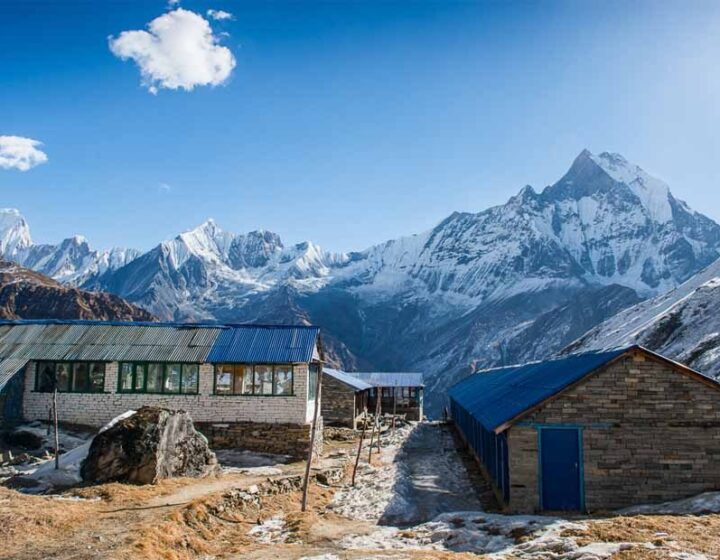
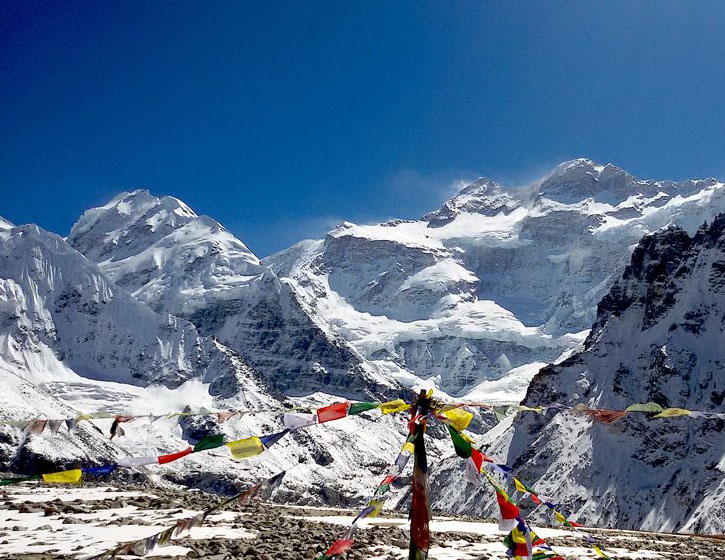
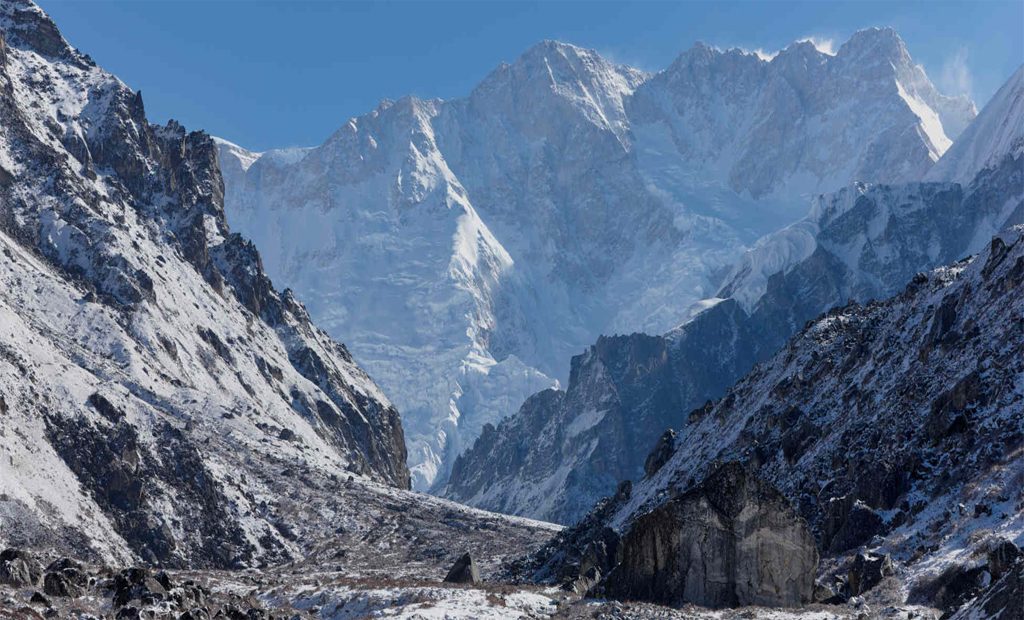
Kanchenjunga trek is highlighted by the extraordinary opportunity to reach both the North and South Base Camps within one extended Himalayan journey. The northern base camp at Pangpema (5,143m) offers an impressive close-up view of the vast Kanchenjunga Eastern Nepal trek massif beneath Mount Kanchenjunga. From this dramatic vantage point, trekkers observe towering ice walls, massive glaciers, and steep snow-covered ridges rising sharply into the sky.
The southern approach leads toward the magnificent Yalung Glacier, presenting a completely different yet equally captivating perspective of the same mountain giant. This side of the adventure feels more secluded and rawer, surrounded by rugged alpine terrain and sweeping glacier landscapes. Over 25 days, the route connects both base camps through remote valleys and challenging high passes, forming a rare and remarkable Himalayan circuit.
Reaching these two contrasting viewpoints makes this journey stand out among Nepal’s long-distance mountain expeditions, as very few trekking routes offer such extensive exploration combined with powerful and varied high-altitude scenery.
Ever-Changing Landscapes
The Kanchenjunga trek offers remarkable geographical diversity. The journey begins in subtropical zones filled with rice fields and cardamom plantations. As elevation increases, trekkers enter rhododendron forests, bamboo groves, and temperate oak woodlands.
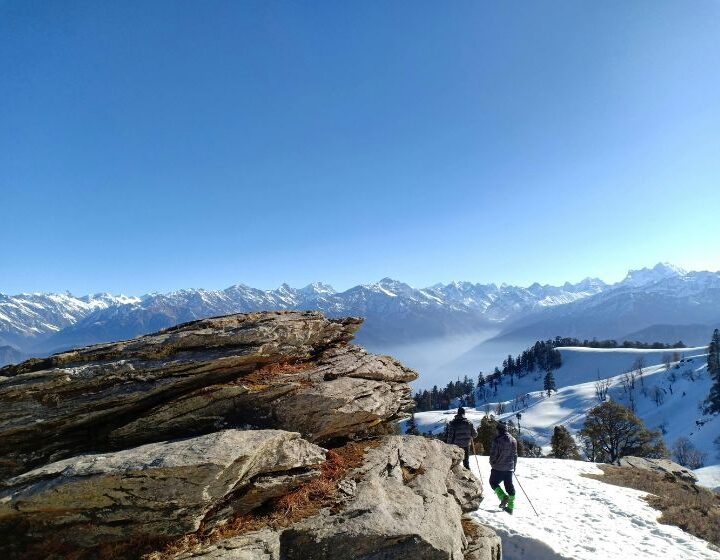
Higher still, the Kanchenjunga Eastern Nepal Trek transitions into alpine meadows and glacial moraines. In spring, blooming rhododendrons color the hillsides. During autumn, clear skies provide uninterrupted mountain views. Rivers fed by melting glaciers cut through rocky terrain, while yaks graze peacefully in high pastures.
This dramatic transformation of scenery defines the Kanchenjunga trek. Each stage feels distinct, offering a fresh landscape and new photographic opportunities. The natural contrasts make the Kanchenjunga Eastern Nepal Trek one of Nepal’s most visually rewarding adventures.
Rich Biodiversity and Conservation
Kanchenjunga trek passes through the protected Kanchenjunga Estern Nepal Conservation Area, covering over 2,000 square kilometers of pristine Himalayan wilderness. This vast conservation region safeguards rare ecosystems and endangered wildlife across multiple altitude zones.
Trekkers along this remote trail may encounter Himalayan monals, musk deer, and blue sheep grazing on alpine slopes. Dense forests create a natural habitat for red pandas, while higher elevations shelter elusive snow leopards. The biodiversity found here also includes colorful orchids, valuable medicinal plants, and numerous rhododendron species that bloom beautifully in spring.
Because tourism remains limited and carefully regulated, the environment stays remarkably intact. This journey is therefore not only a mountain adventure but also a meaningful ecological exploration through one of Nepal’s richest and most diverse conservation landscapes.
Cultural Encounters in Eastern Nepal
The Kanchenjunga trek is equally a cultural expedition. The region is home to Limbu, Rai, Sherpa, and Tamang communities. Their traditions, languages, and architecture reflect deep Himalayan heritage.
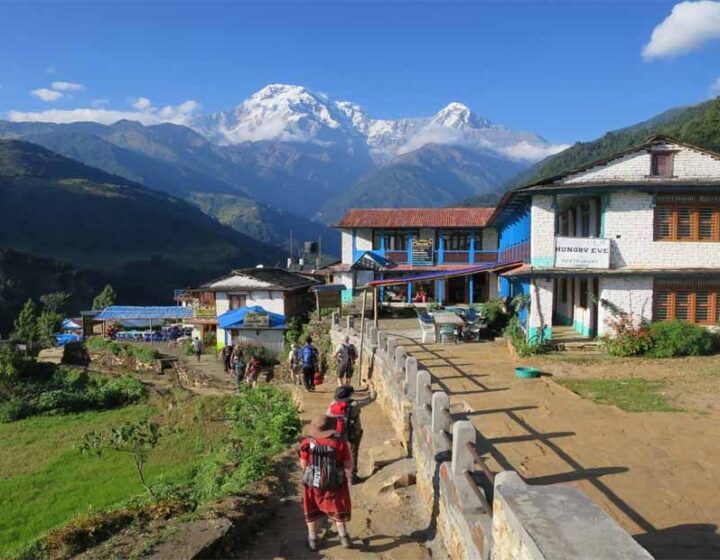
Villages such as Ghunsa and Tapethok provide authentic cultural experiences along the Kanchenjunga Eastern Nepal Trek. Stone houses, fluttering prayer flags, and centuries-old monasteries reveal strong spiritual traditions.
Unlike commercial trekking routes, the Kanchenjunga trek allows genuine interaction with local families. Farmers tend fields, herders guide yaks, and monks maintain sacred sites. The Kanchenjunga Eastern Nepal Trek becomes a meaningful exchange between visitors and residents, preserving authenticity and respect.
Atmosphere and Emotional Experience
The emotional atmosphere of the Kanchenjunga trek is calm and reflective. Silence dominates the trail, broken only by wind, water, or distant yak bells. Because of fewer trekkers, solitude becomes a defining feature of the Kanchenjunga Eastern Nepal Trek.
Sunrises over snowy ridges create unforgettable moments. Evenings in quiet lodges encourage storytelling and contemplation. The extended duration of the Kanchenjunga trek builds endurance and mental strength.
Over 25 days, the Kanchenjunga Eastern Nepal Trek evolves into an inner journey. Trekkers often describe feeling humbled by the scale of Mount Kanchenjunga and inspired by the stillness of the wilderness.
Physical Challenge and Preparation
The Kanchenjunga trek is physically demanding. Daily walking hours range from five to eight hours, with steady altitude gain. Proper acclimatization is crucial, particularly before reaching Pangpema.
Special permits are required due to restricted area regulations. A licensed guide and at least two participants are mandatory for the Kanchenjunga Eastern Nepal Trek. Good fitness, prior trekking experience, and preparation for changing weather conditions are essential.
Despite its challenges, completing the Kanchenjunga trek provides immense satisfaction. For serious trekkers, the Kanchenjunga Eastern Nepal Trek represents a prestigious Himalayan achievement.
Sustainable and Responsible Travel
Kanchenjunga trek emphasizes responsible tourism, as the fragile ecosystem requires careful environmental practices. Trekkers should minimize waste, use reusable items, and respect local customs.
This journey also benefits local communities when travelers choose community-based lodges and hire regional guides. Supporting conservation initiatives helps protect forests, wildlife habitats, and traditional ways of life. Sustainable trekking ensures that the Kanchenjunga trek remains pristine for future generations while also strengthening the local economy.
Why Choose Himalayan Realms Treks
At Himalayan Realms Treks and Expedition Nepal Pvt. Ltd., we bring decades of expertise in organizing remote Himalayan journeys. Our experienced team carefully plans every Kanchenjunga trek with safety and cultural sensitivity in mind.
We provide professional guides, well-structured acclimatization schedules, and reliable logistical support. For the Kanchenjunga Eastern Nepal Trek, our local partnerships ensure authentic village experiences and responsible tourism practices.
Connect another trekking route with Kanchenjunga trek
Kanchenjunga Trek + Makalu Base Camp Trek
You can combine with the remote wilderness of Makalu Base Camp Trek . Both routes lie in eastern Nepal trek and share a similar untouched character. While Kanchenjunga explores the world’s third-highest mountain, the Makalu region takes trekkers beneath Mount Makalu (8,485m).
This combination creates a powerful “Eastern Himalayan Grand Traverse” concept. Both treks emphasize remoteness, biodiversity, and authentic mountain culture. For serious trekkers seeking extended high-altitude adventure, linking these two regions positions your company as a specialist in true wilderness expeditions.
Kanchenjunga Trek + Everest Three Pass Trek
Another strong connection is between the famous Everest Three Pass Trek. The Everest region offers dramatic glacial crossings and iconic Himalayan scenery around Mount Everest. You can promote this as:
“From the solitude of the Kanchenjunga trekking routes, trekking in eastern Nepal takes you on a journey to the summit of Mount Everest. Kanchenjunga provides wilderness isolation, while Everest delivers global recognition and well-developed infrastructure. Together, they represent two different faces of Himalayan trekking — one raw and remote, the other legendary and dramatic.
Kanchenjunga Trek + Lumba Sumba Pass Trek
For a geographically connected option, link with the Lumba Sumba Pass route. This high pass (5,177m) literally connects the Kanchenjunga and Makalu regions.
Overall Overview
The Kanchenjunga trek stands as one of Nepal’s longest and most rewarding mountain expeditions. Over 25 days, trekkers traverse diverse ecosystems, explore remote valleys, and stand beneath the majestic presence of Mount Kanchenjunga.
The Kanchenjunga Eastern Nepal Trek combines wilderness, biodiversity, and cultural depth in a single extended journey. From subtropical farmlands to glacial landscapes, every phase reveals a new dimension of eastern Nepal’s beauty.
Summary
Kanchenjunga trek is far more than a high-altitude hike; it represents a transformative expedition through Nepal’s untouched eastern frontier. The journey challenges physical endurance while offering profound cultural and natural rewards.
For those seeking solitude, authenticity, and dramatic Himalayan scenery, this adventure delivers an experience unlike any other. Trekkers emerge with lasting memories, a deep respect for mountain life, and a powerful connection to the grandeur of Mount Kanchenjunga.
Itinerary
Arrival in Tribhuvan International Airport
When you arrive at Kathmandu Tribhuvan International Airport, our representative will pick you up and take you to your reserved hotel. After check-in at the hotel, you will be briefed about your trekking tour program. After the briefing session, you can relax and unwind at the hotel. If you want to get familiar with this place, you can go for a walk in the Thamel area in the evening.
Sightseeing tour around Kathmandu Valley and trekking preparation
We embark on a journey with an experienced tour guide to the historical and spiritual attractions of Kathmandu, which is also a UNESCO World Heritage Site. You will visit the historic Kathmandu Durbar Square, the sacred Hindu Temple of Pashupatinath, the famous Monkey Temple (Swayambhunath) and the Buddhist Temple (Boudhanath), one of the largest stupas in the world. In the afternoon, our leader checks our equipment, introduces us to the other participants, and we talk about their trip.
from Kathmandu to Bhadrapur by flight and drive to Taplejung
After having breakfast early in the morning, you fly from Kathmandu to Bhadrapur, which is located in south-eastern of Nepal, and then head to Taplejung. Meals included: Breakfast, lunch, and dinner
Trek from Taplejung to Lalikharka: walking Distance 4-5-hour walk
You'll go to Lalikharka after walking around 5 hours. Lalikharka is one of the beautiful villages in Panchthar district. It is a easy ascent and descent on a path that mainly leads through lush green forests to Lalikharkha Meals included: Breakfast, lunch, and dinner
Trek from Lalikharka to Khesewa: walking distance 5 to 6 hours
After having breakfast, you'll start your journey to Khesewa. It is mainly an easy descent to Phundrawa. From here you begin your ascent. It is a steep ascent to Yangpang and from there you walk steadily to Phumphe Danda, then again rise to Khesewa. Our hike leads through forests and small towns. Meals included: Breakfast, lunch, and dinner
Trek Khesewa to Mamankhe: walking Distance 5 - 6 hours
After breakfast, you'll head to the Kabeli Khola. Then you will hike along a trail that leads through the jungle before crossing a small stream. Along the way you enjoy a breathtaking view of the Himalayan peaks and walk through several small and beautiful villages. Meals included: Breakfast, lunch, and dinner
Trek from Mamankhe to Yamphudin: walking distance 4 -5 hours
You will go along the Kabeli Khola during the trek, where you can admire the beautiful ridge behind the stream. You continue your walk and admire a beautiful nearby waterfall. After walking for a while, you cross a small suspension bridge and settlements before arriving in Yamphudin for the night. Meals included: Breakfast, lunch, and dinner
Trek from Yamphudin to Tortong: walking Distance 7- 8 hours
Today's trekking will be on the way along Amji Khola, passing through Lassiya Bhanjyang before reaching Tortong. Stay overnight in Tortong. Meals included: Breakfast, lunch, and dinner
Trek from Tortong to Cheram: walking duration 2-3 hours
After breakfast, you'll begin your constant climb to Cheram. Your route is located directly in Simbuwa Khola. You enjoy walking in the beautiful Lalung Valley and have a view of Tuplung peak. You will walk through the dense rhododendron forest and enjoy the splendour of the Yalung glacier. Night in Cheram. Meals included: Breakfast, lunch, and dinner
acclimatization day in Cheram
You spent a day in Cheram to get used to the altitude. You can spend the rest of the day taking a resting or doing short hikes. There are also views of Kabaru and Rathong peaks. Meals included: Breakfast, lunch, and dinner
Trek from Cheram to Ramche: Walking hours 3 - 4 hours
After breakfast, you'll start your short walk. You climbed from Cheram for a while before reaching the snout of the Yalung Glacier. You also enjoy the view of various Himalayan peaks. You pass a small settlement in Lapsang before reaching Ramche. Meals included: Breakfast, lunch, and dinner
Trek from Ramche to Yalung base camp, back to Cheram
From Ramche, you'll continue through the valley. Then you follow a stream before climbing to the top of the moray until you face the south face of Kanchenjunga. You continue to take a look at the Jannu Himal. You will keep walking to the Oktang Monastery, from here you climb further up to Yalung base camp. The view from base camp is exceptional. Kumbakarna, Nyukla Lachung, and other Himalayan peaks are nearby. You descend and spend the night in Cheram. Meals included: Breakfast, lunch, and dinner
Trek from Cheram a Sele La (4290 m): walking duration 6 to 7 hours
After breakfast, you'll start your walk and crossed four passes by beginning with Sinelapche Bhanjyang. After crossing the pass, you continue towards Mirgin La Pass. You keep walking and arrive at Sinion La Pass, which is not far away. From here you go up to Paso Sele La. The prayer flags are placed on one of the steepest sections of the trail, which is very close to the Sele-La pass. You then cross this pass. Meals included: Breakfast, lunch, and dinner
Trek from Sele La a Ghunsa (3,595 m): walking distance 2-3 hours
After having breakfast. You go north with Tangbgharma Danda. You arrive at a choir that is marked with prayer flags and marks the beginning of a steep path. You will go down through rhododendron, birch, and pine forests before getting to Ghunsa, this is a very attractive place with houses with weathered dark pine walls and Buddhist prayer flags. Meals included: Breakfast, lunch, and dinner
Trek from Ghunsa to Kambachen: walking 5 - 6 hours
Today you will walk further north along the river bank which offers you an incredible mountain backdrop. You walk through meadows with beautiful wildflowers and then cross rhododendrons and pine forests. You cross a bridge at Rampuk Kharka, pass by a waterfall, and cross the problematic section of a landslide. After crossing the landslide area you see the spectacular view of Mount Jannu. If you continue to explore this complicated mountain trail, you will finally reach Kambachen and spend the night. Meals included: Breakfast, lunch, and dinner
Trek from Kambachen to Lhonak: walking distance 5 to 6 hours
You will walk through rocky fields and large boulders today on the hillside along the river bank and come to a waterfall. Then you cross a bridge to Ramtang Monastery, you then find a section of a landslide that you must pass at a constant rate before descending into the river and finally reaching Lhonak. Meals included: Breakfast, lunch, and dinner
Trek to Kanchenjunga base camp, overnight in Pangpema: walking 6-7 hours
We walk to the Kanchenjunga base camp. Our path leads along the massive Kanchenjunga glacier. After passing Pangpema you move down towards the Kanchenjunga base camp. The view from base camp is exceptional. You can admire Mount Kanchenjunga, Jannu Himal, and other peaks of the Himalayas. You return to Pangpema to spend the night. Meals included: Breakfast, lunch, and dinner
Trek from Pangpema to Lhonak: walking distance 3-4 hours
From Pangpema, you follow your steps back to Lhonak. Night in Lhonak. Meals included: Breakfast, lunch, and dinner
Trek from Lhonak to Ghunsa: walking 6 to 7 hours
You'll descend from Lhonak through Kambache to Ghunsa. It is the same route you took on the ascent. Meals included: Breakfast, lunch, and dinner
Ghunsa to Amjilosa: walking 5 to 6 hours
You'll descend to Phale by passing several manes and a nearby monastery. You walk through the juniper forests and reached Phale. From here you continue on to Gyabla. You will cross a bridge over Chhundatangka Khola to get Gyabla. As you continue our walk, you see a waterfall nearby. You also passed a suspension bridge over Sumbung Khola before reaching Amjilosa. Meals included: Breakfast, lunch, and dinner
Trek from Amjilosa to Chirwa: walking 6 to 7 hours
today you continue your walk and pass a small settlement in Solima before crossing a suspension bridge over Ghunsa Khola. You cross another suspension bridge through Ghunsa Khola and reached Sukathum. Your path leads through various villages and leads to the Thunsa Khola, followed by Tamor Nadi before reaching Chirwa. Meals included: Breakfast, lunch, and dinner
Trek from Chirwa to Taplejung via Mitlung: walk 7-8 hour
After having a wonderful time in Chirwa, you'll trek to Taplejung for 8 hours. The trails on the way to Mitlung offer a lot of green, flora, and fauna and mainly picturesque villages that are always ready to welcome you. Meals included: Breakfast, lunch, and dinner
Drive to Bhadrapur: 9 hours by car
You'll take a car from Taplejung to Bhadrapur. The trip lasts 9 hours. Meals included: Breakfast, lunch, and dinner
fly back from Bhadrapur to Kathmandu
Our fantastic trip to Kanchenjunga base camp comes to an end today. In the evening, there will be a farewell dinner to celebrate the successful conclusion of your Kanchenjunga trek. Meals included: Breakfast
Final departure
Our office representative will pick you up from the hotel and takes you to the airport three hours before the scheduled flight. Meals included: Breakfast
Included
- 2-night accommodation in Kathmandu with a B/B basis plan
- Flight fear from Kahtmandu to Bhadrapur for Guest and guide.
- Bus ticket from Bhadrapur to Terathum B
- All airport and hotel transfers
- National park permit
- Accommodation, food and tea/coffee during the trek
- All the camping equipment.
- Porter: – including salary, insurance, equipment.
- For guest:-Down jacket, Good sleeping bag (down jacket and sleeping bag are to be returned after trip completion).
- Chirwa to Bhadrapur bus fear
- Fly fear from Bhadrapur to Kathmandu
- All government and local taxes
Not Included
- Food in Kathmandu ( Lunch & Dinner)
- Nepal Visa fee
- International airfare from your country to Kathmandu and from Kathmandu
- Extra night accommodation in Kathmandu
- Travel and rescue insurance if guest get mountain sickness and need to rescue helicopter.
- Personal expenses example (phone calls, laundry service , bar bills, battery recharge, extra porters, bottle or boiled water, shower etc)
- Tips for guide and porters if you are happy with theirs services.
Join Us Upcoming Trips
Book this trip with us. Here are the upcoming dates. Feel free to share this trip with your friends and family. For custom trips or general inquiries contact us.
| Departure Date | Trip Duration | Price | Status | |
|---|---|---|---|---|
| 15 September, 2025 | 25 days | USD $2885 | Fixed departure | |
| 28 September, 2025 | 25 days | USD $25885 | Fixed departure | |
| 05 October, 2025 | 25 days | USD $2885 | Fixed departure | |
| 15 October, 2025 | 25 days | USD $2885 | Fixed departure | |
| 22 November, 0025 | 25 days | USD $2885 | Fixed departure | |
| 05 December, 2025 | 25 days | USD $2885 | 2885 |
Useful Info
Kanchenjunga Trek: Useful Information Guide
Trek Overview
Location: Eastern Nepal, bordering Sikkim (India)
Highest Point: Pangpema Base Camp (5,140m)
Duration: 20–26 days (standard itinerary is around 25 days)
Difficulty: Strenuous
Trek Type: Camping and Teahouse (basic lodges available)
Trekking Permits Required:
Kanchenjunga Restricted Area Permit (RAP)
Kanchenjunga Conservation Area Permit (KCAP)
A minimum of two trekkers and a registered guide required for RAP
Best Time to Trek
| Season | Months | Conditions |
| Spring | March to May | Rhododendrons in bloom, clear skies |
| Autumn | September to November | Best visibility, stable weather |
| Monsoon | June to August | Not recommended (heavy rain, leeches) |
| Winter | December to February | Very cold; high passes may be blocked |
Trek Route Highlights
Taplejung: Starting point of the trek
Mitlung, Chirwa, Sekathum: Lowland villages with mixed ethnic groups
Ghunsa: Beautiful Sherpa village at 3,595m
Lhonak & Pangpema: High-altitude camps near Kanchenjunga Glacier
Kanchenjunga North & South Base Camps: Spectacular views of Kanchenjunga (8,586m), the third-highest mountain in the world
Permit and Regulation Notes
Restricted Area: Independent trekking is not allowed.
Trekkers must travel with a licensed guide and at least one other person.
Must obtain permits through a registered trekking agency.
A TIMS card is not required for restricted areas.
Accommodation
Teahouses: Available in most villages; basic but sufficient
Camping: Recommended for more remote areas (especially around Pangpema and South Base Camp)
Physical Fitness and Preparation
Requires excellent physical fitness due to high altitudes and long days
Pre-trek training: Cardio, hiking with a backpack, altitude training
Acclimatization days are built into the itinerary—do not skip them
Wildlife & Flora
Part of the Kanchenjunga Conservation Area
Wildlife: Red panda, snow leopard, Himalayan black bear, blue sheep
Flora: Rhododendron forests, alpine meadows, bamboo groves
Cultural Experience
Home to Limbu, Rai, Sherpa, and Tibetan communities
Buddhist monasteries, mani walls, and prayer flags enrich the spiritual journey
Opportunity to engage in local hospitality and traditional practices
Packing Essentials
Layered clothing for variable weather (base layers, fleece, down jacket, waterproof shell)
Sturdy trekking boots
Sleeping bag (4-season recommended)
Water purification tablets or filter
Snacks, energy bars, first aid kit
Trekking poles, headlamp, extra batteries
Satellite phone or local SIM (limited network)
Transportation
Flight: Kathmandu → Bhadrapur (1 hr) or Suketar (if available)
Drive: Bhadrapur to Taplejung via jeep (approx. 8–10 hrs.)
Weather can affect flight schedules—buffer days recommended
Risks & Safety Tips
Altitude Sickness: Gradual ascent, hydration, and rest days crucial
Remote Region: Limited rescue services—travel insurance is essential
Carry cash: There are No ATMs once you leave Taplejung
Environmental Responsibility: Follow Leave No Trace principles
Why Trek Kanchenjunga?
Less crowded compared to Everest and Annapurna
Deep wilderness, untouched landscapes
Rich ethnic diversity and authentic mountain life
Views of Kanchenjunga and surrounding Himalayan giants
Gallery
FAQs
-
Where is Kanchenjunga located?
Kanchenjunga is located in the far eastern region of Nepal, bordering the Indian state of Sikkim. It is the third highest mountain in the world at 8,586 meters (28,169 feet).
-
How difficult is the Kanchenjunga trek?
The Kanchenjunga trek is considered challenging due to its remote terrain, long duration, high altitude, and basic facilities along the route. Prior trekking experience and good physical fitness are highly recommended.
-
How long is the Kanchenjunga trek?
Our full trekking itinerary covers 25 days, including arrival and departure days, acclimatization, and buffer days for weather or health issues.
-
Is a special permit required?
Yes. Kanchenjunga is a restricted area, so you’ll need: Restricted Area Permit Kanchenjunga Conservation Area Permit (KCAP) You must trek with a registered trekking company and be accompanied by a licensed guide.
-
What kind of accommodation is available?
Accommodations are basic teahouses/lodges in villages, offering simple rooms with shared toilets. In some places, especially at higher altitudes, homestays or camping may be necessary.
-
How high is the highest point on the trek?
The trek reaches up to 5,143 meters (16,873 feet) at Pangpema (North Kanchenjunga Base Camp).
-
What kind of food is available on the trek?
You’ll get a mix of Nepali, Tibetan, and basic Western dishes (like pasta, rice, soup, and eggs). In remote areas, food variety is limited but nutritious.
-
How do we reach the trailhead?
The trek starts from Suketar or Taplejung, which is accessed by a domestic flight from Kathmandu to Bhadrapur, followed by a long jeep ride to the trailhead.
-
Can I charge my devices during the trek?
Electricity is available in some villages, but not guaranteed. Carrying a solar charger or power bank is recommended.
-
Is there mobile network or internet access?
Coverage is limited and inconsistent. Some villages may have mobile signals (mainly NCell or NTC), but internet access is rare or extremely slow.