

Trip overview
overview: Gokyo–Cho La Pass 19-Day Trek
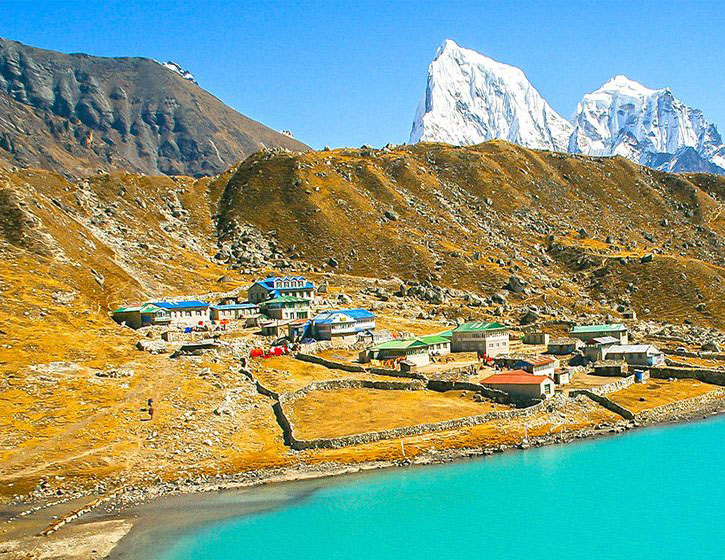
The Gokyo–Cho La Pass Trek is one of the most spectacular and challenging trekking adventures in Nepal’s Everest region. This 19-day trek takes you through some of the most stunning and remote landscapes in the Himalayas. Highlights include the famous Khumbu Glacier—the largest in the region—and the Ngozumpa Glacier, Nepal’s longest. The journey offers a once-in-a-lifetime chance to witness the raw power and beauty of nature. You’ll traverse high mountain passes, turquoise glacial lakes, and traditional Sherpa villages along the way.
Trek Overview and Highlights
This trek combines the allure of pristine natural beauty with rich cultural encounters and physical challenge. It begins in Lukla, from where you will journey through the heart of the Everest region to the enchanting Gokyo Valley, home to the world’s highest freshwater lakes. You will ascend Gokyo Ri (5,357 meters) for a panoramic Himalayan vista that includes Everest, Lhotse, Makalu, and Cho Oyu—the four highest peaks in the world.
Crossing the Dramatic Cho La Pass
One of the most thrilling parts of this trek is crossing the Cho La Pass (5,420 meters). This high mountain pass is covered with ice and snow and demands trekking experience, proper gear, and determination. Crossing Cho La links the Gokyo Valley trail to the classic Everest Base Camp route, allowing trekkers to complete a spectacular circuit.
Everest Base Camp and Kala Patthar Views
After the pass, trekkers descend into the traditional Sherpa settlements on the way to Everest Base Camp (5,364 meters), the iconic destination for mountaineers and trekkers worldwide. From there, the climb to Kala Patthar (5,545 meters) offers stunning close-up views of Mount Everest. Sunrise is especially spectacular.
The Ngozumpa Glacier Experience
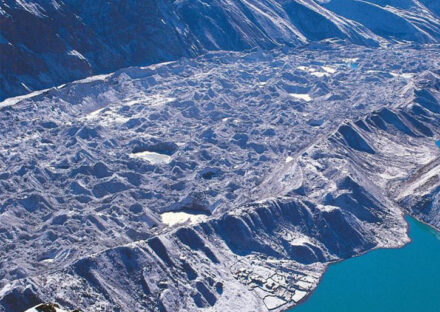
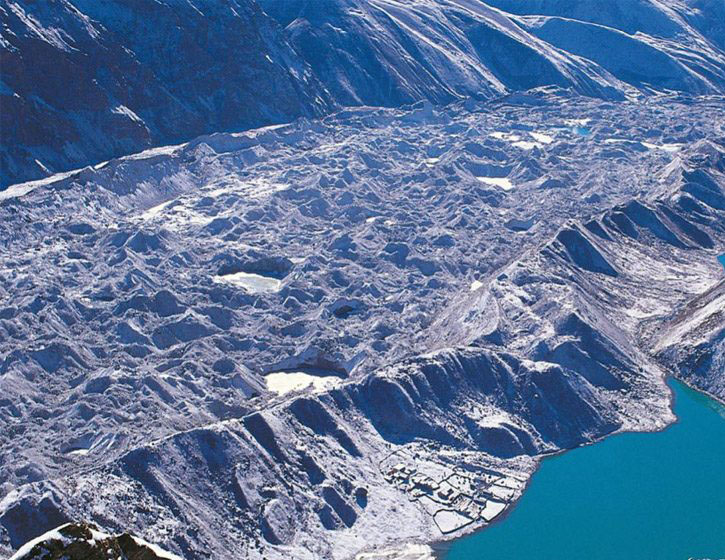
Throughout the trek, you will witness the vast Ngozumpa Glacier, which stretches from the slopes of Cho Oyu down to the Gokyo Valley. Crossing this glacier reveals dramatic glacial moraines, icy crevasses, and alpine meadows, providing a raw and unforgettable wilderness experience.
Flora and Fauna: Diversity Along the Trail
The trek passes through many ecological zones because of the large change in elevation. Trekkers can observe diverse flora and fauna unique to the Himalayas. Subtropical and Temperate Forest Zone (2,500 m – 3,500 m): This area features lush forests rich with rhododendrons (Nepal’s national flower), blooming vibrantly in spring with shades of red and pink. Oak, pine, birch, juniper, and hemlock trees form dense woodlands. Moist shaded areas host mosses and ferns, creating a serene environment.
Alpine Zone (3,500 m – 4,500 m): Vegetation thins out into dwarf rhododendrons, hardy juniper bushes used in Sherpa religious ceremonies, and the rare and delicate edelweiss flowers. The blue Himalayan poppy also dots this zone, adding splashes of color amid rocky slopes.
Tundra and Glacier Zone (Above 4,500 m): Vegetation here is sparse, with only tough grasses, lichens, and mosses surviving the harsh environment. Yak pastures appear as small patches of grassland where herders graze their animals.
Wildlife:
Notably, Sagarmatha National Park is home to iconic Himalayan wildlife, including the Himalayan Tahr, Musk Deer, Snow Leopard, and the elusive Red Panda.. Around Gokyo Lakes, Himalayan marmots and blue sheep are often seen. Domesticated yaks support local life by carrying loads and providing dairy. Birdlife is rich, with Himalayan monals, snow pigeons, golden eagles, griffon vultures, and blood pheasants commonly found in alpine and rhododendron forests, offering nature lovers unforgettable wildlife encounters.
Sagarmatha National Park: A UNESCO World Heritage Site
The Gokyo–Cho La Pass Trek lies entirely within Sagarmatha National Park. This protected area was established in 1976 and recognized by UNESCO in 1979 for its natural and cultural significance. The park covers 1,148 square kilometers of rugged Himalayan terrain. Elevations range from 2,845 meters at Monjo to the summit of Everest at 8,848.86 meters.
The landscape features steep valleys, glaciers, rivers, and towering peaks. These include Lhotse (8,516 m), Nuptse (7,861 m), and Ama Dablam (6,812 m). The region is also home to the Sherpa people. Their vibrant culture and Buddhist traditions are a vital part of the trekking experience. Key cultural sites include the renowned Tengboche Monastery, the spiritual hub of the Everest region. The monastery hosts colorful festivals like Mani Rimdu, featuring mask dances and religious ceremonies that attract both locals and trekkers alike.
Vegetation and Climate Zones Along the Trek
Due to the altitude range and varied terrain, trekkers will experience multiple vegetation zones and climatic conditions: Lower Region (Lukla to Namche, 2,800 m to 3,500 m): Dense forests of rhododendron, pine, juniper, fir, and oak create a cool but comfortable trekking environment, with oxygen levels still sufficient to maintain stamina.
Middle Region (Namche to Gokyo & Dingboche, 3,500 m to 4,800 m): Forests thin into alpine shrubs and dwarf rhododendrons. The air becomes crisp and dry, with colder mornings and nights. Winds are stronger, adding to the challenge. High Region (Gokyo, Cho La Pass & Everest Base Camp, 4,800 m to 5,545 m): Vegetation nearly disappears here, replaced by moss, lichens, and hardy alpine grasses. The atmosphere at high altitude can be harsh, marked by strong winds, freezing temperatures, and significantly reduced oxygen levels. As a result, proper acclimatization and careful pacing are essential for a safe and successful trek.
Best Time to Trek
Spring (March–May): This is one of the most popular trekking seasons due to blooming rhododendrons, moderate temperatures, and clear skies. Days range between 10°C and 20°C, while nights can be chilly, dropping below freezing at higher altitudes. Autumn (September–November): Also a prime trekking season, autumn offers crisp, dry air and excellent visibility. Daytime temperatures vary from 10°C to 18°C, with colder nights. The stable weather makes it ideal for high mountain views.
Summer/Monsoon (June–August): Not recommended because heavy rains cause muddy trails, landslides, and limited visibility. Winter (December–February): Extremely cold, often below -15°C at night, with heavy snowfall closing high passes like Cho La.
Accommodation and Food
Along the trek, accommodation is provided in simple teahouses run by Sherpa families. These lodges offer twin-sharing rooms furnished with beds, blankets, and pillows.
Bringing a sleeping bag is highly advisable for extra warmth, especially at higher altitudes where nighttime temperatures can drop significantly.
As for amenities, bathroom facilities are typically shared, and hot showers are available at most stops—usually for an additional fee. While electricity and charging options are present, they often come at a cost, and Wi-Fi—if available—is slow and expensive outside the major villages. When it comes to food, the local cuisine mainly features hearty Nepali and Tibetan dishes such as…
Dal Bhat (rice, lentils, vegetables): The staple meal with unlimited refills, perfect for maintaining energy., Momos (steamed or fried dumplings): A favorite snack. Sherpa Stew: A warming vegetable and potato soup. Fried noodles or rice: common and filling. Pasta, pancakes, and occasional yak steak can also be found at higher-end teahouses. Vegetarian meals are highly recommended at higher elevations to avoid the risk of food poisoning from poorly stored meats.
Trekking Preparation and Fitness
The Gokyo – Cho La Pass Trek is physically demanding and requires strong fitness, endurance, and mental resilience. You’ll be trekking 5–8 hours a day at high altitudes, so building cardiovascular endurance is essential. To prepare effectively, aim to train 3–4 times per week, starting at least three months before your trek. Activities such as running, stair climbing, cycling, or hiking with a loaded backpack can significantly boost your stamina.
Alongside cardio, it’s important to strengthen your legs, core, and upper body. Incorporate exercises like squats, lunges, deadlifts, planks, and crunches into your routine. This combination helps you manage steep ascents and carry your backpack more comfortably. Furthermore, as the trek ascends above 5,500 meters, proper acclimatization—particularly at Namche and Gokyo—is essential to reduce the risk of acute mountain sickness (AMS). Whenever possible, gaining prior high-altitude experience or engaging in altitude simulation training can provide a significant advantage.
Mentally, be ready for long trekking days, cold weather, basic accommodations, and rapidly changing conditions. With confidence, preparation, and determination, you’ll be well-equipped to enjoy this epic Himalayan journey.
Cultural Experience
The trek is as much a cultural journey as a natural one. Sherpa hospitality is warm and welcoming. Visitors can explore villages like Namche Bazaar, Machhermo, and Gokyo. These stops offer a glimpse into the traditional Sherpa way of life. The Tengboche Monastery, perched dramatically overlooking the valley, is a spiritual center where Buddhist monks conduct daily prayers and festivals.
Why join The Himalayan Realms Trek?
The Himalayan Realms Treks offers expert-guided Gokyo Chola Pass treks with personalized service and deep local knowledge. Moreover, our experienced team delivers safe, well-organized journeys through breathtaking landscapes—featuring turquoise lakes, towering peaks, and rugged mountain passes. Additionally, we prioritize authentic cultural experiences, made even more meaningful by the warm hospitality of the Sherpa community.
From start to finish, your comfort and safety are our top priorities, supported by quality gear and responsible trekking practices. As a result, your adventure becomes both memorable and environmentally sustainable. Therefore, choose Himalayan Realms Treks for unmatched expertise, a steadfast commitment to safety, and a truly unforgettable Himalayan experience.
Conclusion: A Trek of a Lifetime
The Gokyo – Cho La Pass Trek is a breathtaking adventure through Nepal’s stunning natural landscapes. It blends awe-inspiring scenery with rich cultural experiences. From the turquoise waters of the Gokyo Lakes to the thrilling Cho La Pass crossing, every moment feels unforgettable. A major highlight is the visit to Everest Base Camp, famous for its panoramic views and unforgettable scenery. Not only does the trek challenge both body and mind, but it also offers a deep connection to nature and the resilient Sherpa culture of the world’s finest mountain scenery.
Short Itinerary
Day 01: Arrival in Kathmandu
Day 02: Full-Day Kathmandu
Day 03: Fly to Lukla Trek to Phakding
Day 04: Trek to Namche Bazaar
Day 5: Rest day for Acclimatization
Day 06: Trek to Dole (4,200 m)—6 hrs
Day 07: Trek to Machhermo
Day 08: Hike to Gokyo Ri
Day 09: Rest Day for Acclimatization (4,700 m)
Day 11: Trek to Cross Cho La Pass, Dzongla
Day 12: Trek to Lobuche
Day 13: Trek to Gorakshep—Everest Base Camp
Day 14: Trek to Pheriche (4,240 m)—-8 hrs
Day 15: Trek to Namche Bazaar
Day 16: Trek to Lukla
Day 17: Fly to Kathmandu.
Day 18: Buffer Day
Day 19 Final Departure
Itinerary
Welcome to Kathmandu Tribhuwan International Airport
When you arrive at Kathmandu Tribhuvan International Airport, our representative will pick you up, and today you hear the Nepali word for hello "namaste". A word that you will probably never forget after this trip. He will then take you to your reserved hotel. After check-in at the hotel, you will be briefed about your trekking tour program. After the briefing session, you can relax and unwind at the hotel. If you want to get familiar with this place, you can go for a walk in the Thamel area in the evening.
Meals included: None
After having breakfast we embark on a journey with an experienced tour guide to the historical and spiritual attractions of Kathmandu, which is also a UNESCO World Heritage Site. You will visit the historic Kathmandu Durbar Square, the sacred Hindu Temple of Pashupatinath, the famous Monkey Temple (Swayambhunath) and the Buddhist Temple (Boudhanath), one of the largest stupas in the world.
Meals included: Breakfast
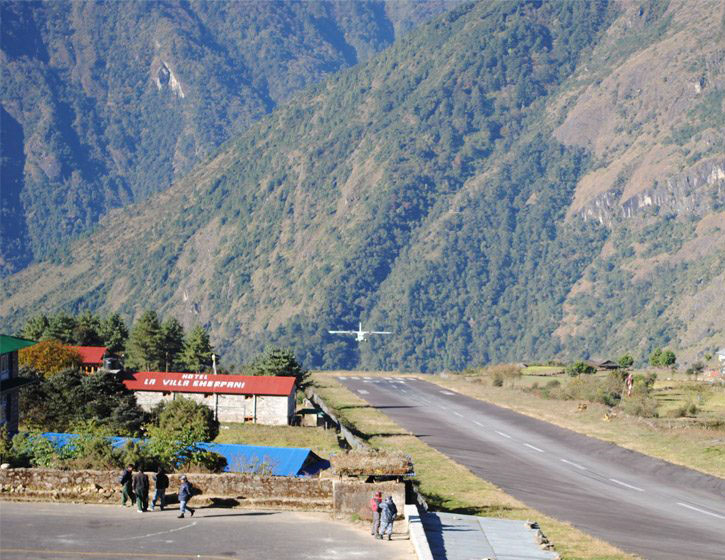
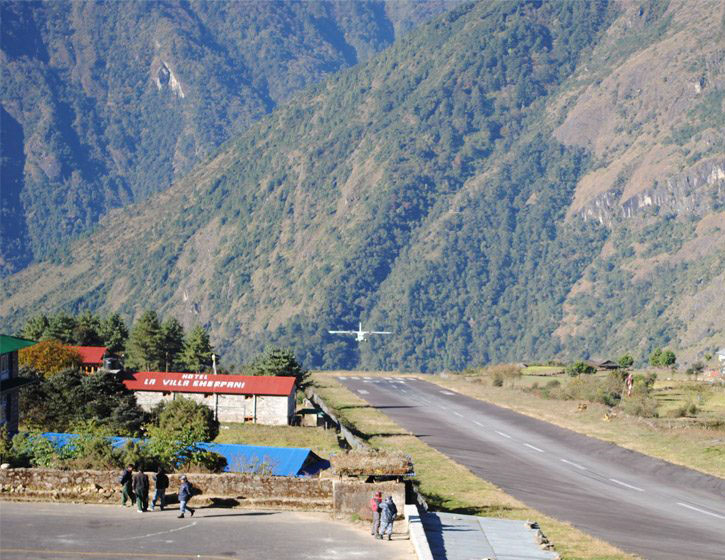
After 30-35 minutes flight you will land at Lukla Airport (Tenzing Hillary Airport) from Kathmandu. During the flight you can see some of the highest mountains in the world including Cho Oyu (8,153m), Lhotse (8,516m), Gauri Shankar (7,145m), Menlangtse (7,181m) and sometimes Mount Everest. After an exciting landing and a warm welcome at Lukla airport, you will be met by your porters and other members of our team who will carry your excess luggage every day until you return to Lukla. We also prepare your goods for shippers. As soon as everything is ready the 3 peaks trek begins and we move towards the daily goal of reaching our first overnight stay. Leaving Lukla behind, after three hours mainly uphill and flat we finally reach the beautiful village of Phakding situated on the Doodh Kosi river. Her we can take a short walk in Phakding village or even go for a walk in the nearby Gompa. Night stay at a lodge in Phakding. Meals included: Breakfast, lunch, and dinner
Today is the second day of your trek, and our destination is the Namche Bazaar. Without wasting time, we leave Phakding and walk towards Monju over some suspension bridges and small settlements. Monju is popularly recognized as the gateway to Sagarmatha National Park. Upon arrival at the entrance at Sagarmatha National Park the team leaders will take care of the necessary documents for entry into the park. We then enter the national park, after a short vertical descent taking us over some suspension bridges the path then climbs taking you over the stunning "Hillary Suspension bridge" you then continue on a steep climb into Namche Bazaar, where you see the first view of Mount Everest along with other peaks. You will spend a night at a Lodge in Namche Bazaar.
Meals included: Breakfast, lunch and dinner
Namche Bazar rest day for acclimatization:- Acclimatization day at the Namche Bazaar
When you reach Namche, you cross the 3000m mark which puts you at risk of altitude sickness. It takes some time for our body to adapt to this rapidly changing altitude and falling temperature. So stay at Namche Bazaar for a day and reduce the risk of altitude sickness. On this day, you can take a short walk to the Everest View Hotel to watch the sunrise over Everest. You can also enjoy the sunrise and sunset in the panorama of the Himalayas from Sagarmatha National Park Headquarters. You can also stop by at Namche Bazaar and explore the Sherpa lifestyle and culture. Meals included: Breakfast, lunch and dinner
Trek from Namche Bazaar to Dole (4040m.): – Trek via Khumjung, it takes about six hours. From Namche the route heads up all the way to Khumjung, a picturesque village which also has its own gompa at the top end of town. Here, you can have excellent views of Thamserku, Kantega and Ama Dablam. Soon after leaving Khumjung the trail climbs to a large chorten on top of a ridge. This ridge descends from Khumbila, a 5734m peak, said to be the abode of the patron God of the Khumbu region. The trail descends slightly towards the Sanasa and then trail ascends up to Mongla (4000m.). From here, you can see panoramic views of various mountains. You trek steeply descending the pass through Phortse Tenga and from there, the trail climbs steeply to Dole, through rhododendron and birch forest festooned with hanging mosses and lichens. You can enjoy a delicious meal at Phortse Tenga (3650m.). Stay overnight at lodge or camp. Meals included: Breakfast, lunch and dinner
Dole to MaCharmo (4150m): – Trek from Dole to Machhermo which takes about five hours. From Dole you climb steadily along the side of the valley, where small and thorny bushes give way to scrub juniper as the altitude increases. The trail passes many summer settlements, which are used when yaks are taken to these pastures to graze in the summer months. Ahead of you are excellent views of Cho Oyu, while back down the valley are the peaks of Kantega and Thamserku. This is a short day and you will arrive at Machhermo in time for lunch. Stay overnight at lodge or camp.Meals included: Breakfast, lunch and dinner
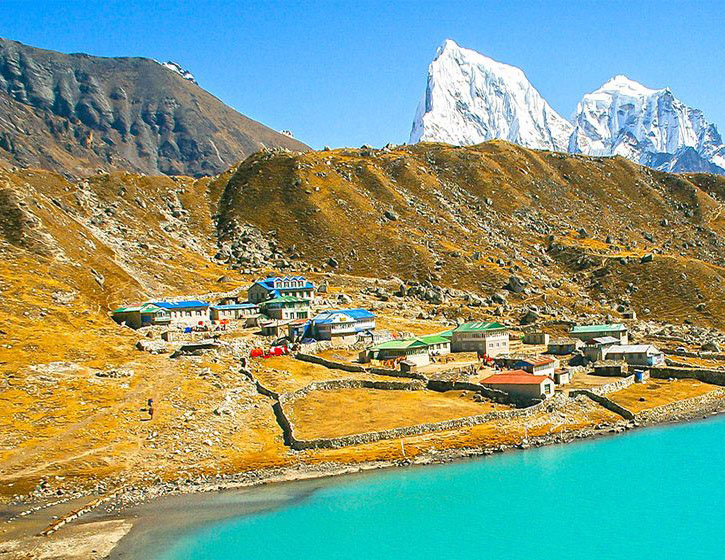
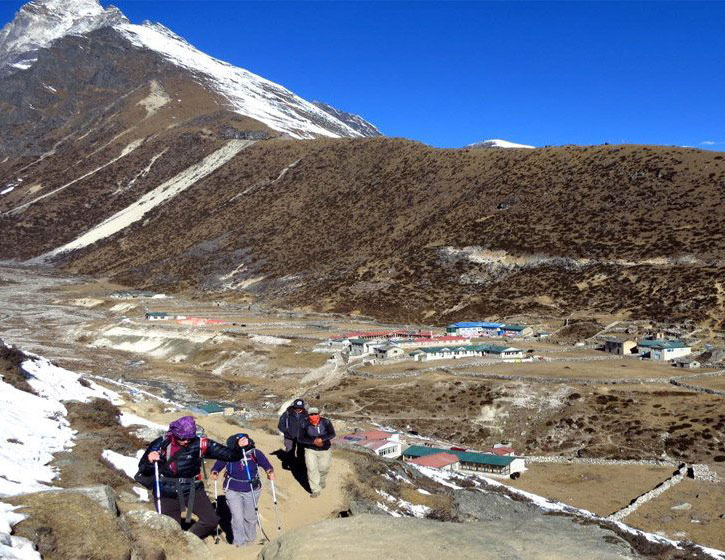
Macharmo to Gokyo (4750m) :-Trek from Machhermo to Gokyo which takes about four and half hours. Today you head for the lakes at Gokyo. You follow a very scenic path to Pangka and then descend slightly, following one of the melted-water Rivers which flow down the west side of the Ngozumpa Glacier. You climb a steep rocky incline into the valley by the side of the glacier, passing the first of the holy lakes. You soon arrive at the second of the lakes, crossing the path which heads across the glacier to Cho La (5420m.), your route to Lobuche and Everest and later in the trek. The third lake is known as Dudh Pokhari and on its eastern shore is the settlement of Gokyo. Walking by the side of the lake, the scenery is magnificent with the summits of Cho Oyu and Gyachung Kang reflected in its emerald green waters. Stay overnight at lodge or camp. Meals included: Breakfast, lunch and dinner
Rest day at Gokyo and we do some excursion in and around Gokyo valley. Gokyo is a trade centre where the Sherpa people run lodges to provide the best services to trekkers. Gokyo is situated by the side of Ngozumpa glacier, the biggest glacier of Nepal. This day you can make a side trip to the Fifth Lake via the Fourth Lake. Stay overnight at lodge or camp. Meals included: Breakfast, lunch and dinner
Today, we continue our journey to Thangnak (Dragnag). At a point beyond the southern end of Lake Taboche Tsho, where a cairn marks a fork in the trail, we branch left, making any easy rise across the hill, and summit the moraine wall at a saddle. From here, we will get a spectacular view northward up the length of the Ngozumpa Glacier to Cho Oyu, as well as Cholatse and Taboche in the southeast. The trail now drops onto the glacier, winding around ice cliffs, rocky humps, skirting small lakes, and crossing glacial sand flats. There are stunning vistas in all directions. After crossing the glaciers, the trail falls into the ablation valley below our overnight Stop in Thangnak, which has three extremely poor lodges and a couple of shelters. Trekking time: 3-4 hours. Meals included: Breakfast, lunch and dinner
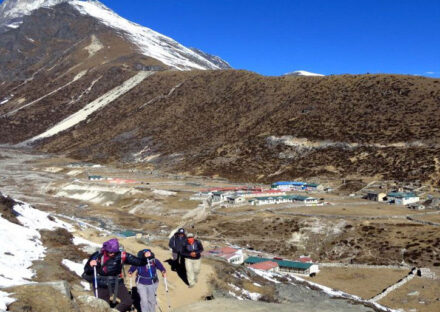
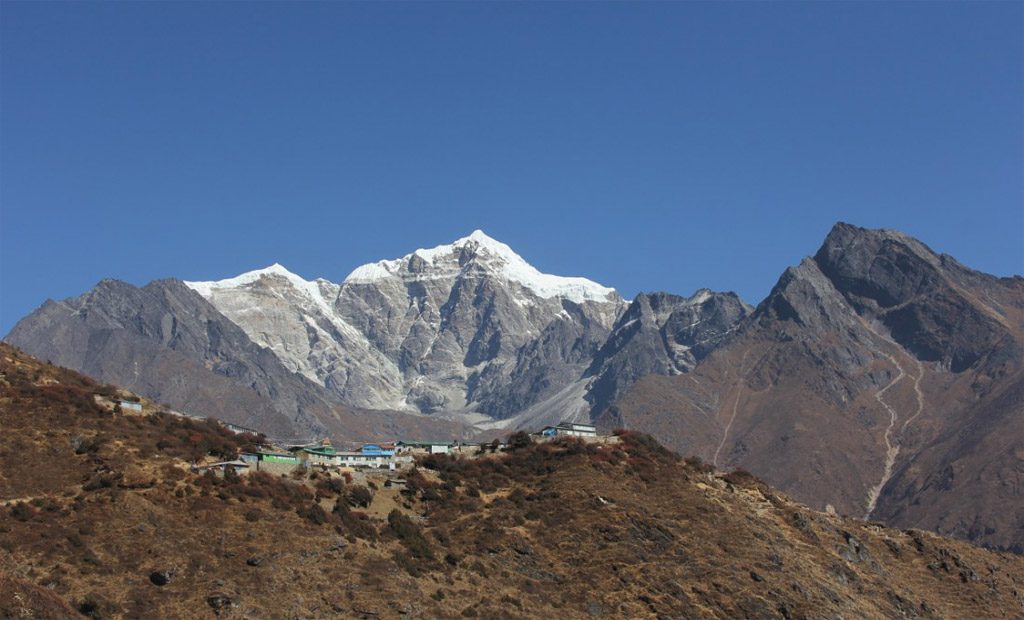
Today's trail climbs slowly to a cairn on the top of a moraine ridge, then falls into a valley to arrive at a rough region of rocks and boulders known as Cho La Base Camp and Phedi (4,930m/16,175ft), which means "at the foot of the hill". We'll now stick close to the right-hand rock wall, where cairns mark the way down. The sights ahead will be stunning. The steep drop now continues down rocky "steps" until we reach an easy trail that leads to the valley's bed. The remainder of the hike to our overnight stay in Dzonglha takes us through this gorgeous valley, where we will be able to take in the breathtaking vistas. Dzonglha contains a A few basic lodges and camping areas in a walled courtyard. Dzonglha provides an excellent close-up picture of Cholatse's north-east face (6,335m/20,785ft), with Chola Tsho lake (4,590m/15,059ft) to the south. We stay the night in Dzonglha. Trekking time: 6-7 hours.
Trekking to Everest Base Camp is certainly a challenge. With more than half of our tour behind us, we enjoyed the simplicity of day 9. Our journey from Dzongla to Lobuche provided us with additional breathtaking vistas without having to traverse glaciers. This was the day we left the more secluded routes of the Everest Base Camp route. We traveled along the undulating trails from Dzongla to Lobuche on the valley's left side. On our right, we were accompanied by the Khumbu Glacier, which was covered in debris with shards of ice poking through. After a couple hours of easy trekking, we made it to Lobuche. During the night in Lobuche.
Meals included: Breakfast, lunch, and dinner
Trek to Everest base camp and return to Gorakshep walking 7 to 9 hours
You are now very close to Everest Base Camp, but it is a challenging day. You first arrive at Gorak Shep and check into a hotel after going down a gentle slope. It has been a walk of almost 3 hours, and it seems to be a little more due to the height that you will have reached today. You have to walk slowly and steadily, and with the help of your guide, you'll be there in no time. The view is excellent today as towering snow-capped peaks surround you. After a light lunch we drive to Everest Base Camp which takes 5-6 hours to drive back to Gorakshep where we will sleep tonight. You will see prayer flags when you reach Everest Base Camp, and the vast mountains you will see in front of you are not Everest but Lhotse and Khumbutse. Behind these mountains, you can only catch a glimpse of Everest. Then return to Gorak Shep to sleep and have dinner there. Meals included: Breakfast, lunch, and dinner
Everest Base Camp is the main camp for the Mountaineers situated at the elevation of 5,364 meters. The Trekkers feel very happy to reach there as it makes them a lifetime memory for their adventurous fulfillment.
descending till Pangboche and cross the Dudkoshi river and lunch in the Devuche after lunch ascending about 45 minutes till to the Tengboche after down to phungithanga about 1:45 and cross the again Dudkoshi river and start to climbing 1 hrs reach to the Kyanjungma after Kyanjumna to Namche is gradually flat about 2 hrs. Stay overnight at the Lodge in Namche.
After breakfast start to descending about 1 hrs to a dhud Koshi river and cross the suspense bridge. Dudhkoshi River to Jorselle is about 1 hrs follow the riverside of Dudh Koshi and reach Jorselle before Jonelle also we need to cross again the suspensive Dhud Dhudh Koshi bridge and reach to Jonelle there has tea, coffee and continue to the Namche Bazaar. After tea, coffee accents a few minutes and cross the bridge of Dhudkoshi and start to up till national park office at Monju village than all the up and down about 2:30 reach to Phakding. Stay overnight phakding in the teahouse.
From Lukla to Kathmandu by flight approximately 30 minutes about the flight. From Kathmandu, domestic airport transfer to the hotel and day time is rest and visit Thamel area for a souvenir to your family.
From Lukla to Kathmandu by flight approximately 30 minutes about the flight. From Kathmandu, domestic airport transfer to the hotel and day time is rest and visit Thamel area for a souvenir to your family.
today is free or last minute you have few hrs. special shopping for your relatives. If you have more time you can do some shopping or sightseeing then we will drop you to the International airport to catch your flight back to your home and wish for your Safe journey.
Included
- All airport and hotel transfers
- 2-night hotel in Kathmandu with B/B plan.
- National Park permit & Pasang Lhambu village entry permit.
- Flight fare from Kathmandu-Lukla-Kathmandu.
- Accommodation in the tea house, During the trek.
- Food:- Breakfast, Lunch, Dinner and Tea/coffee during trek.
- Guide: – including salary, insurance, equipment, flight, food and lodging.
- Porter: – including salary, insurance, equipment, food and lodging.
- For guest: -Down jacket, Good sleeping bag (down jacket and sleeping bag are to be returned after trip completion).
- Transfer from airport to hotel in Kathmandu
- All government and local taxes.
- Final departure from hotel to international airport transfer.
Not Included
- Food in Kathmandu ( Lunch & Dinner).
- Bakery food during the trek.
- Nepal Visa fee.
- International airfare.
- Extra night accommodation in Kathmandu
- Travel and rescue insurance if guest get mountain sickness and need to rescue helicopter.
- Personal expenses example (phone calls, laundry service , bar bills, battery recharge, WIFI charge, extra porters, bottle water or boiled water, shower etc.)
- Tips for guide and porters
Useful Info
1. Trek Overview
Duration: 15–18 days
Max Elevation: 5,545 m (Kala Patthar)
Difficulty: Challenging
Best Seasons: Spring (March–May) & Autumn (Sept–Nov)
Starting Point: Lukla (2,860 m)
Ending Point: Lukla
2. Key Highlights
✅ Gokyo Lakes (4,700m-5,000m): Stunning turquoise glacial lakes
✅ Gokyo Ri (5,357 m): Breathtaking panoramic views of Everest, Lhotse, Makalu, and Cho Oyu
✅ Cho La Pass (5,420 m): A challenging high-altitude pass crossing
✅ Everest Base Camp (5,364 m): The iconic base camp of the world’s highest mountain
✅ Kala Patthar (5,545 m): Best viewpoint for sunrise over Everest
4. Permits Required
✔ Sagarmatha National Park Permit (NPR 3,000 for foreigners, NPR 1,500 for SAARC)
✔ Khumbu Pasang Lhamu Rural Municipality Permit (NPR 2,000)
4. Permits Required
✔ Sagarmatha National Park Permit (NPR 3,000 for foreigners, NPR 1,500 for SAARC)
✔ Khumbu Pasang Lhamu Rural Municipality Permit (NPR 2,000)
6. Packing Essentials
Clothing: Layered trekking gear, down jacket, thermal wear, gloves, sunglasses
Footwear: Sturdy trekking boots, crampons for Cho La if needed
Equipment: Trekking poles, sleeping bag (-15°C), headlamp, water purification tablets
Health & Safety: First aid kit, Diamox for altitude, energy snacks, sun protection
7. Alternative Routes & Extensions
Gokyo + Renjo La Pass (5,360 m) + EBC—less crowded, equally beautiful
Three Passes Trek (Renjo La, Cho La, Kongma La): More challenging but rewarding
Island Peak Climb (6,189 m): Add a peak climbing adventure
Download pdf brochure
FAQs
-
What is the Gokyo Chola Pass Trek?
The Gokyo Chola Pass Trek is a challenging and scenic trek in the Everest region that combines the Gokyo Lakes, Cho La Pass (5,420m), and Everest Base Camp (5,364m), offering stunning views of the Himalayas, including Everest, Lhotse, and Makalu.
-
How long does the trek take?
The trek typically takes 15–18 days, depending on the itinerary, acclimatization days, and weather conditions.
-
What is the difficulty level of this trek?
It is considered challenging due to high-altitude trekking, steep ascents/descents, and crossing the Cho La Pass, which can be icy and technical.
-
When is the best time to do this trek?
Spring (March–May): Stable weather, bloomiAutumn (September–November): Best visibility, comfortable temperatures, and dry trails. Autumn (September–November): Best visibility, comfortable temperatures, and dry trails.ng rhododendrons, and clear skies.
-
Is there internet or mobile network availability?
WiFi is available in major villages (Lukla, Namche, Gokyo, Lobuche), but it can be slow and expensive.
-
Do I need travel insurance?
Yes, comprehensive travel insurance covering high-altitude evacuation (above 5,500m) and medical emergencies is mandatory.