

Trip overview
Short Itinerary
On Day 01, drive from Pokhara to Nayapul (1-1.5 hours) and start trekking to Ulleri for about 5 hours.
Day 02: Trek to Ghorepani (6-7 hours)
Day 03: Early morning hike to Poon Hill for sunrise (1 hour up, 30 minutes down), then trek to Tadapani (5-6 hours)
Day 04: Trek to Ghandruk (3-4 hours), explore the village
Day 05: Trek down to Nayapul (4-5 hours), then drive back to Pokhara
Itinerary
Upon your arrival at Tribhuwan International Airport in Kathmandu, one of our representatives will pick you up and take you to your reserved hotel. In the afternoon you can relax, and in the evening we organize a meeting at your hotel lobby. During the session, we will introduce your trekking guide.
You will be taken on a full-day sightseeing tour of the Kathmandu Valley. You can visit the Pashupatinath and Swyambhunath Temple pilgrimage center, which is very old, and mostly a UNESCO World Heritage Site, and the largest Buddhist stupa in Boudhanath. Visit Patan durbar square, the city of fine arts. On the way back to the hotel, you can explore the surroundings, gorges, and lifestyle. After dinner, you may be able to take a stroll through the famous streets like Thamel and Durbarmarg. Night stay at the three-star deluxe hotel
Meals included: Breakfast
We will take you to the national airport and fly to Pokhara. During the short flight, you will have a majestic view of the magnificent peaks of Manaslu, the snow-capped Annapurna, and the Langtang Himalayas. Alternatively, you can go by a tourist bus or by private car to Pokhara. It takes about 6 to 7 hours along the Prithvi Highway. Upon arrival in Pokhara, you will be transferred to the hotel where you can enjoy your free time by the lake. You can enjoy and relax around Lake Phewa, which is surrounded by the Mount Annapurna Himalayas and visit the Bindavasini Hindu Temple, which is only accessible by boat. You will spend the night in a hotel in Pokhara.
Meals included: Breakfast
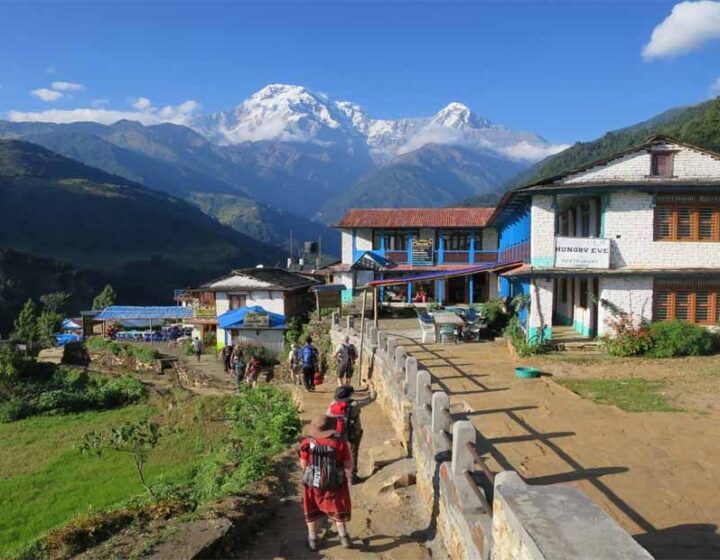
After breakfast at the Pokhara Hotel, we will go to Naya Pul by private car and start our trek. We walk through subtropical forests in the valley, sometimes on the path carved into the side of the cliff. After lunch, we cross the Bhurungdi Khola (river) over a bridge to the village of Tikhedhunga. The Ulleri Hill, with thousands of steps and rocks that are steadily climbing, will be a real test of our resistance. You will arrive in Ulleri in the late afternoon. You will stay at the lodge in Ulleri.
Meals Included: Breakfast, lunch, and dinner
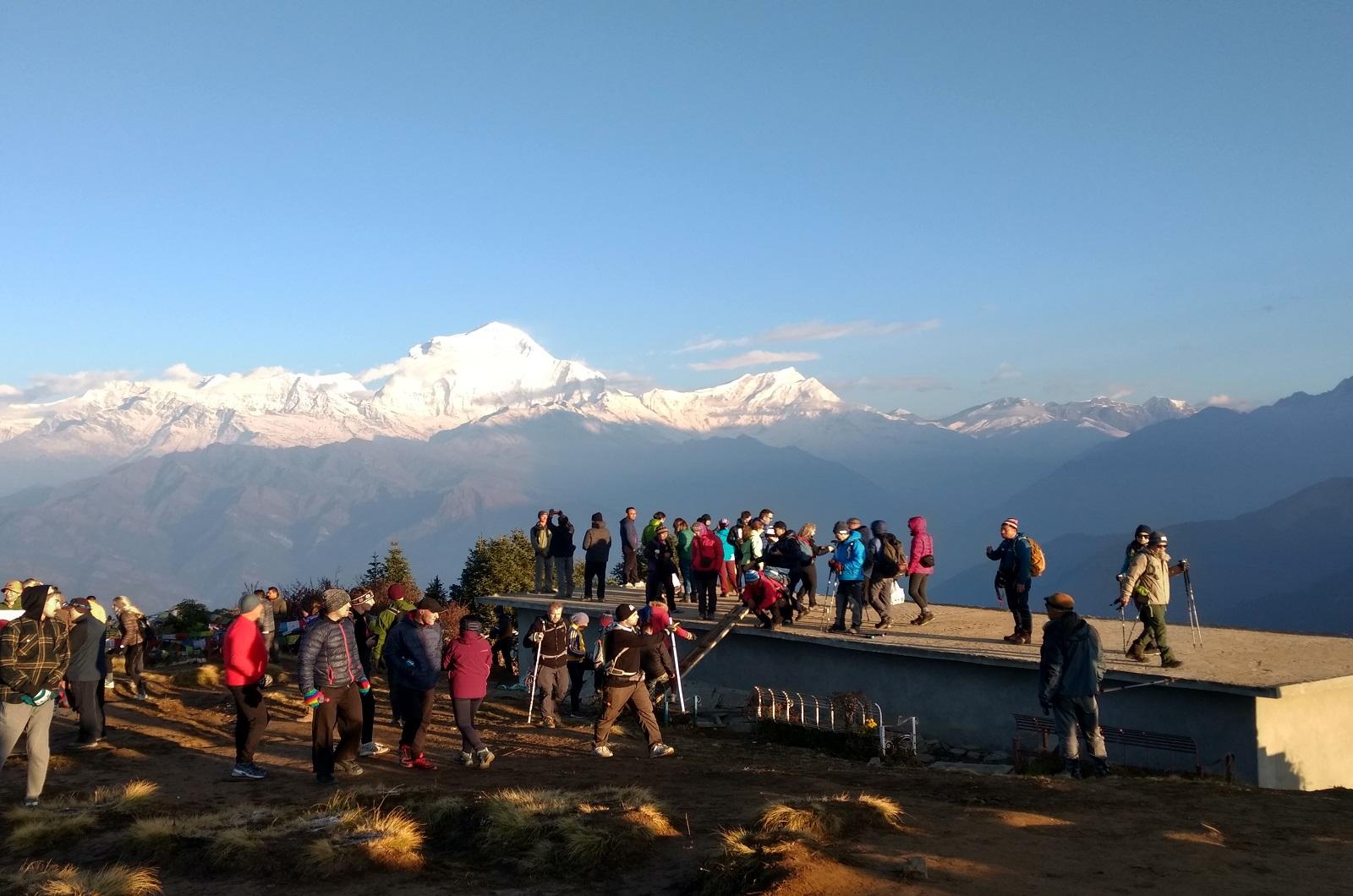
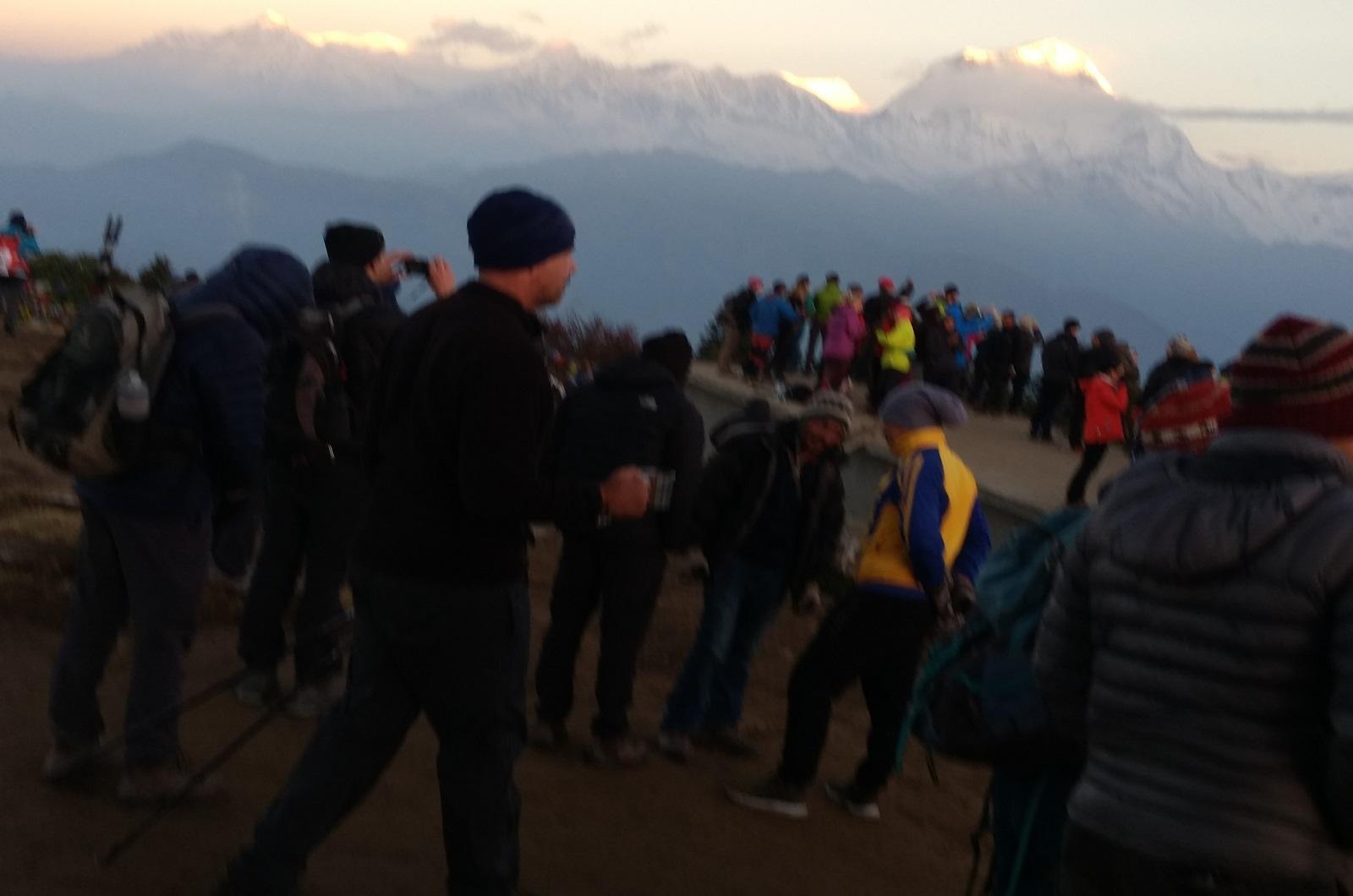
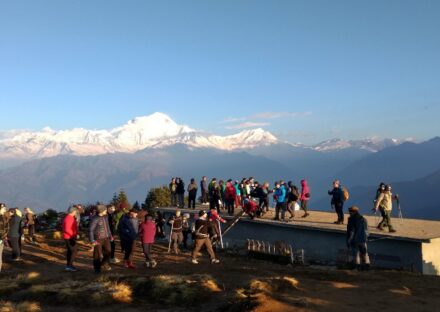
We make an early morning ascent on the steep path to Poon Hill(3,210 m), the most popular highlights of this trekking. It is also a strategic point to enjoy breathtaking views of Mustang, Pokhara, and other many highest mountains, including the Annapurna and Dhaulagiri Mountains. The snowy peaks rise above and around you and glow in the morning sunlight. After taking photos and drinking coffee, tea, or hot chocolate, we returned to Ghorepani. After having breakfast, we start our walk east and up a nearby ridge. We descend through the rhododendron forests, past spectacular waterfalls, and arrive in Tadapani for the night.
Meals Included: Breakfast, lunch, and dinner
From Tadapani, we make a steep descent through the thick and dark forest. Hiking in this area leads through a dense forest of old rhododendrons. These forests become unbelievable gardens when rhododendrons bloom. Depppend on the travel season, you can enjoy cherry blooms on the other side of the gorge. After walking a few more minutes, we entered the village of Ghandruk, a hilltop settlement with stone houses that are mainly inhabited by the community of Gurung. We not only enjoyed the breathtaking close-ups of the Fishtail Mountains, Annapurna South, and Hiunchuli but also got to know the simple but rich cultural traditions of the Gurung at the Gurung Museum in Ghandruk.
Meals included: Breakfast, lunch, and dinner
We walk from Ghandruk to Naya Pul and then return to Pokhara by car. The hike leads downhill to Birethanti. We enter a stone-paved staircase, enter and leave the village, and then enter terraced farms. It drops almost seamlessly from Ghandruk to Modi Khola River Valley. Half an hour's walk from Birethanti takes us to Naya Pul. The journey on foot ends in Nayapul. Then we drive to Pokhara to spend the night in the hotel.
Meals Included: Breakfast and lunch
You fly to Kathmandu. The left side of the plane offers an incredible view of the Himalayas. After arriving in Kathmandu, our staff will drop to your hotel. You enjoy the day comfortably, do last-minute shopping, or explore the sights you missed on your second day in Kathmandu. Night stay at Hotel in Kathmandu.
Meals Included: Breakfast
Your Ghorepani poon hill trek trip ends today! Our representative will drop you off at the airport about 3 hours before your scheduled flight for next destination.
Meals included: Breakfast
Included
- All airport, hotel airport transfers.
- 2-night hotel in Kathmandu
- 2-night hotel in Pokhara
- Flight fare from Kathmandu to Pokhara
- Transfers Pokhara airport to Nayapul
- Conservation permit.
- Accommodation in the tea house
- Food, Tea/coffee during trek.
- Guide: – including salary, insurance, equipment, flight, food and lodging.
- Porter: – including salary, insurance, equipment, food and lodging.
- For guest: -Down jacket, Good sleeping bag (down jacket and sleeping bag are to be returned after trip completion).
- Transfer from Nayapul to Pokhara
- Transfer from Pokhara hotel to Airport
- Transfer from Kathmandu Airport to hotel in Kathmandu
- All government and local taxes.
- Final departure from hotel to international airport transfer.
Not Included
- Food in Kathmandu ( Lunch & Dinner). Kathmanmdu and Pokhara.
- Bakery food during the trek.
- Nepal Visa fee.
- International airfare.
- Extra night accommodation in Kathmandu.
- Sightseeing sport fees. tours guide cost and vechicle cost
- Travel and rescue insurance if guest get mountain sickness and need to rescue helicopter.
- Personal expenses example (phone calls, laundry service , bar bills, battery recharge, WIFI charge, extra porters, bottle water or boiled water, shower etc.)
- Tips for guide and porters
Useful Info
Trek Overview
The Ghorepani–Poon Hill Trek is a short and scenic trek in the Annapurna region of Nepal. It is ideal for beginners, families, and trekkers with limited time. The trek is famous for sunrise views over the Annapurna and Dhaulagiri ranges.
Location
The trek is located north of Pokhara within the Annapurna Conservation Area. Ghorepani village lies at 2,860 meters (9,383 feet), and the Poon Hill viewpoint is at 3,210 meters (10,531 feet). The trail passes through traditional Gurung and Magar villages.
Trek Duration
The trek usually takes 4 to 5 days from Pokhara to Pokhara. Shorter or longer versions are possible depending on the route and walking pace. It is one of Nepal’s most time-efficient Himalayan treks.
Starting and Ending Point
The trek commonly starts at Nayapul or Ulleri, which is reached by road from Pokhara. The trek ends at Nayapul, Ghandruk, or Dhampus, depending on the itinerary. Pokhara is the main gateway for this trek.
Trek Difficulty
The trek is graded as easy to moderate. Stone staircases, especially the Ulleri section, can be physically demanding. No technical skills are required, making it suitable for first-time trekkers.
Maximum Elevation
The highest point is Poon Hill at 3,210 meters (10,531 feet). Altitude sickness is rare due to gradual ascents. Proper hydration and pacing are still important.
Best Time to Trek
The best seasons are spring (March to May) and autumn (September to November). Spring offers rhododendron blooms, while autumn provides clear mountain views. Winter is possible but colder, and summer is rainy.
Weather and Temperature
Daytime temperatures range from 10°C to 20°C depending on the season. Nights can drop below freezing in winter at higher villages. The weather is generally stable in peak trekking months.
Accommodation
Accommodation is in local teahouses along the route. Rooms are simple but comfortable with shared bathrooms. Hot showers and charging facilities are usually available for a small fee.
Food and Meals
Teahouses serve Nepali and international meals. Dal Bhat, noodles, soups, and pancakes are common. Food quality is good and freshly prepared.
Drinking Water
Bottled water is available but not recommended due to plastic waste. Trekkers should use water purification tablets or filters. Safe drinking water is available at lodges.
Permits Required
Two permits are required: the Annapurna Conservation Area Permit (ACAP) and the TIMS card. These can be arranged in Kathmandu or Pokhara. Your trekking company can handle all permit arrangements.
Trail Conditions
The trails are well-maintained and clearly marked. Stone steps, forest paths, and village trails dominate the route. No dangerous or exposed sections are involved.
Crowd Level
The trek is popular, especially during spring and autumn. Poon Hill can be busy at sunrise. However, the wide trail network helps manage crowds well.
Cultural Experience
The trek passes through Gurung and Magar villages. Traditional houses, local dress, and farming lifestyles are visible along the route. Cultural interaction is a highlight of the trek.
Flora and Fauna
The region is rich in biodiversity. Rhododendron forests dominate in spring. Birds, langurs, and Himalayan wildlife may be seen.
Fitness Requirement
Basic fitness is sufficient for this trek. Regular walking or light exercise before the trek is helpful. Daily walking hours range from 4 to 6 hours.
Packing Essentials
Good walking shoes are essential. Warm clothing, rain gear, and a daypack are recommended. Trekking poles help on stair sections.
Guide and Porter
Hiring a guide enhances safety and cultural understanding. Porters help reduce physical strain. Using local staff supports the local economy.
Connectivity and Internet
Mobile networks are available in most villages. Wi-Fi is offered in many teahouses for a small charge. Internet speed can be slow.
Safety
The trek is considered very safe. Trails are close to villages and well traveled. Weather awareness and proper preparation ensure a smooth journey.
Why Choose Himalayan Realms Treks
Himalayan Realms Treks offers experienced local guides and flexible itineraries. The company emphasizes safety, comfort, and cultural respect. Personalized service ensures a high-quality trekking experience.
Gallery
FAQs
-
What is the Ghorepani–Poon Hill Trek?
It is a short and scenic trek in the Annapurna region of Nepal. The trek is famous for sunrise views from Poon Hill. It is ideal for beginners and time-limited travelers.
-
How many days does the trek take
The standard itinerary takes 5 days from Pokhara to Pokhara. The pace is relaxed and suitable for most trekkers. Shorter or longer options are also possible.
-
Where is Poon Hill located?
Poon Hill is located in the Annapurna Conservation Area, north of Pokhara. It lies above Ghorepani village. The viewpoint offers panoramic Himalayan views.
-
What is the altitude of Poon Hill?
Poon Hill stands at 3,210 meters (10,531 feet). Ghorepani village is at 2,860 meters (9,383 feet). The altitude is safe for most trekkers.
-
What is the best time to do the trek?
Spring (March to May) and autumn (September to November) are the best seasons. Spring offers rhododendron blooms. Autumn provides clear mountain views. Can the trek be done in winter?
-
What permits are required?
You need an Annapurna Conservation Area Permit (ACAP). A TIMS card may also be required depending on trekking regulations. Your trekking company can arrange them.
-
What kind of accommodation is available?
Accommodation is in local teahouses. Rooms are simple, clean, and comfortable. Most rooms are twin-sharing.
-
What food is available during the trek?
Teahouses serve Nepali and international meals. Dal Bhat, noodles, pasta, soups, and breakfast items are common. Meals are freshly prepared.