

- Details
Itinerary
Itinerary- Tour Includes/Excludes
- Useful Info
- FAQ
Trip overview
Kathmandu Valley 3-Days Tour
Kathmandu Valley tours offer an immersive journey into the heart of Nepal’s ancient culture, spiritual depth, and architectural brilliance. Known as the cultural and historical center of Nepal, the valley boasts a rich heritage shaped by centuries of art, religion, and tradition. A Kathmandu Valley tour is ideal for travelers seeking a blend of sightseeing, spiritual experiences, and local lifestyle exploration. The valley is home to UNESCO World Heritage Sites, including sacred temples, intricate palaces, and vibrant markets. Visitors can explore the ancient royal cities of Kathmandu, Patan, and Bhaktapur—each with its own unique charm and historical landmarks. From the bustling streets of Thamel to the peaceful courtyards of Pashupatinath and Boudhanath, every corner tells a story. Whether you’re a history lover, a photographer, or a spiritual seeker, Kathmandu Valley offers a memorable and enriching experience.
About Kathmandu Valley
Kathmandu Valley is a vibrant cultural region that has served as the historical and spiritual hub of Nepal for over a thousand years. Once an ancient trade route between India and Tibet, it became a melting pot of Hindu and Buddhist influences, evident in its temples, monasteries, and traditional festivals. The valley includes three major cities: Kathmandu, Lalitpur (Patan), and Bhaktapur. Each city is rich in medieval architecture, showcasing exquisite woodwork, stone carvings, and traditional Newari craftsmanship. Kathmandu Valley is also the birthplace of many traditional Nepali arts, such as thangka painting, metalwork, and pottery. Despite modernization, the valley retains its deep-rooted cultural essence through daily rituals, heritage conservation, and the active presence of living deities like the Kumari. Today, it stands as a dynamic blend of the old and the new—where ancient palaces exist alongside modern cafés and where sacred rituals are still practiced in everyday life.
Location
Kathmandu Valley is located in central Nepal, nestled in the foothills of the Himalayas. Surrounded by green hills and elevated at an average altitude of 1,400 meters (4,600 feet) above sea level, the valley provides a moderate climate year-round. It covers an area of approximately 570 square kilometers and is composed of three main districts: Kathmandu, Lalitpur, and Bhaktapur. The valley is easily accessible via Tribhuvan International Airport in Kathmandu, making it a convenient entry point for international and domestic travelers. Its central location also makes it an ideal base for short treks, mountain flights, and cultural tours. Geographically, the valley was once a large lake, and its fertile plains support dense human settlement. The surrounding hills offer panoramic viewpoints like Nagarkot and Chandragiri, providing stunning Himalayan vistas. This unique setting allows visitors to enjoy both urban exploration and natural beauty within a short drive of each other.
Day 1: Kathmandu City—Temples, Stupas, and Durbar Square
Your cultural journey begins in the bustling capital, Kathmandu. After breakfast, your experienced guide from Himalayan Realms Treks will meet you at your hotel and begin the day’s exploration with a visit to some of the most treasured landmarks in the valley.
Swayambhunath Stupa (Monkey Temple)
Perched atop a hill overlooking the city, Swayambhunath is one of Nepal’s oldest and most sacred Buddhist stupas. Its white dome, gilded spire, and all-seeing eyes of Buddha watch over the valley with quiet grace. According to legend, Swayambhunath emerged spontaneously when the valley was once a vast lake. The site is deeply symbolic of enlightenment and spiritual awakening. Surrounded by fluttering prayer flags, shrines, and monasteries, the hilltop offers panoramic views of Kathmandu. Monks often chant, and devotees spin prayer wheels, filling the area with a spiritual ambiance.
Kathmandu Durbar Square
From Swayambhunath, your journey continues to the historical heart of the city—Kathmandu Durbar Square. This UNESCO World Heritage Site once served as the royal palace complex of the Malla kings. The square is a living museum of traditional Newari architecture, filled with intricately carved wooden temples, stone sculptures, and palaces. Highlights include the Hanuman Dhoka Palace, the Kumari Ghar (home of the Living Goddess), and the Taleju Temple. The square is alive with local vendors, religious rituals, and the hum of daily life, offering a vivid glimpse into both the past and, at the same time, the present. Moreover, it creates an immersive experience where history and everyday life seamlessly intertwine.
Pashupatinath Temple
After lunch, visit Pashupatinath, Nepal’s most sacred Hindu temple. Located on the banks of the Bagmati River, this temple complex is dedicated to Lord Shiva and draws thousands of pilgrims and sadhus from all over the subcontinent. While the inner sanctum is reserved for Hindus, visitors can still admire the temple’s golden rooftops, as well as experience its vibrant spiritual atmosphere, and witness the cremation rituals along the riverbanks. Furthermore, the temple’s mysticism is palpable—especially as chants and prayers echo through the sacred complex, thereby deepening the sense of reverence.
Boudhanath Stupa
The final destination for the day is the Boudhanath Stupa, one of the largest stupas in the world and the epicenter of Tibetan Buddhism in Nepal. The enormous white dome, topped with a golden tower and the eyes of the Buddha, is surrounded by a circular path lined with prayer wheels, monasteries, and Tibetan shops. As the sun begins to set, locals and monks circumambulate the stupa with butter lamps and incense, creating an unforgettable spiritual ambiance.
Return to your hotel in the evening. Overnight stay in Kathmandu.
Day 2: Bhaktapur—The Living Museum of Nepal
On the second day of your Kathmandu Valley tour, you will explore Bhaktapur. This historic city has preserved its medieval charm and traditions like no other. Located just 12 kilometers from Kathmandu, Bhaktapur is a UNESCO World Heritage Site. It is renowned for its rich culture, exquisite art, and architectural brilliance
Bhaktapur Durbar Square
Bhaktapur Durbar Square is a masterpiece of medieval Newari architecture. The square is surrounded by palaces, temples, courtyards, and statues, each echoing the artistic excellence of the Malla era. Highlights include the 55-Window Palace, Vatsala Temple, Golden Gate, and Lion’s Gate. The square is a thriving cultural hub where local artisans craft pottery, woodwork, and Thangka paintings just as they have for centuries.
Nyatapola Temple and Taumadhi Square
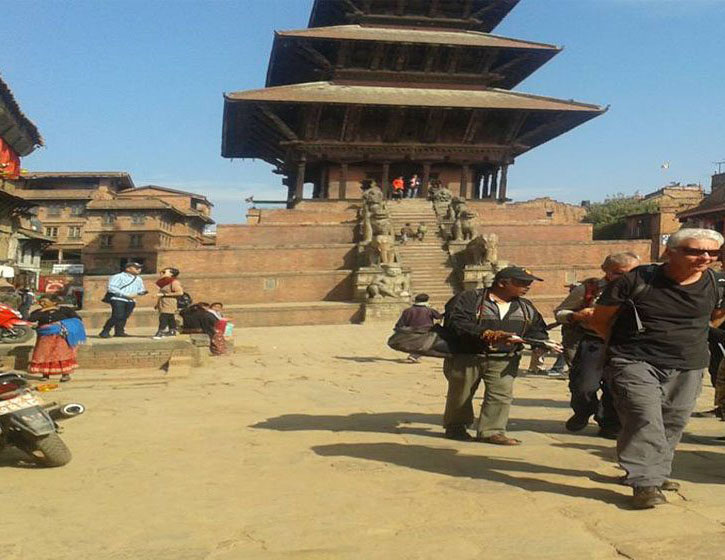
Continue to Taumadhi Square, home to Nyatapola Temple, the tallest pagoda-style temple in Nepal. This five-tiered marvel was built in 1702 and is dedicated to Siddhi Lakshmi, a Tantric deity. The temple is a symbol of balance, strength, and architectural excellence, with statues of mythical beings guarding each level of the staircase.
Pottery Square
A visit to Pottery Square offers insight into Bhaktapur’s living traditions. Here, you can observe potters at work, spinning clay on wooden wheels and drying their creations in the sun. The square is filled with freshly crafted pots, bowls, and lamps, and you can even try your hand at shaping clay under the guidance of a local artisan.
Local Lifestyle and Newari Cuisine
Bhaktapur is also an excellent place to immerse yourself in Newari culture, the indigenous ethnic group of the valley. As you walk through its narrow alleys, you can observe the daily life of locals and, furthermore, sample traditional Newari dishes such as Juju Dhau (king curd), Chatamari (rice crepe), and Bara (fried lentil patties). The slow pace, friendly locals, and deeply rooted traditions make Bhaktapur a delightful cultural experience.
Return to Kathmandu in the late afternoon. Overnight stay in Kathmandu.
Day 3: Patan—City of Fine Arts and Hidden Temples
The third and final day of the Kathmandu Valley tour takes you to Patan, also known as Lalitpur, the “City of Fine Arts.” Just across the Bagmati River from Kathmandu, Patan boasts an extraordinary concentration of temples, statues, and palaces and is renowned for its artistic heritage and metalwork.
Patan Durbar Square
Begin your exploration at Patan Durbar Square, a UNESCO World Heritage Site. The square is full of Newar architecture. It features temples and palace buildings from the 16th century. Notable landmarks include Krishna Mandir, built entirely of stone. There is also the Hiranya Varna Mahavihar, known as the Golden Temple. The Patan Museum is nearby. It houses a world-class collection of traditional sacred art and artifacts.
Hidden Courtyards and Temples
Patan is also famous for its hidden courtyards (bahals) and small temples tucked away from the main squares. Walk through narrow lanes to discover intricately designed courtyards like Kwa Bahal, Mahabouddha Temple, and Sundari Chowk. Each offers a quiet sanctuary showcasing stunning architecture, intricate bronze statues, and detailed woodcarvings.
Local Artisans and Craftsmanship
Patan is home to Nepal’s most skilled metalworkers and stone carvers. During the tour, you’ll visit local workshops where artisans craft statues of deities, ritual items, and traditional jewelry using centuries-old techniques. In addition, you can observe the delicate process of casting and carving. You’ll also have the chance to purchase authentic handmade souvenirs directly from the makers. Consequently, you support local craftsmanship and gain a deeper appreciation for these timeless arts.
Cultural Interaction and Relaxation
As your tour winds down, enjoy a relaxed lunch at a traditional rooftop café overlooking the temples. Interact with locals, share a cup of tea, or reflect on the beauty and harmony of Patan’s living culture. In the afternoon, your guide will drive you back to your hotel or to the airport if you are continuing your journey.
Why Choose Himalayan Realms Treks?
Experienced Guides: Our passionate local cultural guides speak fluent English. They provide deep insights into Nepal’s rich history and heritage.
>Tailored Experience: Whether you’re a photographer, spiritual seeker, or history enthusiast, we customize the tour’s pace and focus to fit your interests.
Safe and Comfortable Transport: Enjoy all transfers in reliable, air-conditioned vehicles for your comfort.
Authentic Encounters: We prioritize genuine cultural interactions through curated visits to workshops, homes, and monasteries.
Sustainable Tourism: Moreover, we promote responsible travel that respects local traditions and supports artisans and communities.
Conclusion
The 3-Day Kathmandu Valley Sightseeing Tour is an enriching cultural immersion into the soul of Nepal. It’s a journey that brings together majestic temples, ancient royal palaces, living traditions, and warm-hearted people.
With each step on cobbled streets and every fluttering prayer flag, you’ll feel closer to Nepal’s spiritual essence. You might stand before the serene stupas of Boudhanath, explore Bhaktapur’s timeless squares, or admire the intricate sculptures in Patan. This short yet meaningful tour leaves lasting impressions. Furthermore, it invites you to immerse yourself in the living heritage of the Kathmandu Valley. Here, every stone tells a story, and every moment touches the heart. In addition, you’ll discover why this region remains a vibrant cultural treasure.
Itinerary
Arrival in Kathmandu-Transfer to Hotel:-Welcome at the Tribhuvan International Airport and transfer to hotel in Kathmandu, rest at the hotel and briefing about the trip. Overnight accommodation is set with BB Plan.
After breakfast full day sightseeing in Kathmandu valley inclusive of Buddha Nath Stupa (this is one of the biggest Buddhist stupa in Nepal, where also you will be able to see many monks and Tibetan peoples), Pasupatinath (one of the most important Hindu Temple of God Shiva, where dead body also cremate), Bhaktapur City (Among three oldest cities is one of the interesting city , where visitor can see fifty five wood carving windows palace, a lot of pottery clubs, many temples and a lot of wood carving place) , Patan City (Also one of the city like Bhaktapur where you will be able to see a Hindus Temple is call God Krishna Temple and Many others as well as A Buddhist Temple call Golden Temple ) & Swyambhunath Stupa (One of oldest Buddhist Stupa located at the highest place in Kathmandu Valley, from where you can see the surroundings of Kathmandu Valley, as well as some mountain peaks also if weather is nice) .
From hotel to Trivhuvan international airport:- today is free or last minute you have few hour special shopping for your relatives. If you have more time you can do some shopping or sightseeing then We will drop you to the International airport to catch your flight back to your home and wish for your Safe journey.
Included
- 2 night 3 star hotel in Kathmandu. with breakfast
- All the Land transfer to the sightseeing point
- All the entrance fees in the sight point
- Airport pick up drop service by car
- All meal (breakfast, lunch & dinner)
- Itinerary English speaking nature guide national park fee
- All government tax
Not Included
- Food in Kathmandu ( Lunch & Dinner)
- Nepal Visa fee
- International airfare from your country to Kathmandu and from Kathmandu
- Extra night accommodation in Kathmandu
- Extra night accommodation in Kathmandu
Useful Info
1. Overview
Kathmandu Valley is the cultural and historical heart of Nepal, encompassing the three ancient cities of Kathmandu, Bhaktapur, and Patan. A UNESCO World Heritage Site, the valley is renowned for its stunning temples, royal palaces, courtyards, and centuries-old traditions. Tours in this region blend sightseeing with immersive cultural experiences.
2. Entry Requirements
Visa: Tourists can obtain a visa on arrival at Tribhuvan International Airport or apply online in advance.
Passport Validity: Minimum of 6 months’ validity required.
Permits: No special permits are required for Kathmandu Valley tours.
3. Best Time to Visit:
Spring (March to May): Clear skies, blooming rhododendrons, and pleasant temperatures.
Autumn (September to November): Best weather and visibility, ideal for sightseeing and festivals.
Winter (December to February): Cooler temperatures, but still accessible.
Monsoon (June to August): Heavy rain can impact travel plans, but the valley is lush and less crowded.
4. Major Attractions
Kathmandu: Swayambhunath (Monkey Temple), Boudhanath Stupa, Pashupatinath Temple, Kathmandu Durbar Square.
Patan (Lalitpur): Patan Durbar Square, Golden Temple, local art shops and handicrafts.
Bhaktapur: Bhaktapur Durbar Square, Nyatapola Temple, Pottery Square.
5. Culture & Religion
The valley is a spiritual hub with Hinduism and Buddhism coexisting harmoniously.
Festivals like Dashain, Tihar, Indra Jatra, and Buddha Jayanti are widely celebrated.
Traditional Newari architecture, cuisine, and rituals dominate the valley's identity.
6. Transportation
Airport: Tribhuvan International Airport (KTM), 6 km from the city center.
Local Transport: Taxis, rickshaws, buses, and private cars are available.
Guided Tours: Recommended for historical insights and ease of navigation.
7. Accommodation
Wide range of options from luxury hotels to budget guesthouses.
Popular tourist areas: Thamel (Kathmandu), Jhamsikhel (Lalitpur), and Bhaktapur Old Town.
8. Food and Drink
Traditional Newari cuisine is a must-try (Yomari, Bara, Chatamari).
International dishes are available in major towns.
Drink bottled or filtered water to avoid illness.
9. Safety and Health
Kathmandu Valley is generally safe for tourists.
Watch for traffic when walking.
Altitude is not a concern here, but air pollution can affect sensitive individuals.
Travel insurance is recommended.
10. Currency and Costs
Currency: Nepalese Rupee (NPR).
ATMs are widely available in major towns.
Kathmandu Valley tours are affordable, with options to suit all budgets.
11. Guides and Language
English-speaking guides are available and enhance the experience with historical and cultural context.
Nepali is the national language; basic English is widely understood in tourist areas.
12. What to Pack
Light clothing for the day and a jacket for cool evenings.
Comfortable walking shoes.
Sunscreen, sunglasses, hat.
Power adapter (Nepal uses Type C, D, and M plugs).
FAQs
-
What is included in a typical Kathmandu Valley tour?
Most tours include transportation, guided visits to major heritage sites (Swayambhunath, Boudhanath, Pashupatinath, Durbar Squares), entrance fees, and sometimes lunch. Multi-day tours may include accommodation and airport transfers.
-
How long does a Kathmandu Valley tour take?
Half-day tours cover 1–2 major sites (approx. 3–4 hours). Full-day tours visit 3–4 heritage sites (6–8 hours). Multi-day packages (2–4 days) allow deeper exploration of Kathmandu, Patan, and Bhaktapur.
-
Do I need a guide for the tour?
A guide is highly recommended. They provide in-depth historical and cultural insights, especially useful at temples, palaces, and UNESCO sites.
-
What is the best time to visit Kathmandu Valley?
March–May (Spring) and September–November (Autumn) offer pleasant weather and clear skies. Winter is cooler but still good for sightseeing. Monsoon season (June–August) brings rain and humidity.
-
Is Kathmandu Valley suitable for children and seniors?
Yes. Most tour sites are easily accessible. Some areas have stairs or uneven paths, but with proper pacing, the tour is manageable for all age groups.
-
Are entrance fees included in the tour price?
It depends on the package. Some tours include all entry fees, while budget options may ask travelers to pay on-site.
-
What kind of food is available during the tour?
Local Nepali and Newari cuisine is popular. International restaurants are also available in Kathmandu, Patan, and Bhaktapur. Vegetarian options are widely available.