+9779851088550

Labuche peak climbing 18 days

Alt"'Lamuche peak climbing. Labuche peak"
Trip Duration
18 days
Trip Grade
Modorade
Transportation
flight Drive and flight
Max. Altitude
6,145m (20070 ft )
Destination
Everest Region
Meals
Breakfast, Lunch,Dinner, tea/coffee
Accomodation
Hotel tea house
Season
September to December and March to May

Trip overview

Overview: Lobuche Peak Climbing 18-days

Lobuche Peak hiking  is a thrilling Himalayan adventure, blending high-altitude trekking with an exhilarating mountaineering experience. The Peak Climbing is a thrilling Himalayan adventure. Lobuche East stands at 6,119 meters and is one of Nepal’s most popular trekking peaks. It offers stunning panoramic views of Mount Everest, Lhotse, Nuptse, Ama Dablam, Makalu, and other giants. This 18-day journey is ideal for adventurers seeking a rewarding challenge that remains within reach for moderately experienced climbers. Along the way, you’ll experience the rich culture of the Khumbu region.

Lobuche Peak: Location

The Lobuche Peak hike is a small mountain only 6,119 meters high. Lobuche Peak Climbing is one of the most popular and challenging summits in the Khumbu region. Climbing requires healthy physical fitness and a positive attitude to reach the top of East Lobuche peak. Lobuche East Peak lies southwest of Everest Base Camp near the Cho-la pass; at first, it remains hidden; however, as you ascend toward the Labuche and Tugla area, the mountain gradually comes into view. From this vantage point, the twin peak-Labche East and Labuche West-stand prominently, commanding the skyline of the Khumbu Valley

Lobuche Peak is situated in the Khumbu region of northeastern Nepal, close to the Everest Base Camp trail within the Sagarmatha National Park. It lies near the village of Lobuche, not far from the famous Khumbu Glacier and Gorakshep, offering climbers stunning alpine scenery and access to some of the world’s highest mountains.

Starting and Ending Points

Starting Point: Kathmandu, with a scenic flight to Lukla (2,860m), and Ending Point: Lukla, with a return flight to Kathmandu. Along the journey, trekkers pass through iconic villages like Namche Bazaar, Tengboche, Dingboche, and Lobuche, each offering its own unique charm and culture. From there, it continues to Lobuche High Camp and, ultimately, to the summit of the peak.

Settlement of Peoples, Lifestyle, and Religion

The trail traverses through traditional Sherpa settlements, a community known for its resilience, mountaineering skills, and warm hospitality. The Sherpas live a mountain-based lifestyle, relying on agriculture, yak herding, and tourism for their livelihood. Their culture is deeply rooted in Tibetan Buddhism, visible in the colorful monasteries, prayer flags, mani walls, and chortens throughout the trail.

A key spiritual highlight of the journey is a visit to Tengboche Monastery, the largest gompa in the region. It offers a unique blend of cultural richness and scenic beauty.

Lobuche Peak Climbing Difficulty—A Detailed Overview

The Lobuche Peak climb (also spelled “Labuche”) is one of Nepal’s most popular trekking peaks, located near the Khumbu Glacier and not far from Everest Base Camp. There are two summits: Lobuche East (6,119 m) and Lobuche West (6,145 m). Most climbers attempt Lobuche East, which is a trekking peak classified by the Nepal Mountaineering Association (NMA), while Lobuche West is a more technical expedition peak.

Difficulty Level

Lobuche East is considered “moderately difficult” to “difficult” depending on:

1. Prior mountaineering experience. 2,. Acclimatization 3. Weather conditions

Moreover, Lobuche Peak is more technical than the nearby Island Peak, making it better suited for climbers who possess basic mountaineering experience

Technical Challenges

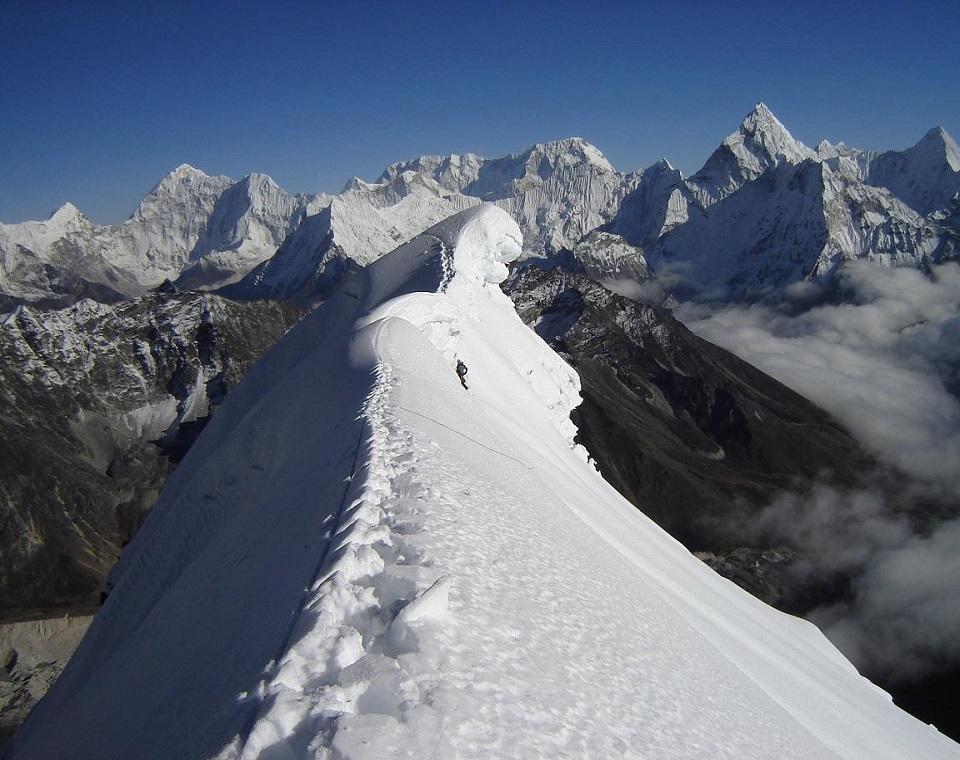
Steep Ice and Snow Slopes: Sections of 45–60 degrees on the final ridge. Use of Mountaineering Gear: Climbers must use ropes, crampons, ice axes, ascenders, and harnesses. Glacier Travel: Requires navigating through crevassed terrain. Fixed ropes are usually installed above high camp; familiarity with jumar use is essential.

Physical Fitness Required

Excellent cardiovascular endurance. Strong legs for steep ascents. Ability to climb for 8–10 hours a day at altitude and Mental resilience under extreme weather and oxygen-deprived conditions

Acclimatization Factor

The route ascends to over 6,000 meters, so proper acclimatization is crucial. Most itineraries include: A trek to Everest Base Camp and Kala Patthar before the summit push 2–3 acclimatization nights at Lobuche or Dingboche

Weather Conditions

Harsh and unpredictable at higher elevations. Best seasons: Spring (April–May) and Autumn (October–November). Sudden storms, snowfall, and high winds can increase difficulty

Logistical Difficulty: Requires a licensed guide under NMA rules. Permit needed: Lobuche Peak Climbing Permit via the NMA. Requires porters, camping gear (for high camp), and food arrangements above base camp

Labuche peak climbing permit

For the Labuche peak, several permits are required. The Lobuche Peak Climbing Permit, issued by the Nepal Mountaineering Association, costs USD 250 in spring, USD 125 in autumn, and USD 70 in winter and summer. In addition, climbers need a Sagarmatha National Park Entry Permit (approx. USD 23), a Khumbu Pasang Lhamu Rural Municipality Permit (approx. USD 15), and a TIMS cardUSD 20 for independent trekkers or USD 10 through a registered agency. These permits are mandatory for accessing and trekking within the Everest region. Lobuche East (6,119 meters) is categorized as a trekking peak and is the one typically climbed, whereas Lobuche West requires a separate expedition permit due to its technical difficulty. For convenience and compliance, most climbers obtain permits through a licensed trekking agency in Nepal, which also helps with logistics, guides, and support staff, ensuring a smoother and safer climbing experience.

Lobuche East Peak is ideal for climbers who:

The Labuche peak climbers have previous high-altitude trekking experience. Have done basic mountaineering training. Want to prepare for 7,000+ m expeditions in the future

It’s not suitable for complete beginners, but for those with preparation, it’s a thrilling and rewarding Himalayan peak.

HIGHLIGHTING THE MAIN POINTS:

Beautiful mountain flight from and to Lukla. Lobuche Peak Climbing is a thrilling Himalayan adventure, combining high-altitude trekking with an exhilarating mountaineering experience. Standing at 6,119 meters, Lobuche East is one of Nepal’s most popular trekking peaks. This peak offers a challenging climb, attracting adventurers who are eager to reach new heights in the heart of the Himalayas. The bazaar of Namche and the monastery of Tengboche… Sightseeing of the beautiful world heritage sites in Kathmandu. An unforgettable view of the high mountains and the Khumbu Icefall.

Vegetation and Atmosphere

The journey takes you through various climatic zones: Lower regions (Lukla to Namche): Dense rhododendron, pine, and birch forests. Mid-altitudes (Namche to Dingboche): Alpine shrubs, junipers, and gradually sparse vegetation. Higher elevations (Above Dingboche): Rugged, glacial terrain and barren landscapes

The air becomes crisp and thin as you ascend, with a noticeable drop in oxygen levels adding to the thrill and challenge of the climb. The atmosphere is tranquil, spiritual, and invigorating, surrounded by the grandeur of the Himalayas.

Flora and Fauna Along the Lobuche Peak Route

Furthermore, the Lobuche Peak climbing journey begins with a rich diversity of flora and fauna, particularly in the lower altitudes of the Sagarmatha National Park, a designated UNESCO World Heritage Site.

Flora

The Labuche peak climbing At the lower elevations (around 2,800 meters), trekkers first pass through lush forests filled with rhododendrons—especially vibrant in spring—along with birch, pine, juniper, and oak trees. As the trail ascends, the vegetation gradually shifts to alpine shrubs and mosses. Higher up, beyond 4,000 meters, the landscape grows increasingly sparse; gradually, alpine meadows and dwarf junipers give way to stark, rocky slopes and glacial terrain

Fauna

The Labuche peak climbing is home to several rare and endangered animals. Along the trail, if you’re lucky, you might spot Himalayan tahr, musk deer, snow leopards (rare and elusive), or red pandas (mostly in the lower forested regions). Himalayan monal (Nepal’s national bird), blood pheasant, and other high-altitude birds. As you move higher, wildlife sightings gradually decrease; nevertheless, the serene alpine environment continues to offer an incredibly rewarding experience

Why Climb Lobuche Peak?

The Labuche peak climb is an adventure with accessibility: a perfect blend of trekking and mountaineering for climbers with moderate experience. Technical Challenge: A great introduction to the use of ropes, crampons, and ice axes. Spectacular Views: Arguably the best vantage point to witness Mount Everest and the Khumbu Glacier. Cultural Experience: Deep dive into Sherpa heritage, lifestyle, and spiritual landscapes. EBC Bonus: Many itineraries include an Everest Base Camp trek, making it a two-in-one adventure.

some most popular climbing peaks

1. Island Peak Climbing

2. Mera peak Climbin

3. Yala peak climbing 

4. Pisang peak climbing

5. Singa Chuli Peak climbing 

6, cholu east peak climbing 

Conclusion

Climbing Lobuche Peak is not just a mountaineering expedition – it is a life-changing journey through the soulful culture of Nepal. From the busy streets of Kathmandu to the serene heights of Lobuche Peak, every step offers adventure, knowledge, and a deep connection with the majestic Himalayas.
Short Itinerary

Location: Khumbu Region, Solukhumbu District

Elevation: 6,119 meters / 20,075 feet (Labuche East)

Peak Type: Trekking Peak (Labuche East is permitted; Labuche West is a technical expedition peak.)

Best Season: Spring (March–May) and Autumn (September–November)

Permits Required

Labuche Peak Climbing Permit (via NMA):

Spring: USD 250

Autumn: USD 125

Winter/Summer: USD 70

Sagarmatha National Park Entry Permit: NPR 3,000 (foreigners)

Khumbu Rural Municipality Entry Permit: NPR 2,000

TIMS Card: Not required in Khumbu, replaced by the local permit

Technical Difficulty

Grade: Alpine PD+ to AD- (depending on season and conditions)

Requires knowledge of:

Crampon use

Fixed ropes, ascenders/descenders

Ice axe skills

Summit push involves steep snow/ice slopes (up to 45–60°)

Acclimatization

Key due to high altitude.

At least 2 acclimatization days (Namche and Dingboche) are essential.

A pre-climb trek to Everest Base Camp or Kala Patthar is a good strategy. Climbing Gear

Personal Gear:

Mountaineering boots

Ice axe, crampons

Harness, helmet

Carabiners (locking & non-locking), Jumar, belay device

Down jacket, gloves, thermal layers, sleeping bag (-20°C to -30°C)

Group Gear (typically provided by operator):

Ropes, snow bars, anchors, tents, cooking gear

Guide & Porter Requirement

It is mandatory to climb with a licensed guide.

Most climbers hire a climbing guide and support porter(s).

Guides are skilled in rope fixing, navigation, and emergency response.

Accommodation

Teahouses: Available up to Lobuche.

Tents: Used at Base Camp and High Camp.

Food & Water

Meals: Dal bhat, pasta, soup, fried rice, and porridge are available in teahouses.

At Base Camp/High Camp: Cooked meals provided by support staff.

Water: Always purify; use iodine, chlorine tablets, or SteriPEN.

Safety & Emergency

Risks include AMS, weather changes, and crevasses.

Emergency evacuation by helicopter is possible from high altitudes.

Travel insurance with high-altitude rescue coverage is essential.

Fitness & Preparation

Prior trekking experience above 5,000m is recommended.

Pre-trip training: endurance, cardio, leg strength, and climbing practice.

Alternative Peaks

Island Peak (6,189 Easier and more popular

Mera Peak (6,476 m)—higher but non-technical

Lobuche West (6,145 m), a Technical expedition peak, requires special permit

Itinerary

Your Labuche Peak climbing adventure begins with your arrival at Tribhuvan International Airport in Kathmandu, the vibrant capital of Nepal. As you step off the plane, you'll be greeted by the sights, sounds, and energy of a city that blends ancient culture with modern charm. A representative from our team will be waiting outside the airport terminal to welcome you with a warm smile and traditional hospitality. You’ll then be transferred to your hotel in the heart of the city, where you can relax and recover from your journey. Once you’ve settled in, we’ll arrange a pre-climb briefing in the afternoon or early evening. This session is essential to ensure that you are fully prepared for the adventure ahead. Our experienced climbing leader or guide will introduce the entire itinerary, review your gear, discuss altitude and safety precautions, and address any questions or concerns you may have. You'll also receive your climbing permits, including the NMA permit and TIMS card.

If time permits, you may wish to take a short stroll around Thamel, a lively neighborhood full of trekking shops, cafes, and cultural sites. Kathmandu itself offers a rich tapestry of experiences, and even a brief walk can offer glimpses of temples, bustling markets, and local life.

In the evening, you’ll enjoy your first Nepali dinner, either at the hotel or a nearby restaurant, before getting a good night’s rest in preparation for the exciting journey ahead.

Overnight stay at a hotel in Kathmandu

Today is a flexible and important day for acclimatizing to Nepal’s pace and preparing thoroughly for the climb ahead. After breakfast at the hotel, you’ll have the opportunity to explore some of the cultural treasures of the Kathmandu Valley. You may choose to join a guided sightseeing tour (optional) to visit UNESCO World Heritage Sites such as Swayambhunath (Monkey Temple), Boudhanath Stupa, Pashupatinath Temple, or Kathmandu Durbar Square. These sacred places offer a glimpse into Nepal’s deep spiritual traditions, intricate art, and timeless architecture.

Alternatively, if you prefer to rest, you can spend the day relaxing at the hotel or strolling through the colorful alleys of Thamel, where local shops offer handcrafted goods, trekking gear, and traditional foods. This is also a great time to shop for any last-minute gear or personal items you might need during the trek and climb.

In the afternoon, you’ll attend a final equipment check session with your guide or expedition leader. Together, you will review all technical climbing gear, including crampons, harness, helmet, ice axe, and ropes. Any missing or faulty items can be rented or purchased locally from trusted gear stores. Ensuring everything is in proper working order today will help prevent issues on the mountain.

Your guide will also reconfirm flight details for the early departure to Lukla the next morning. After the check, enjoy dinner at a local restaurant or with the group, then rest up for the exciting journey to the Khumbu region. Overnight stay in Kathmandu.

Fly to Lukla (2,860m) & Trek to Phakding (2,610m)
Flight Duration: 30–35 minutes
Trekking Duration: 3–4 hours

Today marks the true beginning of your Himalayan adventure. Early in the morning, you'll transfer to the domestic terminal for a scenic flight to Lukla, the famed gateway to the Everest region. The short but thrilling flight offers breathtaking views of the snow-capped Himalayan giants, deep river valleys, and lush terraced hills. Landing at Tenzing-Hillary Airport—perched on a mountain ridge—is an adventure in itself.

Upon arrival in Lukla (2,860 meters), you’ll meet the rest of the trekking crew, including porters and assistants, and begin your trek. The trail today is gentle and follows the Dudh Koshi River, passing through rhododendron and pine forests, Buddhist shrines, and small Sherpa settlements.

You’ll cross your first suspension bridge and enjoy the fresh mountain air as you make your way gradually to Phakding, a riverside village nestled at 2,610 meters. This first day’s hike allows your body to adjust slowly to the elevation, making it a perfect warm-up.

In the afternoon, you can relax at the teahouse or take a short acclimatization walk to a nearby monastery. Your guide will go over the next day's plan and ensure everyone is comfortable and healthy.

Dinner will be served at the teahouse, with a selection of Nepali and Western dishes, followed by a peaceful night’s sleep to the soothing sounds of the river., Overnight stay at a teahouse in Phakding.

After a nourishing breakfast in Phakding, you begin your ascent toward Namche Bazaar, the heart of the Khumbu region and a major hub for trekkers and climbers heading toward Everest. The trail continues alongside the Dudh Koshi River, weaving through pine forests and charming Sherpa villages such as Benkar and Monjo.

At Monjo, you’ll enter the Sagarmatha National Park, where your permits are checked and registered. From here, the path descends briefly to the riverbed and crosses a series of dramatic suspension bridges, including the iconic Hillary Bridge, one of the highest and most thrilling on the trek.

The real climb begins after the final river crossing—a long, steady ascent through dense forest with occasional rest stops offering glimpses of Everest, Lhotse, and Thamserku, weather permitting. Your guide will set a manageable pace to ensure proper acclimatization as you gain over 800 meters in elevation today.

Arriving at Namche Bazaar (3,440m), you’ll find yourself in a vibrant, amphitheater-shaped town bustling with life. This well-equipped settlement offers bakeries, cafes, gear shops, banks, and even internet access. It's also home to a large Sherpa community and serves as a vital trading post.

Once at the lodge, you can rest and explore the colorful market streets. The altitude gain makes today a significant day in your acclimatization process, so hydration and rest are key. Overnight stay at a teahouse in Namche Bazaar.

Optional Hike: 2–3 hours (Everest View Hotel or Khumjung Village)

Today is a crucial acclimatization day to help your body adjust to the increasing altitude. While it's called a “rest day,” staying active with a light hike is key to successful acclimatization. After breakfast, your guide will lead you on an acclimatization hike to either the Everest View Hotel (3,880m) or Khumjung Village, depending on weather and group fitness.

The short but steep hike up to the Everest View Hotel offers a panoramic reward—on a clear day, you can see Mount Everest, Lhotse, Ama Dablam, and Thamserku rising majestically above the valley. If continuing to Khumjung, you’ll visit a traditional Sherpa village with its own monastery and the reputed “Yeti scalp,” preserved inside a glass case. After soaking in the views and exploring local culture, you'll descend back to Namche for lunch. In the afternoon, enjoy free time to rest, hydrate, or explore Namche’s market, visit the Sherpa Culture Museum, or check out the Sagarmatha National Park Visitor Center to learn more about the region’s flora, fauna, and mountaineering history.

Proper acclimatization at this stage greatly improves your chances of a successful summit of Labuche Peak. Your guide will monitor your health and readiness for the days ahead.

In the evening, enjoy a warm meal and the vibrant mountain atmosphere of Namche.
Overnight stay at a teahouse in Namche Bazaar.

After breakfast, you leave behind the bustling town of Namche Bazaar and begin one of the most scenic trekking days of the journey. The trail contours along the ridge with mesmerizing views of Everest, Ama Dablam, Lhotse, and Thamserku unfolding as you walk. This stretch of the trail is particularly stunning in the morning light, with Himalayan peaks gleaming in the distance and pine forests lining your path. After a couple of hours of relatively easy walking, you’ll descend to the Dudh Koshi River at Phunki Tenga, a small settlement beside the river. Here, you’ll stop for lunch and rest before beginning a long, steady uphill climb through a beautiful forest of rhododendron and fir trees.

At the top of the ascent lies the spiritual center of the Khumbu region—Tengboche Monastery (3,860m). This historic Buddhist monastery is the largest in the Everest region and offers a dramatic setting with snow-capped peaks forming a majestic backdrop. If your timing is right, you may witness a traditional puja (prayer ceremony) performed by resident monks—an unforgettable cultural experience.

After exploring the monastery and enjoying the peaceful surroundings, you’ll check in to your teahouse nearby. The air is noticeably thinner here, and the temperature drops significantly at night, so layering up and staying hydrated are important.
Overnight stay at a teahouse in Tengboche.

After a peaceful night in Tengboche, you start the day with a gentle descent through a forest of pine and rhododendron, offering stunning morning views of Ama Dablam and Kangtega. The trail crosses the Imja Khola River via a wooden bridge, then passes through the traditional Sherpa village of Pangboche (3,985m)—the highest permanent settlement in the region.

You may visit the ancient Pangboche Monastery, believed to be one of the oldest in the Khumbu, where monks perform daily rituals and preserve Himalayan cultural heritage. The trail then climbs gradually through sparse alpine terrain, with the treeline giving way to scrubby bushes and vast open hillsides.

As you continue ascending, the towering peak of Ama Dablam (6,812m) dominates the landscape. You’ll also start to see Island Peak (Imja Tse) and the massive south face of Lhotse in the distance.

Arriving in Dingboche (4,410m), a picturesque village nestled in a broad, windswept valley, you’ll notice the altitude change more clearly. The air feels drier and thinner, and movement requires more effort. Dingboche is a key acclimatization stop with stone-walled fields and cozy teahouses, offering a peaceful break before higher climbs.

After settling in, rest and hydrate well. You might take a short walk in the afternoon to aid acclimatization, but avoid strenuous activity. Overnight stay at a teahouse in Dingboche.

Optional Hike: Nangkartshang Peak (5,083 m)—3–4 hours round trip

Today is another essential acclimatization day, allowing your body to adapt to the higher altitude before heading deeper into the Khumbu. While rest is important, staying active with a moderate hike will enhance the acclimatization process.

After breakfast, your guide will lead a side hike to Nangkartshang Peak (5,083m), a rocky ridge directly above Dingboche. The trail climbs steadily, becoming steeper as you ascend, but the effort is well rewarded with panoramic views. From the top, you’ll see Makalu (8,485m), the fifth-highest mountain in the world, along with spectacular views of Lhotse, Ama Dablam, Island Peak, and the Imja Valley below.

The hike takes about 3–4 hours round trip and helps stimulate red blood cell production, crucial for altitude adaptation. You’ll return to Dingboche for lunch and have the afternoon free to rest, journal, or explore the village at your own pace.

Dingboche offers a unique high-altitude experience, with its traditional stone walls, potato fields, and close-up views of surrounding Himalayan giants. The landscape here is stark yet beautiful, with a dramatic sky that shifts colors as the sun moves.
Your guide will monitor your health and ensure you’re acclimatizing well. Proper hydration, nutrition, and sleep are key during this critical stage. Overnight stay at a teahouse in Dingboche.

Trekking Duration: 5–6 hours
Today, the trail leads you through Dughla, where you’ll see memorials to climbers who perished on Everest. After crossing the Khumbu Glacier moraine, the route ascends steadily to Lobuche (4,910m). With stunning views of Nuptse, Pumori, and Cholatse, Lobuche is a great place to rest and prepare for the final push to Everest Base Camp.
Overnight stay at a teahouse in Lobuche.

Trek to Gorak Shep (5,164m) & Everest Base Camp (5,364m) Day 10: Trek to Gorak Shep (5,164m) & Everest Base Camp (5,364m) to Gorak Shep (5,164m) & Everest Base Camp (5,364m)

Early morning, hike to Kala Patthar for incredible views of Everest at sunrise. The climb is steep but rewarding, offering unparalleled panoramic vistas. Afterward, descend back to Lobuche. Overnight stay at a teahouse in Lobuche.

The trail to Labuche High Camp involves a steep, gradual climb. After setting up camp and attending a climbing briefing, you'll rest and prepare for the summit attempt. Overnight at Labuche High Camp (tented camp).

Start your summit push early in the morning, navigating technical terrain including fixed ropes, snow, and ice. After reaching the summit, enjoy breathtaking views of Everest, Lhotse, and Makalu before descending back to High Camp. Overnight at Labuche High Camp (tented camp).

This is an extra day in case of bad weather or altitude-related issues. If needed, it allows for another summit attempt or extra rest. Overnight at Labuche High Camp (tented ca

After the summit attempt, descend through familiar terrain. Passing Pangboche, you’ll notice the descent’s impact on your energy as the altitude decreases. Overnight stay at a teahouse in Pangboche.

Continue your descent, crossing the Dudh Koshi River and retracing your steps through Tengboche. Arriving in Namche, enjoy the vibrant atmosphere of the Sherpa heartland. Overnight stay at a teahouse in Namche Bazaar.

Your final trekking day takes you back to Lukla, where you can reflect on your adventure and say farewell to your porters and crew. Overnight stay at a teahouse in Lukla.

In the morning, you’ll take a flight back to Kathmandu. Upon arrival, transfer to your hotel. The remainder of the day is free to relax or explore Kathmandu before your final departure. Overnight stay in Kathmandu.

Useful Info

Location: Khumbu Region, Solukhumbu District

Elevation: 6,119 meters / 20,075 feet (Labuche East)

Peak Type: Trekking Peak (Labuche East is permitted; Labuche West is a technical expedition peak.)

Best Season: Spring (March–May) and Autumn (September–November)

Permits Required

Labuche Peak Climbing Permit (via NMA):

Spring: USD 250, Autumn: USD 125. Winter/Summer: USD 70

Sagarmatha National Park Entry Permit: NPR 3,000 (foreigners)

Khumbu Rural Municipality Entry Permit: NPR 2,000

TIMS Card: Not required in Khumbu, replaced by the local permit

Technical Difficulty

Grade: Alpine PD+ to AD- (depending on season and conditions)

Requires knowledge of: Crampon use, Fixed ropes, ascenders/descenders Ice axe skills

Summit push involves steep snow/ice slopes (up to 45–60°)

Acclimatization

Key due to high altitude.

At least 2 acclimatization days (Namche and Dingboche) are essential.

A pre-climb trek to Everest Base Camp or Kala Patthar is a good strategy.

Climbing Gear

Personal Gear:

Mountaineering boots

Ice axe, crampons

Harness, helmet

Carabiners (locking & non-locking), Jumar, belay device

Down jacket, gloves, thermal layers, sleeping bag (-20°C to -30°C)

Group Gear (typically provided by operator):

Ropes, snow bars, anchors, tents, cooking gear

Guide & Porter Requirement

It is mandatory to climb with a licensed guide.

Most climbers hire a climbing guide and support porter(s).

Guides are skilled in rope fixing, navigation, and emergency response.

Accommodation

Teahouses: Available up to Lobuche.

Tents: Used at Base Camp and High Camp.

Food & Water

Meals: Dal bhat, pasta, soup, fried rice, and porridge are available in teahouses.

At Base Camp/High Camp: Cooked meals provided by support staff.

Water: Always purify; use iodine, chlorine tablets, or SteriPEN.

Safety & Emergency

Risks include AMS, weather changes, and crevasses.

Emergency evacuation by helicopter is possible from high altitudes.

Travel insurance with high-altitude rescue coverage is essential.

Fitness & Preparation

Prior trekking experience above 5,000m is recommended.

Pre-trip training: endurance, cardio, leg strength, and climbing practice.

Alternative Peaks

Island Peak (6,189 Easier and more popular

Mera Peak (6,476 m)—higher but non-technical

Lobuche West (6,145m Technical expedition peak, requires special permit

FAQs

  • What is Lobuche Peak?

    Lobuche Peak is a popular trekking peak in the Khumbu region of Nepal. It has two main summits: Lobuche East (6,119 m), which is a trekking peak, and Lobuche West (6,145 m), a technical expedition peak. Most climbers aim for Lobuche East as it’s permitted for commercial climbing.

  • How difficult is Lobuche Peak Climbing?

    Lobuche East is considered a moderately technical climb. It involves some steep snow and ice sections, the use of fixed ropes, and glacier travel. Prior experience with basic mountaineering techniques and good physical fitness are essential.

  • Do I need previous climbing experience?

    Do I need previous climbing experience?

  • Do I need a climbing permit for Lobuche Peak?

    Yes. You will need the following permits: Lobuche Peak Climbing Permit (issued by the NMA) Sagarmatha National Park Permit Khumbu Pasang Lhamu Rural Municipality Entry Permit Your trekking agency typically handles all permits.

  • Is altitude sickness a concern?

    Yes. Lobuche Peak lies above 6,000 meters, and proper acclimatization is critical. Most itineraries include time at higher elevations like Namche Bazaar, Dingboche, or Everest Base Camp to adapt.

  • Is travel insurance required?

    Absolutely. You must have travel insurance that includes: High-altitude evacuation (above 6,000m) Medical coverage Trip cancellation and delay

  • How long is the summit day, and what is it like?

    Summit day typically starts around 2–3 AM and takes 8–12 hours round trip. You’ll use headlamps in the early hours, cross glaciers, ascend steep snow slopes using fixed ropes, and enjoy stunning views of Everest, Lhotse, Ama Dablam, and more from the summit.

Quick Enquiry

Similar Trips

Alt. Annapurna Base camp with Hot Spring
9% off
USD $950
Alt, Annapurna Base Camp
8% off
USD $1,145
2% off
USD $990

Karpu danda trek

5 Days

WHEN TO GO:

  • J
  • F
  • M
  • A
  • M
  • O
  • N
  • D
Book Now

Testimonials