

Overview: Tengboche, the Everest Region
Introduction
Nestled in the heart of the Khumbu realm, Tengboche (also spelled Thyangboche) is a serene highland sanctuary renowned for its divine tranquility, rich cultural tapestry, and breathtaking natural magnificence. Suspended on a wide ridge at approximately 3,867 meters (12,687 feet), this enchanting Sherpa settlement is the spiritual core of the Everest region. While famed primarily for its iconic Tengboche Monastery, this hamlet also acts as a gateway to Mount Everest, offering trekkers an extraordinary fusion of Himalayan culture, nature, and spiritual insight.
Tengboche’s dramatic setting, bordered by rhododendron forests and gazing directly at Ama Dablam’s towering face, elevates it beyond mere geography. It is both a pilgrimage destination and a favored resting point for hikers on their way to Everest Base Camp. This piece unpacks the essence of Tengboche through its topography, community, ecology, spiritual role, and its status as a must-see destination in the Nepal Himalayas.
About Tengboche
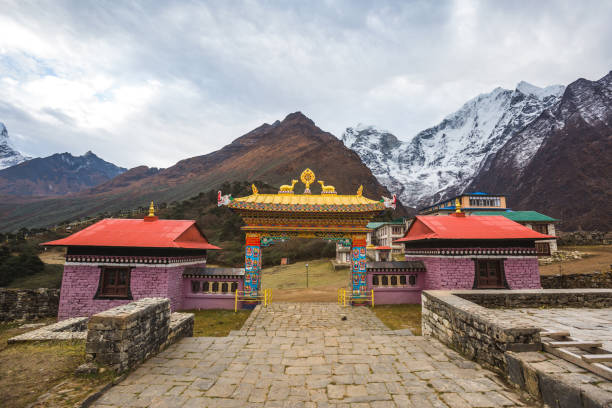
Tengboche is not just a waypoint but a deeply revered location within Nepal’s Sagarmatha National Park. It is chiefly recognized for the Tengboche Monastery (Dawa Choling Gompa), the largest and most prominent Buddhist religious structure in the Khumbu vicinity. The monastery is a focal point for the annual Mani Rimdu festival, attracting monks, pilgrims, and travelers from around the globe.
Although modest in size, the village’s importance is far-reaching. Its function transcends that of a mountain stop—it represents the spiritual lifeline of the Sherpa community, a symbol of perseverance, heritage, and devotion. With panoramic views of Mt. Everest, Nuptse, Lhotse, and Thamserku, it is a destination that blends human spirituality with natural grandeur.
Location
Tengboche is situated in the northeastern expanse of Nepal, within the Solukhumbu District of Province No. 1. Resting inside Sagarmatha National Park—a UNESCO World Heritage Site—it lies along the Everest Base Camp trekking corridor. Geographically, it perches above the confluence of the Dudh Koshi and Imja Khola rivers, granting stunning vistas of the snow-capped Himalayan chain.
Encircled by alpine meadows and undisturbed woodland, its strategic altitude offers unobstructed views of surrounding summits while remaining accessible to trekkers ascending from Namche Bazaar. The village stands as a natural amphitheater, encased in silence broken only by wind gusts, the chants of monks, and the distant rush of glacial streams.
How to Reach Tengboche
Reaching Tengboche involves a multi-phase adventure that begins with a short but thrilling flight from Kathmandu to Lukla, a hilltop airstrip etched into the mountains. From Lukla, trekkers proceed by foot through the Everest Base Camp Trail, a legendary path dotted with villages such as Phakding, Monjo, and Namche Bazaar.
Namche, the bustling trade hub of the Khumbu region, acts as an acclimatization halt. From there, a demanding yet captivating uphill trek through forests of pine and rhododendron, and across suspension bridges brings one to Tengboche in approximately two days. The final stretch rewards visitors with one of the most breathtaking approach views in the Himalayas—Ama Dablam looming in the foreground and Everest emerging gradually on the horizon.
Helicopter charters are also available for those seeking a swift aerial approach, but most adventurers opt for the traditional path to soak in the scenery and spirit of the region.
People of Tengboche
The locals of Tengboche predominantly belong to the Sherpa ethnicity, an indigenous group of Himalayan dwellers celebrated for their mountaineering prowess and spiritual devotion. These inhabitants live modest lives intertwined with Buddhist customs, deeply respecting the rhythms of nature and the teachings of the Dharma.
Sherpas here maintain a lifestyle that harmonizes ancient traditions with the practicalities of high-altitude existence. They serve as monks, hoteliers, porters, and trekking guides, playing pivotal roles in preserving culture while welcoming global visitors with humility and grace.
Their dialect, attire, cuisine, and festivals echo their Tibetan ancestry, but their unique experiences in Nepal’s extreme elevations have shaped a culture that is distinctly Sherpa—resilient, humble, and spiritually enriched.
Accommodation in Tengboche
Despite its remote setting, Tengboche offers various types of shelters to travelers. Guesthouses and teahouses dominate the lodging scene, providing simple yet cozy rooms furnished with basic amenities such as clean bedding, shared restrooms, and warm meals.
Most accommodations are family-run, allowing visitors to experience Sherpa hospitality firsthand. A few lodges offer better insulation, attached bathrooms, and heated dining areas, but electricity, Wi-Fi, and hot water often come with an extra cost due to the logistical challenges of this highland location.
Travelers are advised to carry sleeping bags and backup power banks, as comfort in Tengboche is functional rather than luxurious. The views, serenity, and spiritual ambiance, however, more than compensate for material simplicity.
Religious Significance
Religion is the lifeblood of Tengboche, with Tibetan Buddhism reigning supreme in daily life and seasonal celebrations. The Tengboche Monastery, rebuilt after a fire in 1989, houses ancient scriptures, murals, prayer wheels, and statues of Guru Rinpoche and Buddha Shakyamuni. This spiritual hub is home to over 30 monks and lamas who engage in daily chants and rituals.
The Mani Rimdu festival, celebrated each autumn, is the zenith of Tengboche’s religious calendar. It features mask dances, sacred rituals, and communal blessings, drawing not only monks but also hundreds of foreign and local observers.
Colorful prayer flags flutter around stupas and mani walls, while yak-borne caravans stop to receive blessings before continuing toward Everest Base Camp. The spiritual energy is so palpable that even secular visitors often describe a sense of peace and awakening upon arrival.
Lifestyle and Culture
Life in Tengboche is dictated by the elements and the monastic calendar. The people rise with the sun, tend to yaks and fields, and participate in spiritual observances. Children may walk several kilometers to attend school, and families rely on agriculture, tourism, and small trade to sustain themselves.
Daily customs include lighting butter lamps, reciting prayers, and spinning prayer wheels. Traditional Sherpa meals such as shyakpa (stew), tsampa (roasted barley flour), and momo (dumplings) provide nourishment in the thin air. Tea infused with yak butter is a daily staple.
The community thrives on mutual support and maintains a high degree of self-sufficiency. Festivities such as Losar (Tibetan New Year) and Buddha Jayanti are marked with gatherings, feasts, and spiritual ceremonies.
Flora and Fauna
Tengboche is surrounded by a vibrant biosphere that includes both endemic and migratory species. The forests around Tengboche are rich with rhododendron, birch, fir, and juniper trees. These bloom brilliantly in spring and turn golden in autumn, creating stunning seasonal landscapes.
Wildlife in the area includes snow leopards, Himalayan monals (Danphe—the national bird), musk deer, red pandas, and Himalayan tahrs. Birds like ravens, crows, and choughs often circle overhead, especially near teahouses.
A deep respect for both nature and spirituality helps protect the local ecosystem. Tengboche lies between alpine and subalpine zones, making it ideal for nature lovers and wildlife watchers.
Vegetation and Terrain
The surrounding terrain of Tengboche includes alpine pastures, dwarf shrublands, and mixed forests. Vegetation thins with elevation, but the diversity in plant life remains remarkable. Rhododendron and dwarf juniper dominate the lower slopes, while mosses and lichens thrive in higher, rockier niches.
During spring, the hillsides burst into color with pink, red, and purple blooms. Medicinal herbs and wildflowers such as edelweiss also start to appear, adding richness to the land and delighting the senses. With its many small habitats, Tengboche becomes a paradise for plant lovers, ecotourists, and researchers.
Atmosphere and Climate
The air in Tengboche is crisp, thin, and filled with a quiet sense of peace. Skies stay mostly clear during the post-monsoon and pre-monsoon seasons, giving travelers excellent views of Everest and the nearby peaks. Days are mild, but nights can become very cold.
Soft monastic chants drift through the pine-scented air, adding to the calm atmosphere. In the early morning, mist often moves across the ridges, making the monastery look as if it is floating above the valley. At sunset, warm orange light falls on Ama Dablam, creating moments that stay with every traveler long after they leave.
Trekking Hub in Nepal
Tengboche is a major highlight of the Everest Base Camp trek—one of the world’s most iconic walking journeys. For many trekkers, it serves as the spiritual high point, offering a quiet moment of reflection before they ascend into the harsher, more barren terrain above.
The village also lies along the Three Passes Trek. It’s a common stop for those heading to Gokyo Lakes or Island Peak. Its location at the crossroads of key Himalayan trails makes Tengboche a vital stop on any Everest-region adventure.
Services by The Himalayan Realms Treks and Freelance Guides
At The Himalayan Realms Treks and Expedition Nepal Pvt. Ltd., we ensure your journey to Tengboche is meaningful, safe, and memorable. Our experienced Sherpa and licensed Nepali guides bring not just knowledge but heartfelt connections to the region.
We provide custom-made itineraries, responsible trekking practices, acclimatization assistance, cultural briefings, and local accommodation arrangements.
Our affiliated freelance guides, many of them born in the Khumbu region, offer genuine local insights. They help you experience Tengboche through the eyes of those who live there. We focus on sustainability, cultural preservation, and traveler satisfaction. Whether you’re here for a spiritual retreat, a nature walk, or a trek to Everest Base Camp, we make your journey through Tengboche smooth and rewarding. Our experience ensures every step feels simple, clear, and meaningful.