

Overview: Annapurna Region
Introduction
The Annapurna Region is one of Nepal’s most diverse and breathtaking trekking destinations. It is famed for its stunning scenery, cultural variety, and many trekking and mountaineering options. Located in north-central Nepal, this area offers everything from easy scenic trails to high-altitude expeditions. This makes it a popular choice for both novice hikers and experienced climbers. With well-preserved natural surroundings, ancient traditions, and snow-capped peaks, the region captures the true spirit of Himalayan adventure. Beyond the famous Annapurna Base Camp trek, the region also includes the Annapurna Circuit, Upper Mustang, Mardi Himal, Khopra Ridge, Khayer Lake, and the Jomsom-Muktinath trail. Additionally, numerous challenging climbing peaks offer adventurers unforgettable memories and rich cultural experiences.
Annapurna Base Camp Trek
The Annapurna Base Camp (ABC) trail is one of the most iconic trekking routes in Nepal. It takes adventurers through terraced fields, rhododendron forests, and into a glacial basin surrounded by towering peaks such as Annapurna I (8,091m), Machapuchare (6,993m), and Hiunchuli (6,441m). The combination of diverse landscapes and breathtaking mountain scenery makes ABC a favorite among trekkers.
Annapurna Circuit Trek
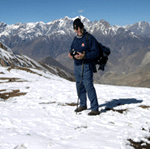
The Annapurna Circuit circles the entire Annapurna Massif and is considered one of the world’s greatest long-distance treks. A highlight of this journey is crossing the Thorong La Pass at 5,416 meters, which rewards hikers with sweeping views of snowcapped ranges. The trek transitions from lush subtropical forests to arid high-altitude zones, providing dramatic cultural and landscape diversity.
Upper Mustang Trek
To the north lies Upper Mustang, a restricted trekking area showcasing the ancient Kingdom of Lo. Characterized by arid valleys, colorful cliffs, centuries-old monasteries, and Tibetan-influenced villages, Mustang feels more like Tibet than Nepal. It offers an immersive cultural and spiritual experience for those seeking something unique.
Mardi Himal Trek
A relatively new trail, the Mardi Himal Trek brings hikers close to the southern face of Machapuchare. It is ideal for travelers who prefer solitude, lush forested trails, and panoramic views of the Annapurna range, all within a shorter time frame compared to longer treks.
Khayer Lake (Khopra Ridge) Trek
The Khayer Lake or Khopra Ridge Trek is a hidden gem that branches off from the Ghorepani-Poon Hill route. This trail offers awe-inspiring vistas, alpine lakes, and a glimpse into authentic rural village life in the Annapurna region.
Jomsom to Muktinath Trek
This route traverses the Kali Gandaki Gorge—the deepest gorge in the world—before leading trekkers to Muktinath, a sacred temple revered by both Hindus and Buddhists. It can be done as part of the Annapurna Circuit or as a shorter standalone trek.
Climbing Peaks in the Annapurna Region
The Annapurna region also offers challenging mountaineering opportunities. Annapurna I (8,091m) is one of the most technically demanding 8,000-meter peaks. For less experienced climbers, Tent Peak (Tharpu Chuli – 5,695m) and Hiunchuli (6,441m) provide rewarding but technical ascents. Pisang Peak (6,091m) and the Chulu East and West Peaks (6,584m and 6,419m) are popular among trekkers who want to combine hiking with climbing. For seasoned mountaineers, Singu Chuli (6,501m) offers a tougher technical challenge with equally stunning rewards.
About the Region
The Annapurna Region falls under the Annapurna Conservation Area Project (ACAP), Nepal’s largest protected region, covering over 7,600 square kilometers. The conservation area was established to preserve the region’s rich biodiversity and unique cultural heritage. Villages and communities throughout this territory live in harmony with their environment, practicing sustainable tourism and agriculture. It’s a self-sufficient world where traditions blend with the rhythm of nature.
Location and Geography
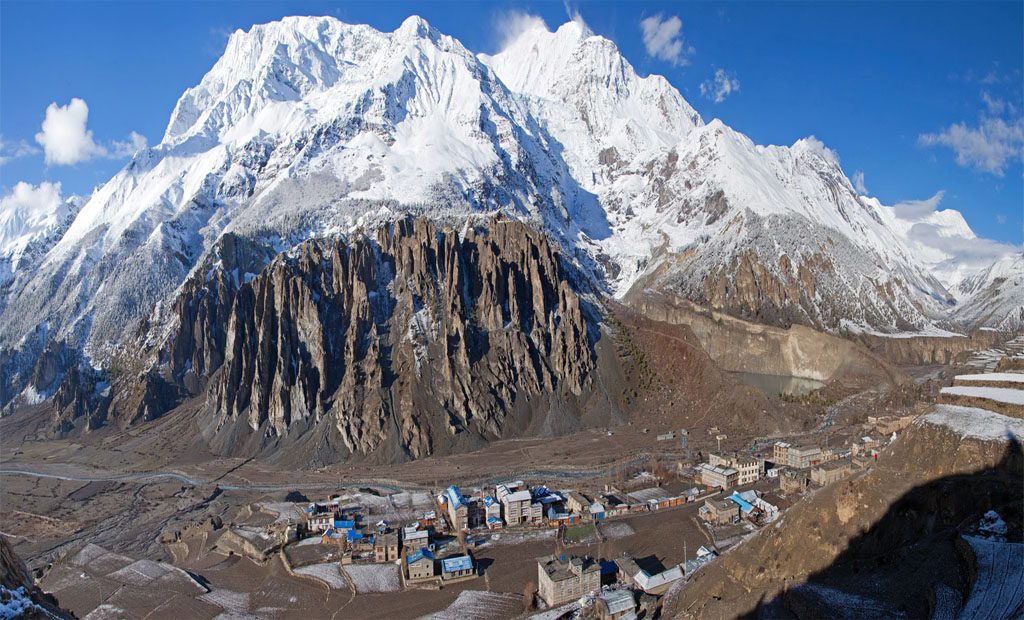
Geographically, the Annapurna Region lies in central Nepal, spread across Lamjung, Manang, Mustang, Kaski, and Myagdi districts. Its topography varies dramatically—from lowland valleys around 800 meters to some of the world’s tallest mountains soaring above 8,000 meters. The landscape includes verdant farmlands, deep gorges, cascading waterfalls, glacial rivers, and rugged plateaus. Major rivers like the Marsyangdi and Kali Gandaki cut through this region, shaping its ecological diversity.
The region is easily accessible from Pokhara, Nepal’s second-largest city, which serves as the gateway to most Annapurna treks. Pokhara is connected to Kathmandu via road and air, making it a convenient launching point for travelers.
People and Ethnic Diversity
The Annapurna region showcases a vibrant cultural mosaic, shaped by diverse ethnic communities such as the Gurungs, Magars, Thakalis, Tibetans, and Manangis. Each of these groups not only maintains its own unique customs, clothing styles, architecture, and languages, but also contributes to the region’s distinct cultural identity. For instance, Gurung communities—especially in villages like Ghandruk and Landruk—continue to proudly uphold rich martial traditions while also offering warm hospitality to travelers. Moreover, their social structures and cultural celebrations remain deeply rooted in ancestral values, which further enhances the authenticity of the trekking experience.
Thakalis, prominent in the Jomsom area, have built a reputation for their distinctive cuisine and long-standing trading heritage. In Upper Mustang and Manang, local communities actively practice Tibetan Buddhism and maintain strong cultural ties to Tibetan traditions.
Even in the face of modernization, many villages continue to uphold their ancestral customs. Residents often construct homes from stone and mud, reflecting practical design shaped by generations of knowledge. Villagers celebrate communal festivals with vibrant music, spirited dance, and time-honored rituals that keep their cultural legacy alive.
Religion and Beliefs
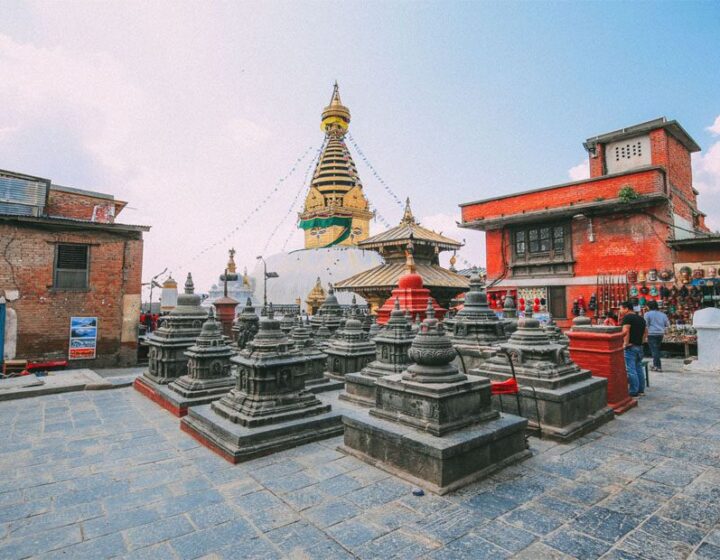
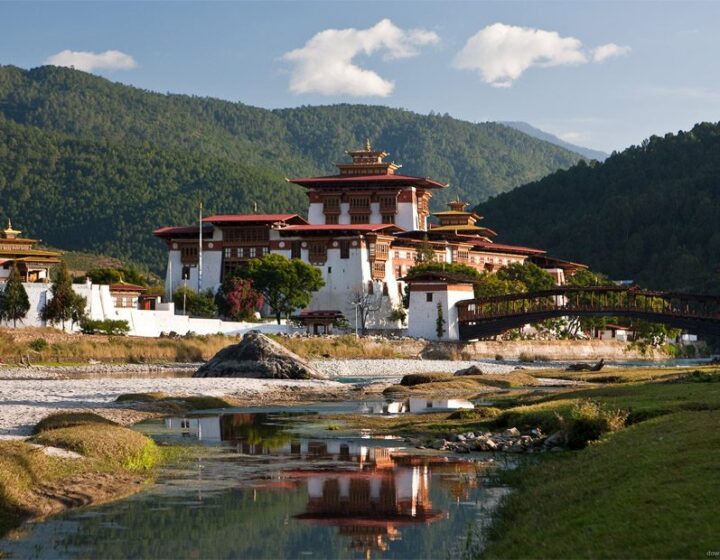
In this region, you’ll see a mix of Hinduism and Buddhism. Many temples, shrines, and monasteries are scattered along the trails. The temple of Muktinath is especially important, attracting both Hindu and Buddhist pilgrims. It is believed to be a place of liberation, or “moksha.” Monasteries in Upper Mustang and Manang show strong Tibetan Buddhist influence, with monks, prayer wheels, and colorful paintings.
Festivals like Dashain, Tihar, Losar (Tibetan New Year), and Yartung (celebrated in Mustang with horse racing and singing) are celebrated with joy and color. Trekkers often get to witness these traditions if they travel during festival times.
Lifestyle and Livelihood
People in the Annapurna region live in close harmony with nature Most people grow crops like millet, barley, potatoes, and corn. In the lower parts, rice and vegetables are common. Animal husbandry—raising yaks, sheep, and goats—is also an important part of life, especially in the highlands.
Tourism is now a major source of income. Many locals work as guides, porters, lodge owners, or cooks. Tea houses along the trails offer food and lodging to trekkers, helping the communities earn a living. Despite the growing tourism, people still follow their age-old customs, and their daily life often includes praying, spinning prayer wheels, and taking care of their homes and fields.
Flora and Fauna
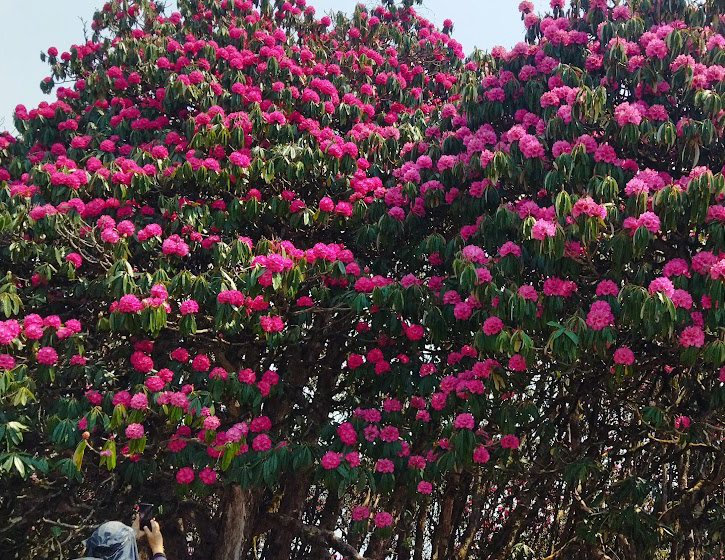
Due to its vast altitude range, the Annapurna region shelters a remarkable variety of plant and animal life. At lower elevations, tropical forests featuring sal trees, bamboo, and ferns thrive, while oak, maple, and rhododendron forests cover the mid-hills—bursting with color during the vibrant spring bloom
As you ascend, alpine meadows and tundra vegetation dominate. In the trans-Himalayan areas like Mustang, vegetation is sparse, with hardy shrubs and desert-like flora.
The fauna is equally diverse. The region is home to elusive species such as the snow leopard, Himalayan tahr, red panda, blue sheep, langurs, and numerous bird species including the Himalayan monal, Nepal’s national bird. ACAP’s conservation efforts have helped preserve many of these rare animals in their natural habitat.
Atmosphere and Ambience
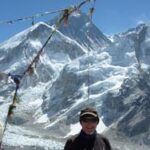
The overall atmosphere of the Annapurna Region is one of serenity, majesty, and timelessness. Every step along the trail brings a fresh panorama—towering peaks shimmering in the sunlight, villages nestled in terraced hillsides, colorful prayer flags fluttering in the breeze, and waterfalls cascading into emerald rivers.
Climate varies with altitude: the lowlands are warm and subtropical, the mid-hills are temperate, and the highlands are cold and alpine. Spring (March–May) and autumn (September–November) are the most favorable seasons, offering clear skies, mild temperatures, and spectacular visibility. Winter treks are possible at lower elevations, while the monsoon months (June–August) are lush but wet.
Company and Nepal Freelance Guide Services
For those desiring a well-organized, safe, and enriching adventure, The Himalayan Realms Treks and Expedition Nepal Pvt. Ltd. stands out as a reliable travel partner. Our agency curates tailor-made journeys across the entire Annapurna region, ensuring seamless logistics, cultural immersion, and expert guidance. From arranging permits and transportation to offering multilingual guides and seasoned porters, we guarantee a personalized trekking or climbing experience.
In addition to full-package services, we also support Nepal freelance guide services. Moreover, these independent professionals are often from the region itself and possess in-depth knowledge of trails, traditions, and local dialects. Consequently, engaging a freelance guide not only enhances the authenticity of your journey but also supports the local economy and preserves indigenous skills.
Conclusion
The Annapurna Region is a land of extraordinary diversity. Here, soaring summits stand beside sacred shrines, and ancient traditions thrive amid stunning natural beauty. Whether you seek the spiritual calm of Muktinath, the solitude of Upper Mustang, the vibrant rhododendron forests of Ghorepani, or the thrilling challenge of climbing Chulu Peak, this region truly offers something for everyone.
Ultimately, exploring the Annapurna Region is more than just a trek; it is a transformative journey that blends breathtaking natural beauty, rich cultural heritage, and profound personal growth.
It is a sacred pilgrimage into the heart of the Himalayas, where nature, culture, and spirituality unite in perfect harmony.