

Overviews: Bhaktapur Durbar Square
Nestled in the heart of the Kathmandu Valley, Bhaktapur Durbar Square is one of Nepal’s most extraordinary cultural and architectural treasures. This historic site, part of the ancient city of Bhaktapur—also known locally as Khwopa or Bhadgaon—offers visitors a vivid glimpse into the country’s rich heritage. Recognized as a UNESCO World Heritage Site, Bhaktapur Durbar Square stands as a living museum where centuries-old traditions, religious devotion, and artistic brilliance converge. The square is surrounded by intricately carved wooden temples, stone monuments, and majestic courtyards that embody the best-preserved essence of the medieval Malla period.
As the most intact of the three royal squares in the Kathmandu Valley, Bhaktapur Durbar Square offers a vibrant, authentic experience of Newar culture, with its bustling pottery squares, ceremonial processions, and ancient rituals still practiced today. Whether you’re a culture enthusiast, a history lover, a photographer, or a spiritual traveler, visiting Bhaktapur Durbar Square promises a rich, immersive journey through Nepal’s medieval past. The square isn’t just a tourist attraction; it’s a living, breathing hub of Nepali identity, making Bhaktapur Durbar Square an essential destination for anyone exploring the cultural soul of the Himalayas.
Historical Significance of Bhaktapur
The name Bhaktapur means “City of Devotees.” This historic town flourished during the Malla period (12th–18th century), a golden era of art and architecture in the Kathmandu Valley. It served as the capital of the Malla Kingdom until the late 15th century.
The Malla kings were great patrons of architecture, leading to the creation of the royal palace complex, intricately carved temples, stone water spouts, and beautiful courtyards. Bhaktapur Durbar Square was the political and cultural center of their kingdom, embodying the highest achievements of Newar artisanship.
Iconic Attractions in Bhaktapur Durbar Square
1. 55-Window Palace (Pachpanna Jhyale Durbar)
Built in the 17th century by King Bhupatindra Malla, this palace is famous for its stunning façade featuring fifty-five intricately carved wooden windows. Once the royal residence, it now houses the National Art Gallery, showcasing historic paubha paintings, Hindu deities, and Buddhist art.
2. Vatsala Temple and the Bell of Barking Dogs
Adjacent to the palace stands the Vatsala Temple, crafted in the elegant Shikhara style. This stone temple is dedicated to Goddess Vatsala Devi. Nearby, the giant bronze bell—nicknamed the “Bell of Barking Dogs”—was historically used to announce royal proclamations. It continues to charm visitors with its lore and legacy.
The Golden Gate (Lūn Dhwākhā)
This exquisite entrance to the Taleju Temple courtyard is regarded as one of the finest examples of medieval metalwork. Crafted from gilded copper, it features mythological motifs, including Goddess Taleju Bhawani. Its craftsmanship alone is worth the visit.
Nyatapola Temple
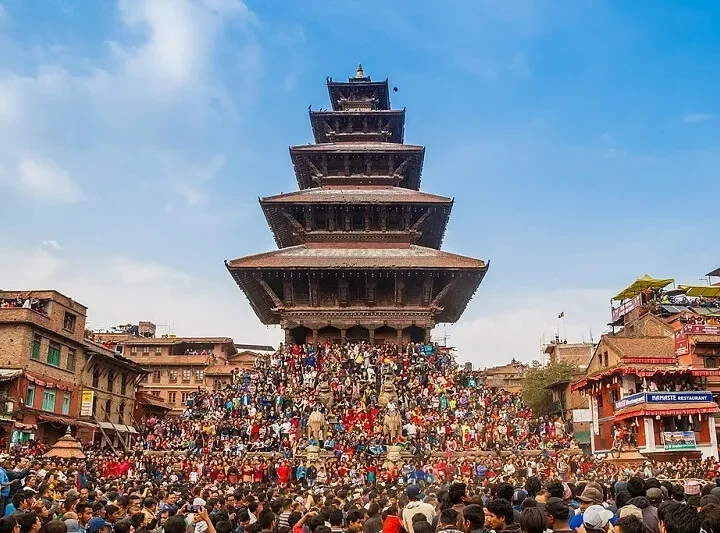
A short walk from the square in Taumadhi Tole, the towering Nyatapola Temple is the tallest in Nepal, built in 1702. Its five stories represent five basic elements and honor Siddhi Lakshmi, a fierce form of Goddess Durga. The stone guardians at each level— wrestlers, elephants, and lions—reflect layers of divine protection and strength.
Bhairavnath Temple
Located opposite Nyatapola, the Bhairavnath Temple is dedicated to Bhairava, the terrifying incarnation of Lord Shiva. Though modest initially, it was expanded into a grand three-tiered temple and plays a central role in Bisket Jatra, Bhaktapur’s most energetic festival.
Architectural and Artistic Grandeur
Bhaktapur is the ultimate showcase of Newar architecture. The city is filled with pagoda-style temples, traditional homes, intricately carved wooden windows, ceremonial ponds, and open courtyards known as chowks. From the gently sloping brick-paved alleys to the detailed rooftops, the entire cityscape reflects symmetry, spirituality, and skill.
Unlike a static museum, Bhaktapur is a living, breathing city. The temples are active sites of worship. Locals gather in public squares, artisans work in open studios, and festivals unfold with timeless passion.
Festivals and Living Culture
Bhaktapur’s charm lies in its living cultural traditions, many of which date back centuries. The local Newar community upholds its heritage through spectacular festivals, rituals, music, and communal events.
Bisket Jatra
Celebrated every Nepali New Year (mid-April), Bisket Jatra is the most thrilling festival in Bhaktapur. The event commemorates ancient legends of gods and demons. Massive wooden chariots carrying images of Lord Bhairava and Goddess Bhadrakali are pulled through the streets by teams of locals in a symbolic tug-of-war.
The festival also includes the erection of a huge ceremonial pole (lingam), representing strength and fertility. Drumming, dancing, and joyous chaos fill the streets, making it a spectacular sight for any visitor.
Gai Jatra and Indra Jatra
Gai Jatra, or the “Festival of Cows,” honors the deceased with humor, satire, and symbolic cow parades. Families who’ve lost loved ones participate in this emotional yet colorful event.
Indra Jatra, though celebrated more prominently in Kathmandu, is also observed in Bhaktapur. It includes traditional dances, mask performances, and homage to Lord Indra, god of rain.
These festivals are not just events—they are expressions of identity, resilience, and spirituality that make Bhaktapur a cultural heartland.
Local Crafts and Economy
Bhaktapur is world-renowned for its traditional crafts, and these still thrive today.
Pottery Square
In Potter’s Square, near Durbar Square, artisans shape wet clay into water pots, lamps, and decorative pieces using traditional hand-spun wheels. It’s a captivating place to see live craftsmanship in action and even try your hand at the wheel.
Woodcarving and Thangka Painting
Many alleys around the square are home to woodcarving studios, where artisans craft windows, doors, statues, and masks. You’ll also find thangka painting schools, producing vibrant Buddhist mandalas and religious art.
These crafts are not only vital to Bhaktapur’s economy but also help preserve generational knowledge and heritage.
Bhaktapur After the 2015 Earthquake
The 2015 earthquake caused considerable damage to Bhaktapur’s historical monuments, including the 55-Window Palace and Vatsala Temple. However, a strong wave of restoration efforts has brought much of the square back to life.
UNESCO, the Nepal government, and local artisans have collaborated to reconstruct temples using traditional techniques and materials. This rebuilding process also serves as a platform for training young craftsmen, ensuring the continuity of ancient knowledge.
Why You Should Visit Bhaktapur Durbar Square
1. Cultural Immersion
Experience Nepal’s authentic cultural essence in Bhaktapur. Stay in traditional guesthouses, watch morning rituals, enjoy Newari cuisine, and savor Juju Dhau—the famous “King of Curds.”
2. Spiritual Discovery
Bhaktapur is more than a sightseeing spot—it’s a place for spiritual reflection. The gentle sound of temple bells, sacred chants, incense-filled shrines, and local devotion create a deeply meditative atmosphere.
3. Photographer’s Dream
Golden brick alleys, carved temple doors, and colorful festivals provide endless visual inspiration. Capture everything from grand architectural shots to intimate portraits of daily life.
4. Educational Value
A walk through Bhaktapur is a walk through history and heritage. Learn about Himalayan architecture, Newar traditions, and the interplay of Hindu and Buddhist beliefs—a unique opportunity for cultural education.
Practical Information for Travelers
Location: 13 km east of Kathmandu; easily accessible by taxi, motorbike, or local bus.
Entry Fee: Required for foreign nationals; the fee supports conservation.
Best Time to Visit: Autumn (Oct–Nov) and Spring (Mar–May) offer pleasant weather and coincide with major festivals.
Local Etiquette: Dress modestly, remove shoes before entering temples, and always ask before taking close-up photos of locals.
Nearby Attractions:
Taumadhi Square—Home to Nyatapola and Bhairavnath temples. Dattatreya Square—Known for ancient monasteries and woodcarving museums. Siddha Pokhari—A peaceful pond ideal for a quiet stroll or reflection.
Conclusion: A Journey to Nepal’s Soul
Bhaktapur Durbar Square is not just a destination—it is a portal to Nepal’s soul. It offers an immersive experience where medieval history, vibrant culture, sacred rituals, and daily life harmoniously exist. Far from the noise of modernity, it preserves an atmosphere of timeless elegance and spiritual richness.
For those seeking a deeper connection to Nepal beyond trekking routes and mountain peaks, Bhaktapur offers something extraordinary—a chance to walk among kings, gods, artisans, and generations who shaped the country’s identity. Visit Bhaktapur Durbar Square and become a part of its living legacy.