

Trip overview
overviews: Kanchenjunga 25-day Trek:
Interduction
The Kanchenjunga Trek is a truly unforgettable Himalayan journey that immerses trekkers in remote wilderness, vibrant local cultures, and dramatic high-mountain scenery. Nestled in the far eastern region of Nepal, this off-the-beaten-path adventure brings you face to face with the third-highest mountain in the world — Mount Kanchenjunga (8,586m). Far from the crowds of Everest or Annapurna, the Kanchenjunga region offers raw beauty, cultural authenticity, and one of the most pristine trekking experiences in the world.
A Remote Trekking Experience Unlike Any Other:
Unlike popular trekking routes in Nepal, the Kanchenjunga Trek remains one of the least-trodden trails, offering a deep sense of solitude and untouched nature. This is not just a trek; it’s a journey into one of the last true Himalayan frontiers.
The Kanchenjunga Base Camp Trek typically takes around 20–25 days and involves strenuous walking, high passes, and camping or staying in basic teahouses. Because the region is relatively isolated, the infrastructure is less developed than in more commercialized trekking zones. However, that’s exactly what makes this trek so special.
The trek offers both North and South Base Camps of Kanchenjunga. Most itineraries are designed to reach the North Base Camp (Pangpema) at 5,143 meters, which provides an awe-inspiring view of the massive Kanchenjunga massif. The South Base Camp gives a different perspective, revealing stunning views of Yalung Glacier and the surrounding peaks.
Trek to Kanchenjunga: An Unrivaled Scenic Journey:
From the lowland river valleys and rice terraces of Taplejung to the icy moraines of Pangpema, the Kanchenjunga Trek presents an ever-changing landscape. As you gain altitude, the scenery transforms from lush rhododendron forests and bamboo groves to high alpine meadows and glacier-fed rivers.
Each day of the trek brings a fresh visual treat. Cross high suspension bridges over thundering rivers, walk beneath waterfalls cascading down vertical rock faces, and pass by yaks grazing on open pastures. In the spring, the trail bursts into a riot of color as rhododendrons bloom, while autumn offers crystal-clear skies and sharp mountain vistas.
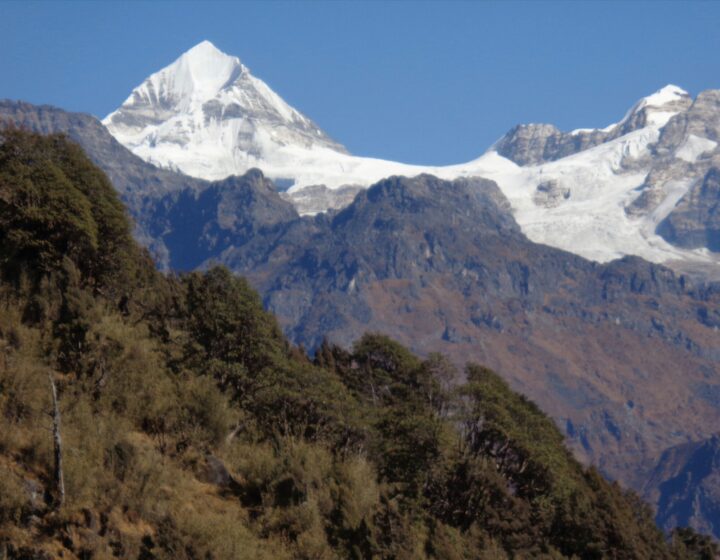
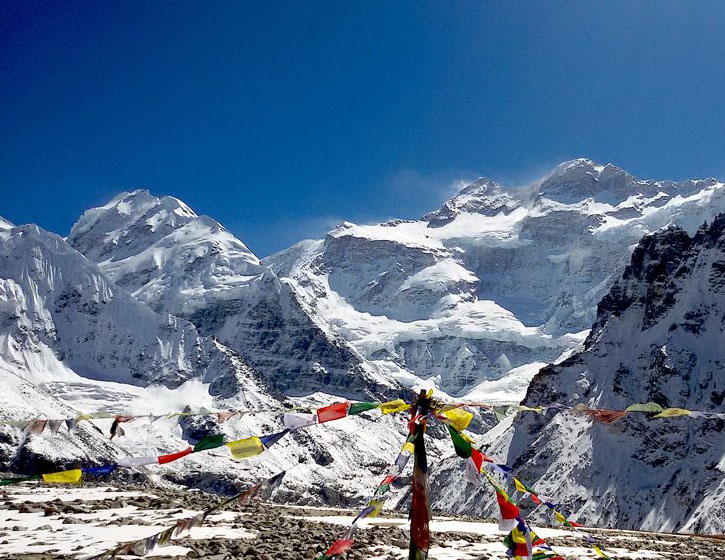
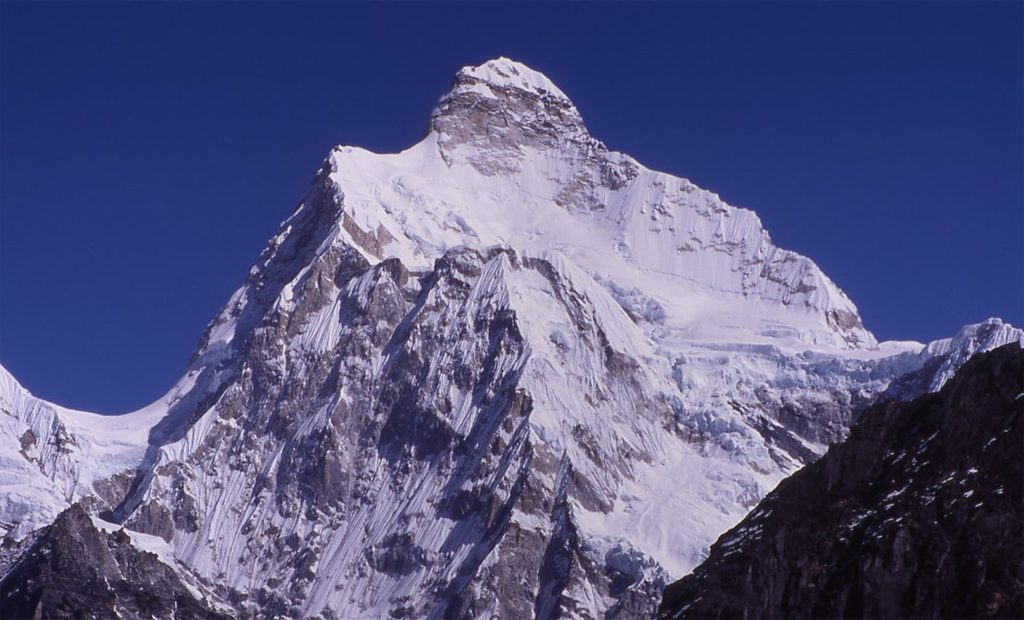
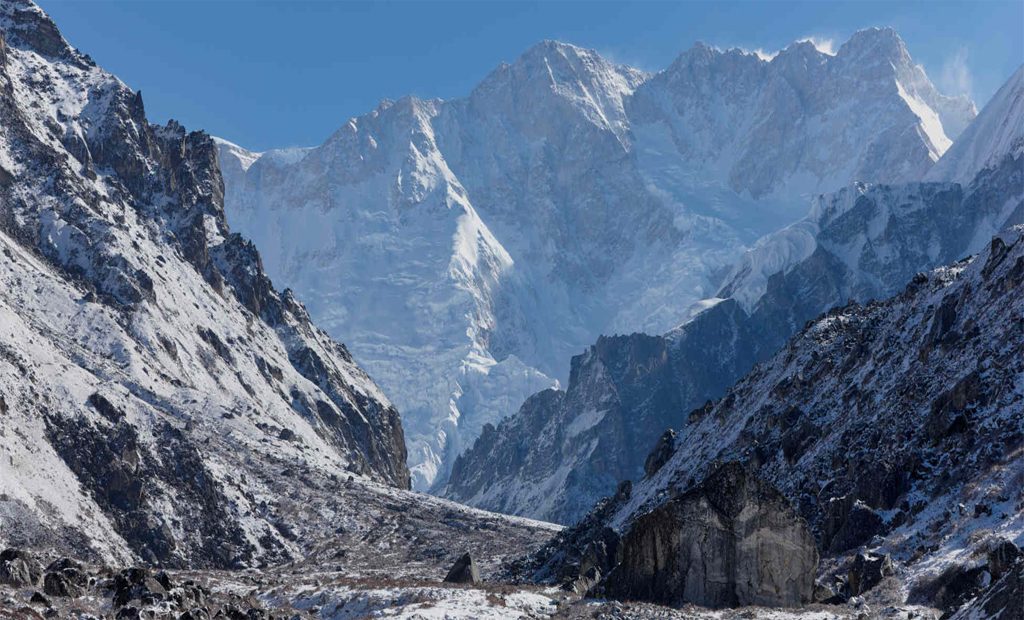
The highlight is undoubtedly the view of Mount Kanchenjunga from Pangpema. Towering ice walls, hanging glaciers, and vertical cliffs create a truly majestic spectacle. Here, trekkers often pause for a day to acclimatize and absorb the silence and grandeur of the Himalayan giants.
Flora and Fauna in the Kanchenjunga Region:
The Kanchenjunga region is part of the Kanchenjunga Conservation Area, which covers 2,035 square kilometers of diverse ecosystems. This conservation zone is a haven for rare and endangered species, making the Kanchenjunga Base Camp Trek not only a scenic adventure but also a nature lover’s dream.
Trekkers frequently encounter Himalayan monals, pheasants, and flocks of laughing thrushes. With some luck and a quiet approach, one might even catch sight of a red panda or a Himalayan black bear. Snow leopards inhabit the higher reaches, though they are elusive.
The vegetation ranges from subtropical forests of oak and chestnut to alpine shrubs and mosses. The rich biodiversity supports more than 20 species of rhododendron, 250 species of birds, and hundreds of varieties of orchids and medicinal plants.
The Unique Culture and Lifestyle of the Kanchenjunga Trail:
While the scenery is jaw-dropping, what truly sets the Kanchenjunga Trek apart is its cultural depth. The region is home to ethnic communities like the Limbu, Rai, Sherpa, and Tamang people, each with their own language, rituals, and architecture.
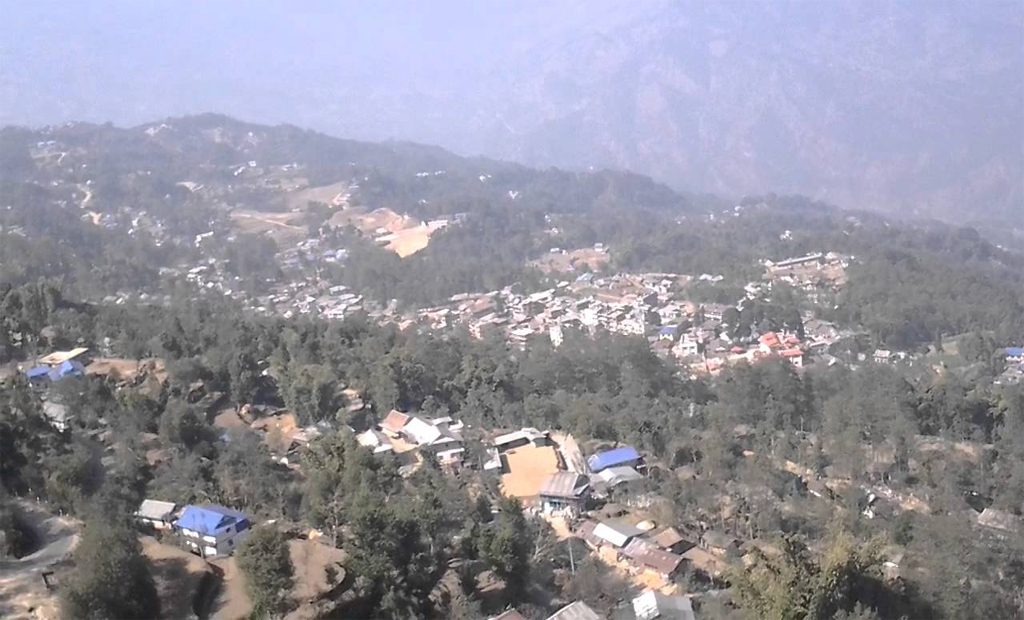
Traditional villages like Ghunsa, Sekathum, and Tapethok offer authentic experiences of rural Himalayan life. The locals are known for their warm hospitality, and although facilities are basic, the sense of community is strong.
The Ghunsa Valley, in particular, is a cultural gem. Prayer wheels, mani walls, and Buddhist monasteries reflect the deep spiritual traditions of the area. Trekkers are often invited into homes to share butter tea or listen to stories passed down through generations.
Because the Kanchenjunga region is less commercialized, visitors get a rare glimpse into the ancient rhythms of Himalayan culture, relatively untouched by tourism. This makes the trek to Kanchenjunga not only a physical challenge but also a cultural revelation.
Atmosphere and Mood Along the Kanchenjunga Trek
The mood of the Kanchenjunga Trek is distinct from more trafficked routes. It’s quiet, introspective, and almost meditative. The absence of crowds means trekkers walk in near silence, with only the sounds of rustling leaves, flowing streams, and distant yak bells breaking the stillness.
Campsites and teahouses are sparsely populated, often with just one or two other groups present. This solitude allows for deep personal reflection and a strong connection with the surrounding environment. Whether you are watching dawn break over the snowfields or stargazing in the cold mountain night, the Kanchenjunga trail instills a sense of awe and humility.
Preparing for the Kanchenjunga Base Camp Trek:
The Kanchenjunga Trek is considered one of the more challenging treks in Nepal. Daily walking hours range from 5 to 8 hours, with significant altitude gains and remote terrain.
This trek best suits seasoned trekkers who have a good level of fitness and prior experience with high-altitude trekking. Trekkers should come prepared for unpredictable weather, basic accommodation, and limited medical facilities. For safety and a richer experience through local insights and cultural interpretation, we strongly recommend hiring an experienced guide and porter.
Trekkers must obtain two permits for this journey: the Kanchenjunga Restricted Area Permit and the Kanchenjunga Conservation Area Permit. Due to its restricted status, the trek also requires a minimum group size of two people.
These requirements ensure both safety and preservation of this fragile environment.
Why Choose the Kanchenjunga Trek Over Other Routes?:
There are many trekking routes in Nepal, but few match the Kanchenjunga Base Camp Trek in terms of wilderness, biodiversity, and authenticity. Unlike the more touristy Everest or Annapurna regions, the Kanchenjunga trail offers an adventure for those seeking something deeper—something more wild and elemental.
This trek stands out for its:
Seclusion: Far fewer trekkers mean a more peaceful and personal experience.. Diverse terrain: From subtropical valleys to icy highlands. Cultural encounters: Rare opportunities to interact with ethnic communities largely untouched by mass tourism. Stunning mountain views: Including the Kanchenjunga massif and other 7,000+ meter peaks. For those looking to escape the commercial trekking circuits and immerse themselves in raw Himalayan grandeur, the Kanchenjunga Trek is unrivaled.
Sustainable and Responsible Trekking in Kanchenjunga:
Given the fragile ecosystems and traditional communities along the Kanchenjunga trail, sustainable tourism is essential. Trekkers should aim to leave no trace—carry reusable items, avoid plastic waste, and respect local customs.
Choosing local trekking agencies, hiring community-based guides and porters, and staying in eco-friendly lodges ensures that the benefits of tourism flow directly into the local economy. Supporting local schools, monasteries, and conservation initiatives can also leave a lasting positive impact.
The Kanchenjunga region depends on such responsible practices to maintain its delicate balance of nature and culture.
Why Join Us: Himalayan Realms Treks
In a world full of travel choices, finding a trekking company that truly understands the heart of the Himalayas can make all the difference. At Himalayan Realms Treks and Expedition Nepal Pvt. Ltd., we go beyond guiding treks — we offer life-changing journeys through some of the most remote, majestic, and culturally rich regions of Nepal. Whether you are a seasoned adventurer or a first-time trekker, choosing us means choosing authenticity, safety, and a deeper connection to the land and its people.
Here’s why joining Himalayan Realms Treks is not just a decision — it’s the beginning of your unforgettable Himalayan story.
Founded on Legacy, Led by Expertise
Himalayan Realms Treks was established by Takao Yuzawa from Japan, with over three decades of love and connection to the Nepalese Himalayas. Our company was born from a profound respect for Nepal’s landscapes, people, and spiritual essence. Now led by Managing Director Dammaru Prasad Niraula, with over 35 years of experience in the trekking and expedition industry, our leadership team brings together unmatched knowledge, integrity, and a commitment to high standards.
Our Australian Consultant Advisor, Stuart Colkin, ensures that our services meet international expectations, while still being deeply rooted in local traditions.
Personalized Service with a Passionate Team
Unlike larger tour operators that treat clients as numbers, we offer personalized service. From your very first inquiry to the moment you descend from the Himalayas, our team will be with you every step of the way. Our experienced guides and porters are not only certified professionals but also passionate storytellers, cultural ambassadors, and guardians of your well-being.
We understand that every trekker is different. That’s why we customize itineraries, adjust pacing, and provide flexible options to ensure that your journey is exactly what you envisioned.
Handpicked, Unique Trekking Experiences:
While many agencies focus on the more commercial routes, we specialize in less-traveled paths that highlight the raw beauty and cultural depth of Nepal. Some of our featured treks include:
Kanchenjunga Base Camp Trek – Explore the untouched eastern frontier of Nepal with breathtaking views of the world’s third-highest mountain.
Langtang Valley Trek – Discover a hidden valley with Tibetan culture and dramatic landscapes just north of Kathmandu.
Muktinath Trek – A sacred pilgrimage combined with the natural wonders of Mustang.
Makalu Base Camp Trek – A true expedition-style trek into a rugged, remote region.
Australian Camp Trek – A short yet spectacular trek, perfect for those with limited time.
Our routes are carefully designed to provide a balance of natural beauty, cultural encounters, and peaceful reflection.
Conclusion: The Journey of a Lifetime
The Kanchenjunga Trek is more than a mountain adventure—it’s a deep journey into one of the last remaining pristine corners of the Himalayas. It tests your limits, rewards you with world-class scenery, and connects you with cultures as old as the hills themselves.
Whether you’re drawn by the thrill of standing beneath the massive Kanchenjunga summit, captivated by the beauty of its diverse flora and fauna, or enchanted by the serenity of remote mountain life, the Kanchenjunga Base Camp Trek undoubtedly promises an experience unlike any other.
Moreover, if you’re seeking a transformative journey that’s both physically demanding and spiritually enriching, the trek to Kanchenjunga will surely leave an indelible mark on your soul. It’s not just about reaching a destination—rather, it’s about embracing the path, connecting with the people, and standing in awe of the peaks along the way.
Itinerary
Arrival in Tribhuvan International Airport
When you arrive at Kathmandu Tribhuvan International Airport, our representative will pick you up and take you to your reserved hotel. After check-in at the hotel, you will be briefed about your trekking tour program. After the briefing session, you can relax and unwind at the hotel. If you want to get familiar with this place, you can go for a walk in the Thamel area in the evening.
Sightseeing tour around Kathmandu Valley and trekking preparation
We embark on a journey with an experienced tour guide to the historical and spiritual attractions of Kathmandu, which is also a UNESCO World Heritage Site. You will visit the historic Kathmandu Durbar Square, the sacred Hindu Temple of Pashupatinath, the famous Monkey Temple (Swayambhunath) and the Buddhist Temple (Boudhanath), one of the largest stupas in the world. In the afternoon, our leader checks our equipment, introduces us to the other participants, and we talk about their trip.
from Kathmandu to Bhadrapur by flight and drive to Taplejung
After having breakfast early in the morning, you fly from Kathmandu to Bhadrapur, which is located in south-eastern of Nepal, and then head to Taplejung. Meals included: Breakfast, lunch, and dinner
Trek from Taplejung to Lalikharka: walking Distance 4-5-hour walk
You'll go to Lalikharka after walking around 5 hours. Lalikharka is one of the beautiful villages in Panchthar district. It is a easy ascent and descent on a path that mainly leads through lush green forests to Lalikharkha Meals included: Breakfast, lunch, and dinner
Trek from Lalikharka to Khesewa: walking distance 5 to 6 hours
After having breakfast, you'll start your journey to Khesewa. It is mainly an easy descent to Phundrawa. From here you begin your ascent. It is a steep ascent to Yangpang and from there you walk steadily to Phumphe Danda, then again rise to Khesewa. Our hike leads through forests and small towns. Meals included: Breakfast, lunch, and dinner
Trek Khesewa to Mamankhe: walking Distance 5 - 6 hours
After breakfast, you'll head to the Kabeli Khola. Then you will hike along a trail that leads through the jungle before crossing a small stream. Along the way you enjoy a breathtaking view of the Himalayan peaks and walk through several small and beautiful villages. Meals included: Breakfast, lunch, and dinner
Trek from Mamankhe to Yamphudin: walking distance 4 -5 hours
You will go along the Kabeli Khola during the trek, where you can admire the beautiful ridge behind the stream. You continue your walk and admire a beautiful nearby waterfall. After walking for a while, you cross a small suspension bridge and settlements before arriving in Yamphudin for the night. Meals included: Breakfast, lunch, and dinner
Trek from Yamphudin to Tortong: walking Distance 7- 8 hours
Today's trekking will be on the way along Amji Khola, passing through Lassiya Bhanjyang before reaching Tortong. Stay overnight in Tortong. Meals included: Breakfast, lunch, and dinner
Trek from Tortong to Cheram: walking duration 2-3 hours
After breakfast, you'll begin your constant climb to Cheram. Your route is located directly in Simbuwa Khola. You enjoy walking in the beautiful Lalung Valley and have a view of Tuplung peak. You will walk through the dense rhododendron forest and enjoy the splendour of the Yalung glacier. Night in Cheram. Meals included: Breakfast, lunch, and dinner
acclimatization day in Cheram
You spent a day in Cheram to get used to the altitude. You can spend the rest of the day taking a resting or doing short hikes. There are also views of Kabaru and Rathong peaks. Meals included: Breakfast, lunch, and dinner
Trek from Cheram to Ramche: Walking hours 3 - 4 hours
After breakfast, you'll start your short walk. You climbed from Cheram for a while before reaching the snout of the Yalung Glacier. You also enjoy the view of various Himalayan peaks. You pass a small settlement in Lapsang before reaching Ramche. Meals included: Breakfast, lunch, and dinner
Trek from Ramche to Yalung base camp, back to Cheram
From Ramche, you'll continue through the valley. Then you follow a stream before climbing to the top of the moray until you face the south face of Kanchenjunga. You continue to take a look at the Jannu Himal. You will keep walking to the Oktang Monastery, from here you climb further up to Yalung base camp. The view from base camp is exceptional. Kumbakarna, Nyukla Lachung, and other Himalayan peaks are nearby. You descend and spend the night in Cheram. Meals included: Breakfast, lunch, and dinner
Trek from Cheram a Sele La (4290 m): walking duration 6 to 7 hours
After breakfast, you'll start your walk and crossed four passes by beginning with Sinelapche Bhanjyang. After crossing the pass, you continue towards Mirgin La Pass. You keep walking and arrive at Sinion La Pass, which is not far away. From here you go up to Paso Sele La. The prayer flags are placed on one of the steepest sections of the trail, which is very close to the Sele-La pass. You then cross this pass. Meals included: Breakfast, lunch, and dinner
Trek from Sele La a Ghunsa (3,595 m): walking distance 2-3 hours
After having breakfast. You go north with Tangbgharma Danda. You arrive at a choir that is marked with prayer flags and marks the beginning of a steep path. You will go down through rhododendron, birch, and pine forests before getting to Ghunsa, this is a very attractive place with houses with weathered dark pine walls and Buddhist prayer flags. Meals included: Breakfast, lunch, and dinner
Trek from Ghunsa to Kambachen: walking 5 - 6 hours
Today you will walk further north along the river bank which offers you an incredible mountain backdrop. You walk through meadows with beautiful wildflowers and then cross rhododendrons and pine forests. You cross a bridge at Rampuk Kharka, pass by a waterfall, and cross the problematic section of a landslide. After crossing the landslide area you see the spectacular view of Mount Jannu. If you continue to explore this complicated mountain trail, you will finally reach Kambachen and spend the night. Meals included: Breakfast, lunch, and dinner
Trek from Kambachen to Lhonak: walking distance 5 to 6 hours
You will walk through rocky fields and large boulders today on the hillside along the river bank and come to a waterfall. Then you cross a bridge to Ramtang Monastery, you then find a section of a landslide that you must pass at a constant rate before descending into the river and finally reaching Lhonak. Meals included: Breakfast, lunch, and dinner
Trek to Kanchenjunga base camp, overnight in Pangpema: walking 6-7 hours
We walk to the Kanchenjunga base camp. Our path leads along the massive Kanchenjunga glacier. After passing Pangpema you move down towards the Kanchenjunga base camp. The view from base camp is exceptional. You can admire Mount Kanchenjunga, Jannu Himal, and other peaks of the Himalayas. You return to Pangpema to spend the night. Meals included: Breakfast, lunch, and dinner
Trek from Pangpema to Lhonak: walking distance 3-4 hours
From Pangpema, you follow your steps back to Lhonak. Night in Lhonak. Meals included: Breakfast, lunch, and dinner
Trek from Lhonak to Ghunsa: walking 6 to 7 hours
You'll descend from Lhonak through Kambache to Ghunsa. It is the same route you took on the ascent. Meals included: Breakfast, lunch, and dinner
Ghunsa to Amjilosa: walking 5 to 6 hours
You'll descend to Phale by passing several manes and a nearby monastery. You walk through the juniper forests and reached Phale. From here you continue on to Gyabla. You will cross a bridge over Chhundatangka Khola to get Gyabla. As you continue our walk, you see a waterfall nearby. You also passed a suspension bridge over Sumbung Khola before reaching Amjilosa. Meals included: Breakfast, lunch, and dinner
Trek from Amjilosa to Chirwa: walking 6 to 7 hours
today you continue your walk and pass a small settlement in Solima before crossing a suspension bridge over Ghunsa Khola. You cross another suspension bridge through Ghunsa Khola and reached Sukathum. Your path leads through various villages and leads to the Thunsa Khola, followed by Tamor Nadi before reaching Chirwa. Meals included: Breakfast, lunch, and dinner
Trek from Chirwa to Taplejung via Mitlung: walk 7-8 hour
After having a wonderful time in Chirwa, you'll trek to Taplejung for 8 hours. The trails on the way to Mitlung offer a lot of green, flora, and fauna and mainly picturesque villages that are always ready to welcome you. Meals included: Breakfast, lunch, and dinner
Drive to Bhadrapur: 9 hours by car
You'll take a car from Taplejung to Bhadrapur. The trip lasts 9 hours. Meals included: Breakfast, lunch, and dinner
fly back from Bhadrapur to Kathmandu
Our fantastic trip to Kanchenjunga base camp comes to an end today. In the evening, there will be a farewell dinner to celebrate the successful conclusion of your Kanchenjunga trek. Meals included: Breakfast
Final departure
Our office representative will pick you up from the hotel and takes you to the airport three hours before the scheduled flight. Meals included: Breakfast
Included
- 2-night accommodation in Kathmandu with a B/B basis plan
- Flight fear from Kahtmandu to Bhadrapur for Guest and guide.
- Bus ticket from Bhadrapur to Terathum B
- All airport and hotel transfers
- National park permit
- Accommodation, food and tea/coffee during the trek
- All the camping equipment.
- Porter: – including salary, insurance, equipment.
- For guest:-Down jacket, Good sleeping bag (down jacket and sleeping bag are to be returned after trip completion).
- Chirwa to Bhadrapur bus fear
- Fly fear from Bhadrapur to Kathmandu
- All government and local taxes
Not Included
- Food in Kathmandu ( Lunch & Dinner)
- Nepal Visa fee
- International airfare from your country to Kathmandu and from Kathmandu
- Extra night accommodation in Kathmandu
- Travel and rescue insurance if guest get mountain sickness and need to rescue helicopter.
- Personal expenses example (phone calls, laundry service , bar bills, battery recharge, extra porters, bottle or boiled water, shower etc)
- Tips for guide and porters if you are happy with theirs services.
Join Us Upcoming Trips
Book this trip with us. Here are the upcoming dates. Feel free to share this trip with your friends and family. For custom trips or general inquiries contact us.
| Departure Date | Trip Duration | Price | Status | |
|---|---|---|---|---|
| 15 September, 2025 | 25 days | USD $2885 | Fixed departure | |
| 28 September, 2025 | 25 days | USD $25885 | Fixed departure | |
| 05 October, 2025 | 25 days | USD $2885 | Fixed departure | |
| 15 October, 2025 | 25 days | USD $2885 | Fixed departure | |
| 22 November, 0025 | 25 days | USD $2885 | Fixed departure | |
| 05 December, 2025 | 25 days | USD $2885 | 2885 |
Useful Info
Kanchenjunga Trek: Useful Information Guide
Trek Overview
Location: Eastern Nepal, bordering Sikkim (India)
Highest Point: Pangpema Base Camp (5,140m)
Duration: 20–26 days (standard itinerary is around 25 days)
Difficulty: Strenuous
Trek Type: Camping and Teahouse (basic lodges available)
Trekking Permits Required:
Kanchenjunga Restricted Area Permit (RAP)
Kanchenjunga Conservation Area Permit (KCAP)
Minimum of two trekkers and a registered guide required for RAP
Best Time to Trek
| Season | Months | Conditions |
| Spring | March to May | Rhododendrons in bloom, clear skies |
| Autumn | September to November | Best visibility, stable weather |
| Monsoon | June to August | Not recommended (heavy rain, leeches) |
| Winter | December to February | Very cold, high passes may be blocked |
Trek Route Highlights
Taplejung: Starting point of the trek
Mitlung, Chirwa, Sekathum: Lowland villages with mixed ethnic groups
Ghunsa: Beautiful Sherpa village at 3,595m
Lhonak & Pangpema: High altitude camps near Kanchenjunga Glacier
Kanchenjunga North & South Base Camps: Spectacular views of Kanchenjunga (8,586m), the third-highest mountain in the world
Permit and Regulation Notes
Restricted Area: Independent trekking is not allowed.
Trekkers must travel with a licensed guide and at least one other person.
Must obtain permits through a registered trekking agency.
TIMS card is not required for restricted areas.
Accommodation
Teahouses: Available in most villages; basic but sufficient
Camping: Recommended for more remote areas (especially around Pangpema and South Base Camp)
Physical Fitness and Preparation
Requires excellent physical fitness due to high altitudes and long days
Pre-trek training: Cardio, hiking with a backpack, altitude training
Acclimatization days are built into the itinerary—do not skip them
Wildlife & Flora
Part of the Kanchenjunga Conservation Area
Wildlife: Red panda, snow leopard, Himalayan black bear, blue sheep
Flora: Rhododendron forests, alpine meadows, bamboo groves
Cultural Experience
Home to Limbu, Rai, Sherpa, and Tibetan communities
Buddhist monasteries, mani walls, and prayer flags enrich the spiritual journey
Opportunity to engage in local hospitality and traditional practices
Packing Essentials
Layered clothing for variable weather (base layers, fleece, down jacket, waterproof shell)
Sturdy trekking boots
Sleeping bag (4-season recommended)
Water purification tablets or filter
Snacks, energy bars, first aid kit
Trekking poles, headlamp, extra batteries
Satellite phone or local SIM (limited network)
Transportation
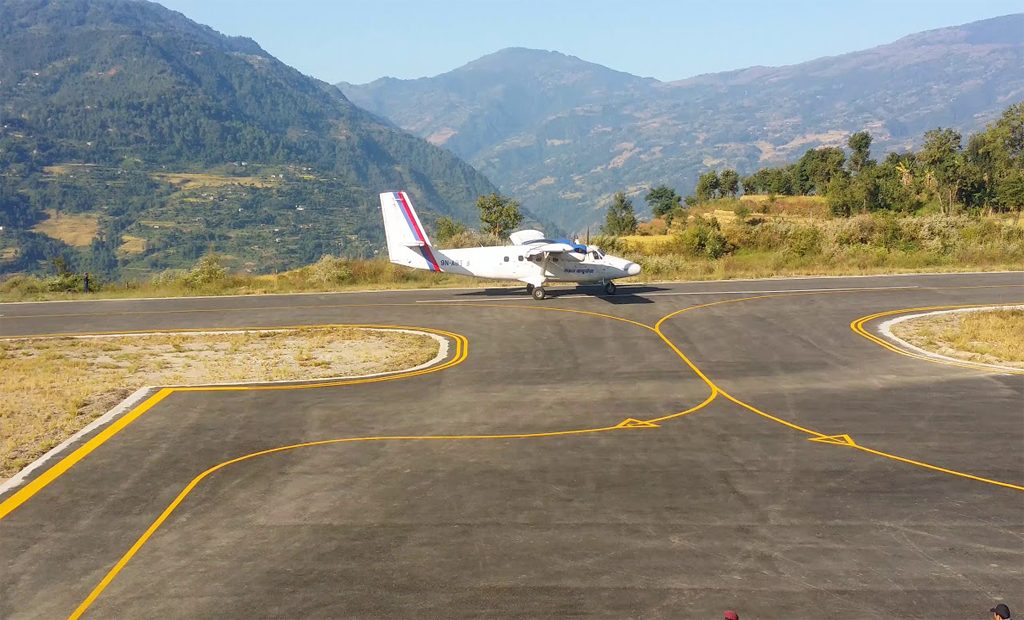
Flight: Kathmandu → Bhadrapur (1 hr) or Suketar (if available)
Drive: Bhadrapur to Taplejung via jeep (approx. 8–10 hrs.)
Weather can affect flight schedules—buffer days recommended
Risks & Safety Tips
Altitude Sickness: Gradual ascent, hydrate, rest days crucial
Remote Region: Limited rescue services—travel insurance is essential
Carry cash: No ATMs once you leave Taplejung
Environmental Responsibility: Follow Leave No Trace principles
Why Trek Kanchenjunga?
Less crowded compared to Everest and Annapurna
Deep wilderness, untouched landscapes
Rich ethnic diversity and authentic mountain life
Views of Kanchenjunga and surrounding Himalayan giants
Gallery
FAQs
-
Where is Kanchenjunga located?
Kanchenjunga is located in the far eastern region of Nepal, bordering the Indian state of Sikkim. It is the third highest mountain in the world at 8,586 meters (28,169 feet).
-
How difficult is the Kanchenjunga trek?
The Kanchenjunga trek is considered challenging due to its remote terrain, long duration, high altitude, and basic facilities along the route. Prior trekking experience and good physical fitness are highly recommended.
-
How long is the Kanchenjunga trek?
Our full trekking itinerary covers 25 days, including arrival and departure days, acclimatization, and buffer days for weather or health issues.
-
Is a special permit required?
Yes. Kanchenjunga is a restricted area, so you’ll need: Restricted Area Permit Kanchenjunga Conservation Area Permit (KCAP) You must trek with a registered trekking company and be accompanied by a licensed guide.
-
What kind of accommodation is available?
Accommodations are basic teahouses/lodges in villages, offering simple rooms with shared toilets. In some places, especially at higher altitudes, homestays or camping may be necessary.
-
How high is the highest point on the trek?
The trek reaches up to 5,143 meters (16,873 feet) at Pangpema (North Kanchenjunga Base Camp).
-
What kind of food is available on the trek?
You’ll get a mix of Nepali, Tibetan, and basic Western dishes (like pasta, rice, soup, and eggs). In remote areas, food variety is limited but nutritious.
-
How do we reach the trailhead?
The trek starts from Suketar or Taplejung, which is accessed by a domestic flight from Kathmandu to Bhadrapur, followed by a long jeep ride to the trailhead.
-
Can I charge my devices during the trek?
Electricity is available in some villages, but not guaranteed. Carrying a solar charger or power bank is recommended.
-
Is there mobile network or internet access?
Coverage is limited and inconsistent. Some villages may have mobile signals (mainly NCell or NTC), but internet access is rare or extremely slow.